Ulster University Scraps Derry Sports Dome as Funding Crisis Deepens at Magee Campus
Ulster University has confirmed that it is abandoning plans for a major indoor sports arena at its Magee campus in Londonderry, citing construction inflation and projected running costs that it describes as financially unsustainable. The decision has been condemned by local politicians as a further blow to the long-promised expansion of the Magee campus, and has raised fresh questions about the university's commitment to the north-west at a time when it is also planning to cut up to 450 jobs across its campuses.
Background
The proposed indoor sports arena — an Air Dome structure of approximately 15,000 square metres — was announced in 2024 as a flagship project for the Magee campus. Designed to be built on the site of the former Foyle College, the facility was intended to house full-size pitches for rugby, football, and Gaelic games, and to serve as a venue for musical and community events. It was presented as a transformative addition to the campus that would benefit not just students but the wider Derry community.
The project had secured approximately £9.05 million in funding from the Special EU Programmes Body through the PeacePlus programme, which Ulster University had committed to matching. The involvement of PeacePlus funding gave the project a cross-community dimension, with the sports facility intended to serve as a shared space for people from across the city's divided communities. The SEUPB expressed disappointment at the cancellation but acknowledged the university's decision, citing "external considerations" and significant cost increases.
The Magee campus has long been a source of political tension in Northern Ireland. For decades, local politicians and community leaders have argued that the campus has been systematically underdeveloped relative to Ulster University's campuses in Belfast and Coleraine, and that this underinvestment has contributed to the economic marginalisation of the north-west. The expansion of Magee — including the development of a medical school — has been a central demand of Derry's political representatives across all parties.
Key Developments
Ulster University confirmed the cancellation of the sports dome project in early August 2026, describing it as "no longer financially viable." The university cited a combination of ongoing construction inflation — which has significantly increased the cost of building projects across Northern Ireland and beyond — and projections for operational costs that it said were unsustainable given its current financial position. The university stated that it must prioritise its limited resources for core activities, including research, teaching, and the delivery of City Deal projects.
The cancellation follows a difficult period for Ulster University, which announced plans in April 2026 to cut up to 450 jobs across its campuses as part of a restructuring programme driven by financial pressures. The university has warned that the absence of a sustainable funding model for higher education in Northern Ireland — where tuition fees are capped at a level that does not cover the cost of provision — is creating an existential challenge for the sector.
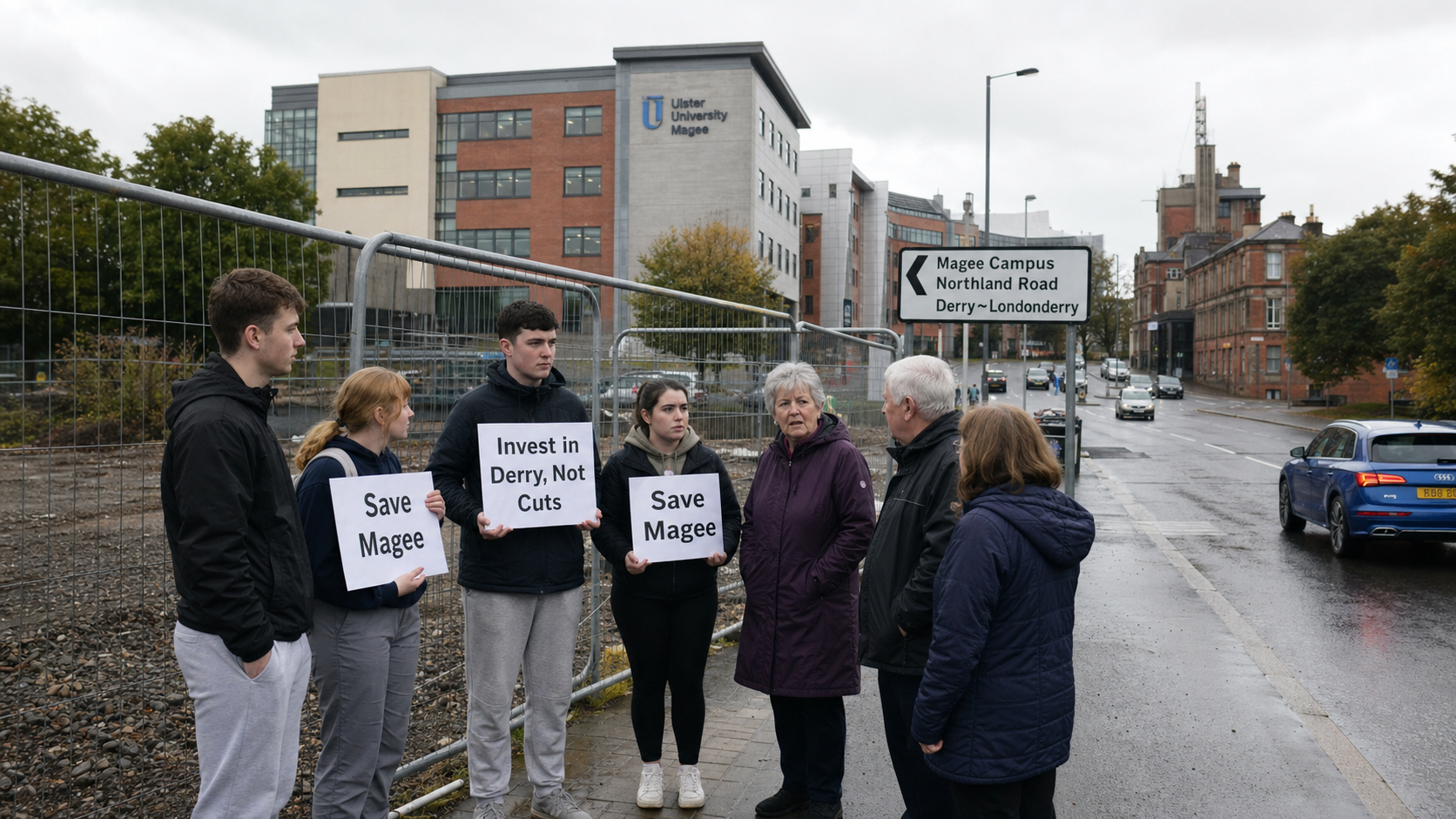
SDLP Foyle MLA Sinéad McLaughlin was among the most vocal critics of the decision, expressing concern that the Magee campus is being disproportionately affected by budget cuts and warning that the cancellation of the sports dome raises further questions about the university's long-term plans for the north-west. McLaughlin and other local representatives have called on the Executive to provide emergency funding to protect the Magee expansion programme.
Why It Matters
The scrapping of the Derry sports dome matters because it is the latest in a series of setbacks for the Magee campus expansion that has been promised to the people of the north-west for many years. The medical school, which was supposed to be a centrepiece of the expansion, also faces significant challenges due to construction inflation and the absence of a confirmed Executive budget. If both projects are ultimately abandoned or significantly scaled back, it will represent a profound failure to deliver on commitments that were made to a region that has historically been underserved by public investment.
The broader context is the chronic underfunding of higher education in Northern Ireland. Unlike in the Republic, where universities can charge higher fees and access a wider range of funding streams, Northern Ireland's universities operate under a fee cap that leaves them structurally underfunded relative to their costs. This is not a problem that Ulster University created, but it is one that the university is now managing in a way that is having real consequences for communities like Derry that were counting on the Magee expansion to deliver economic and social benefits.
Local Impact
For Derry and the wider north-west, the cancellation of the sports dome is a significant blow. The facility would have provided a world-class indoor sports venue for a city that currently lacks such infrastructure, and its community dimension — the shared space for cross-community sport and events — was particularly valued. The loss of the PeacePlus funding that was earmarked for the project is also a concern, as it is not clear whether those funds can be redirected to alternative projects in the region. Local sports clubs, schools, and community organisations that had been anticipating the facility will now need to continue making do with existing, often inadequate, infrastructure.
What's Next
Ulster University has indicated that it will continue to pursue other elements of the Magee campus development, including City Deal projects that have secured separate funding streams. However, the university has been careful not to make specific commitments about the medical school, which remains subject to the availability of Executive funding. Local politicians have called for an urgent meeting with the university's leadership and the Executive to discuss the future of the Magee expansion, and that meeting is expected to take place in the coming weeks. The outcome will be closely watched by the people of Derry, who have been waiting for the promised transformation of their university campus for far too long.