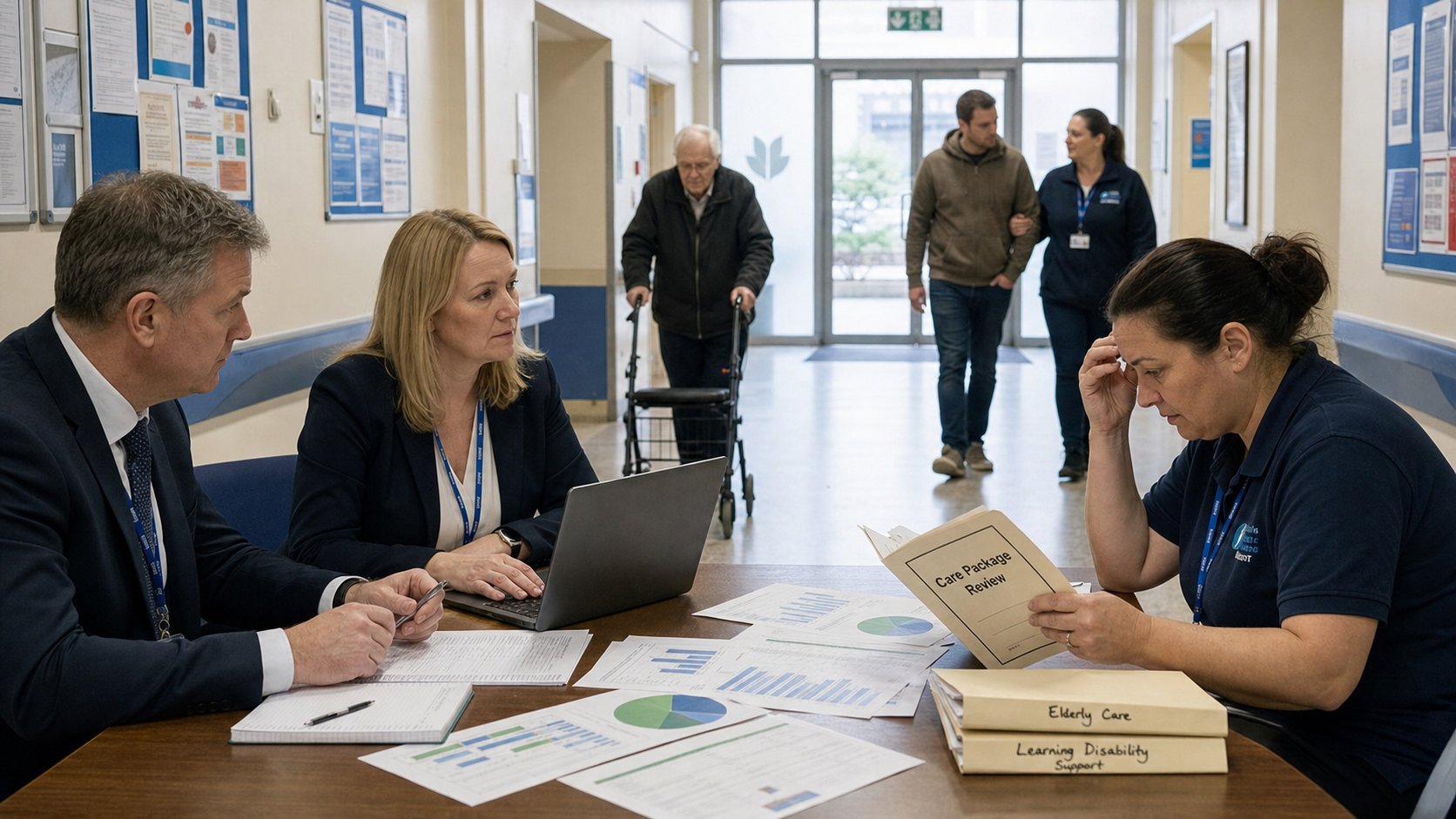
NI Trusts Paying £200,000 Each to Consultants to Cut Care Package Costs for Vulnerable Adults
Northern Ireland's Health and Social Care Trusts are each paying approximately £200,000 to management consultants to help identify ways to reduce the costs of care packages for vulnerable adults and elderly people, BBC Northern Ireland has learned — a revelation that has drawn sharp criticism from opposition politicians and care sector representatives who argue the money would be better spent on frontline services.
Background
Northern Ireland's health and social care system is delivered through six Health and Social Care Trusts: Belfast, Northern, South Eastern, Southern, Western, and the Northern Ireland Ambulance Service Trust. Unlike the NHS in England, where health and social care are administered separately, Northern Ireland operates an integrated model in which the trusts are responsible for both hospital-based healthcare and community-based social care, including domiciliary care packages for elderly and disabled people living in their own homes.
Care packages — the bundles of support services provided to individuals who need assistance with daily living — represent one of the largest and fastest-growing cost pressures in the Northern Ireland health budget. An ageing population, rising complexity of need, and workforce shortages in the domiciliary care sector have combined to push care package costs upward year on year, creating significant financial pressure on trusts that are already operating under severe budgetary constraints.
The use of management consultants by public bodies in Northern Ireland has been a recurring source of controversy. The Stormont Executive has spent tens of millions of pounds on external consultancy in recent years, with critics arguing that the money would be better invested in building internal capacity within the civil service and the health service. Defenders of the practice argue that specialist expertise is sometimes necessary for complex transformation programmes that exceed the capabilities of in-house teams.
Key Developments
BBC Northern Ireland has established that each of the five main HSC Trusts — Belfast, Northern, South Eastern, Southern, and Western — has engaged management consultants at a cost of approximately £200,000 per trust to review care package costs and identify opportunities for reduction. The total expenditure across the five trusts amounts to approximately £1 million. The consultants are understood to be examining the assessment processes used to determine care package eligibility and the unit costs of individual care services, with a view to identifying where savings can be achieved without compromising the quality of care provided to service users.
The Department of Health confirmed that the engagement was part of a broader programme to ensure that care packages represent value for money and that resources are directed to those with the greatest need. A spokesperson said the department was committed to maintaining the quality of care for vulnerable adults while ensuring that the system operates as efficiently as possible within the available budget.
Opposition politicians reacted with anger. SDLP health spokesperson Colin McGrath described the expenditure as "deeply troubling" and questioned why trusts were spending public money on consultants to find ways to cut services to the most vulnerable people in society. Alliance Party MLA Paula Bradshaw called for the findings of the consultancy reviews to be published in full and subjected to independent scrutiny before any changes to care packages were implemented.
Why It Matters
The decision to engage consultants to review care package costs comes at a moment of acute financial pressure for the Northern Ireland health system. The Stormont Executive is facing a multi-year budget deficit, and the Department of Health has been asked to identify significant savings across its programmes. Care packages for vulnerable adults are among the most politically sensitive areas of the health budget, because any reduction in support directly affects the daily lives of people who are often unable to advocate effectively for themselves.
The pattern of paying consultants to identify cuts to public services is one that has attracted criticism across the UK. In England, NHS trusts have faced similar controversies over consultancy spending, with the National Audit Office finding in 2024 that the value delivered by management consultants in the health sector was frequently difficult to quantify and often fell short of expectations. Northern Ireland's integrated health and social care model means that cuts to care packages can have knock-on effects on hospital admissions, as people who lose domiciliary support are more likely to present at emergency departments when their needs are not met in the community.
Local Impact
For the thousands of elderly and disabled people across Northern Ireland who depend on care packages to live independently in their own homes — in areas from the Shankill Road in west Belfast to rural Fermanagh and the Glens of Antrim — the prospect of reductions in their support is a source of significant anxiety. Carers NI has warned that any cuts to care packages will increase the burden on unpaid family carers, many of whom are already providing care at levels that are unsustainable for their own health and wellbeing. The organisation has called for the consultancy findings to be shared with service users and their families before any decisions are made.
What's Next
The consultancy reviews are expected to be completed by the end of September 2026, with findings presented to trust boards and the Department of Health in October. Any proposed changes to care package eligibility or provision would require a period of public consultation before implementation. The Health Committee at Stormont has indicated it will seek a briefing from the Department of Health on the consultancy programme and its findings at its next scheduled meeting in September.