PSNI Officer Dismissed After 'Catalogue of Corruption' Including Sexual Relationship with Victim
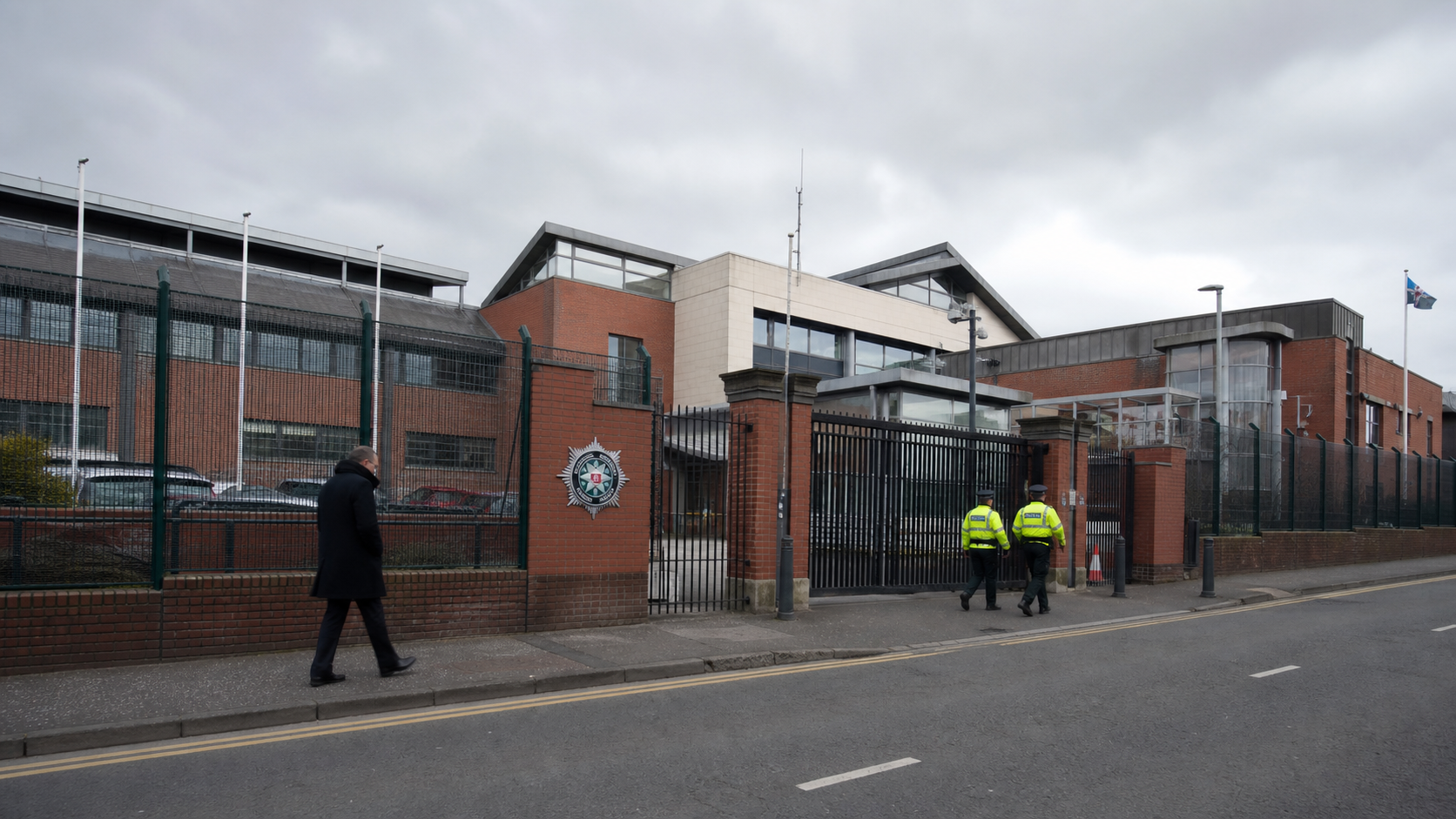
A Police Service of Northern Ireland officer has been dismissed following a Police Ombudsman investigation spanning nearly five years, which uncovered what the watchdog described as a catalogue of corruption — including the abuse of his position to initiate a sexual relationship with a vulnerable woman he encountered while on duty, the falsification of official documents, and the intimidation of a former partner through an anonymous threatening letter.
Background
The case was referred to the Police Ombudsman for Northern Ireland in 2021 and centred on the officer's conduct during and after a 2018 assault investigation involving two women, referred to in official documents as Woman A and Woman B. The officer had previously been in a sexual relationship with Woman A before being assigned to take a statement from Woman B, who was involved in a counter-assault allegation against Woman A. He failed to disclose this conflict of interest to his supervisors.
The abuse of position for sexual purposes is a category of police misconduct that the Ombudsman's office has identified as a growing concern across the United Kingdom. Since 2018, the Northern Ireland Ombudsman has received reports of over 60 cases of alleged abuse of position for sexual purposes, with 47 cases currently ongoing. The pattern reflects a broader problem identified in policing across these islands, where the power imbalance between officers and members of the public — particularly those who are vulnerable or in distress — creates conditions that some officers have exploited.
The PSNI has faced sustained scrutiny over its handling of misconduct cases in recent years, following a series of high-profile failures that have damaged public confidence in the force. The Ombudsman's office has repeatedly called for stronger internal oversight mechanisms and faster disciplinary processes, arguing that the current system allows misconduct to persist for too long before action is taken.
Key Developments
The investigation found that within 24 hours of meeting Woman B in a professional capacity, the officer initiated a sexual relationship with her, eventually moving in with her and fathering a child before the relationship ended in 2020. He subsequently served as the investigator for an assault allegation involving Woman B's former boyfriend without disclosing his intimate relationship with her — a further and serious conflict of interest that compromised the integrity of that investigation.
The misconduct extended to the falsification of official documents. Five weeks after taking Woman B's handwritten statement, the officer created a typed version with a falsified date and attempted to have a colleague sign it in place of his own name. The colleague refused and reported the incident to a supervisor — a disclosure that ultimately triggered the formal investigation. In 2021, the officer also sent an anonymous threatening letter to another former partner that included an intimate photograph of her. A search of his phone revealed 51 images of this woman, including intimate photographs taken without her knowledge.
Police Ombudsman Jacqui Durkin stated that the officer's predatory behaviour had undermined public trust in the PSNI and highlighted a significant power imbalance that the force must address systemically. The Public Prosecution Service directed no criminal prosecution regarding the allegations, but the officer was dismissed by the PSNI in April 2026 following a gross misconduct finding.
Why It Matters
The case is significant not only for the severity of the individual misconduct but for what it reveals about the systemic vulnerabilities in PSNI oversight. The investigation took nearly five years from referral to conclusion — a timeline that the Ombudsman has acknowledged is too long, particularly for victims who must live with the consequences of the misconduct throughout that period. The officer continued to serve in the PSNI for years after the initial complaint was made, raising questions about what interim measures were taken to protect the public during the investigation.
The Ombudsman's finding that 47 similar cases are currently ongoing suggests that the problem of officers abusing their position for sexual purposes is not isolated. Unlike England and Wales, where the College of Policing has introduced specific vetting and barring provisions targeting this category of misconduct, Northern Ireland has been slower to implement equivalent measures. The PSNI has indicated it is reviewing its vetting procedures in light of the Ombudsman's recommendations, but critics argue that structural reform — rather than case-by-case responses — is what is required.
Local Impact
For communities across Northern Ireland that depend on the PSNI for protection and justice, cases of this nature erode the trust that effective policing requires. The Ombudsman's office has noted that victims of abuse of position are often among the most vulnerable people who come into contact with police — those reporting domestic violence, sexual assault, or other traumatic experiences. The knowledge that an officer might exploit that vulnerability is a deterrent to reporting, with potentially serious consequences for public safety across Belfast and beyond.
What's Next
The Police Ombudsman has submitted a formal report to the PSNI Chief Constable with recommendations for systemic improvements to vetting, supervision, and the handling of conflicts of interest. The PSNI has been asked to respond within 90 days. A Policing Board meeting scheduled for September will include a discussion of the Ombudsman's findings and the force's response. The Ombudsman has also indicated that the 47 ongoing cases of alleged abuse of position will be prioritised for resolution within the next 18 months.