UK Energy Bills Fall as Ofgem Cuts Price Cap to £1,641 for April to June 2026
British households will see their energy bills fall from April as Ofgem has reduced the energy price cap by 6.6% to £1,641 per year for a typical household, bringing some relief to consumers still grappling with the cost of living crisis.
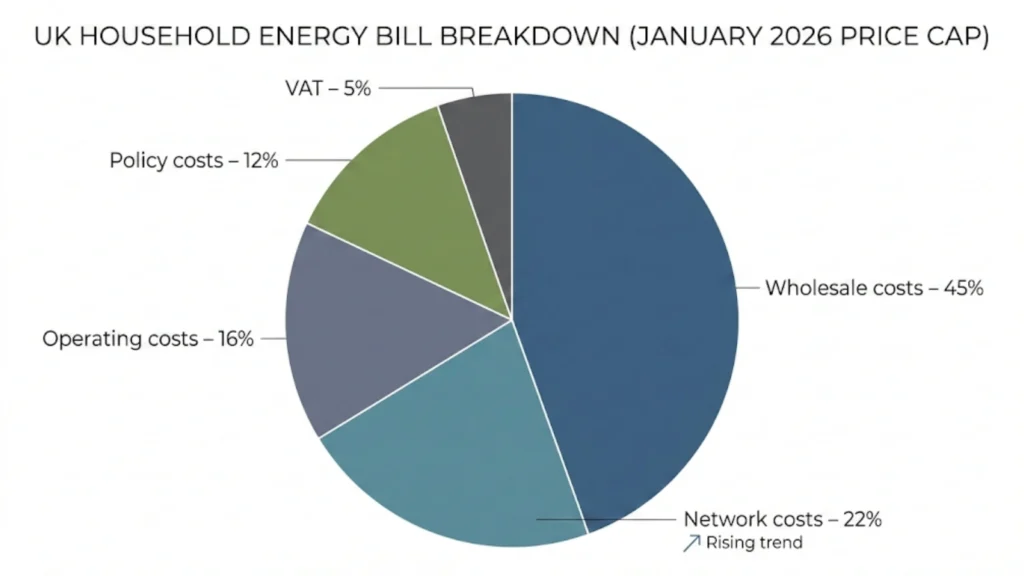
The new cap, which applies from 1 April to 30 June 2026, represents a saving of £117 compared to the previous cap of £1,758 set for January to March. The reduction is primarily driven by lower wholesale energy costs and a significant government policy change that moved 75% of the Renewables Obligation off household bills and into general taxation.
Background
The energy price cap, set by Ofgem every three months, limits the maximum amount suppliers can charge customers on a standard variable tariff per unit of energy. It does not cap total bills, which depend on individual consumption. The cap applies to customers in England, Scotland, and Wales; Northern Ireland operates under a separate system.
Key Developments
Under the new cap, electricity will cost 24.67 pence per kilowatt hour with a daily standing charge of 57.21 pence, while gas will cost 5.74 pence per kilowatt hour with a daily standing charge of 29.09 pence. Prepayment meter customers will pay a slightly lower typical annual bill of £1,597, down from £1,711.
The government's decision to end the Energy Company Obligation (ECO) scheme and shift renewable energy levies into general taxation contributed significantly to the reduction. However, network costs — reflecting essential upgrades to the UK's electricity and gas grids — increased by £66, partially offsetting the savings. The government had initially predicted savings of £150 per household, but the network cost increase reduced the actual saving to £117.
Energy Secretary Ed Miliband is also finalising a £13 billion "warm homes plan" that will fund solar panels, home batteries, and other green technology upgrades. A proposed regulatory change would allow residents to plug solar panels directly into domestic sockets — a practice already common in Germany — potentially saving the average household a further £138 per year.
Why It Matters
The fall in the price cap provides some relief, but energy analysts warn that bills could rise sharply again from July. Energy consultancy Cornwall Insights predicts the cap could increase by £288 — or 18% — to around £1,929 from 1 July, largely due to rising oil and gas prices driven by the ongoing conflict in the Middle East, which has disrupted global energy markets.
What's Next
Ofgem will announce the next price cap level on 27 May 2026, covering the period from 1 July to 30 September. Households struggling with bills are advised to contact their energy supplier, which is obligated to offer assistance including repayment plans and emergency credit.
Full details of the new price cap are available via BBC News.