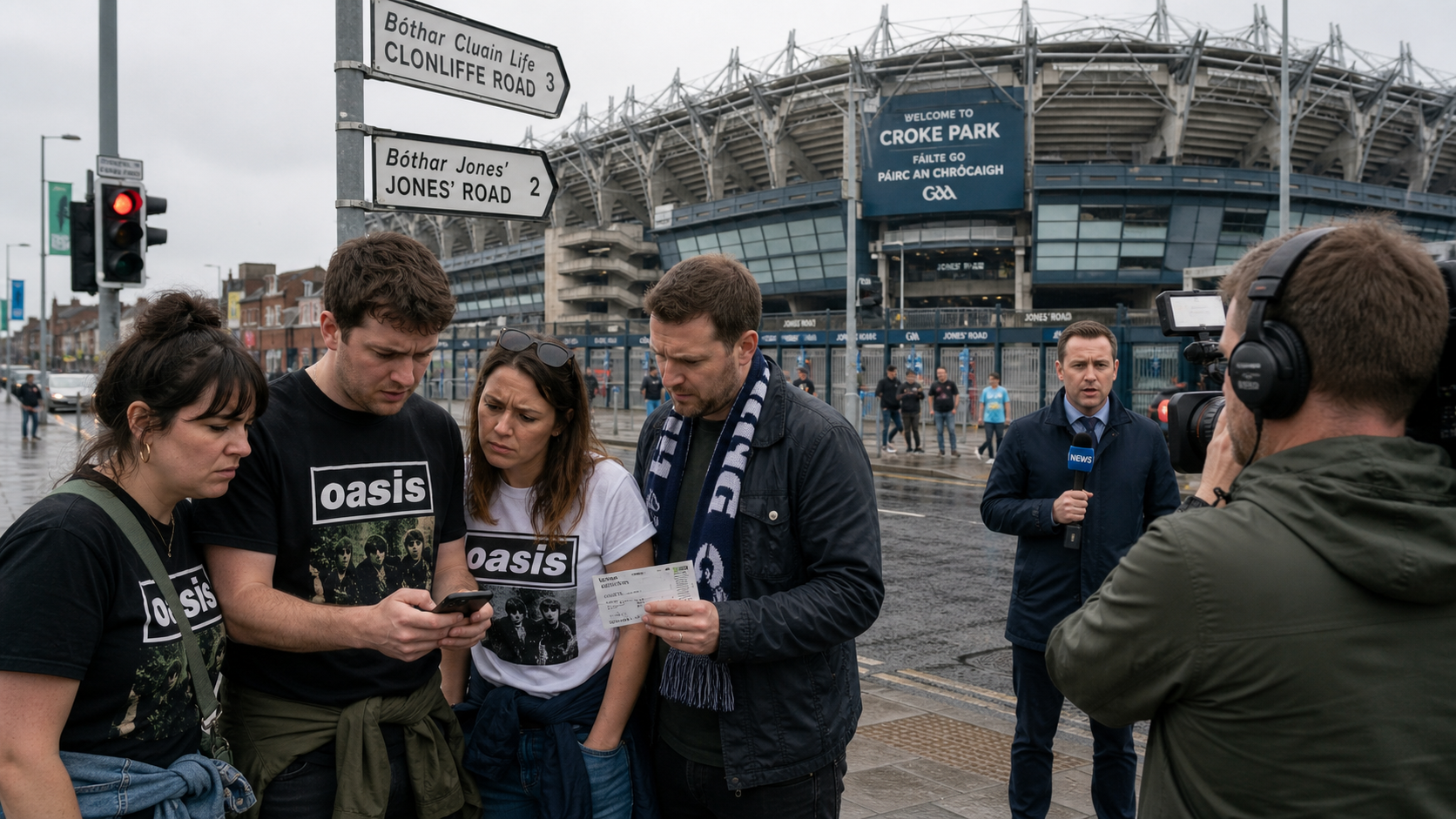
Ticketmaster Faces Consumer Law Trial Over Oasis Croke Park Ticket Sales as CCPC Brings Charges
The Competition and Consumer Protection Commission has initiated legal proceedings against Ticketline Unlimited Company, trading as Ticketmaster, over the sale of tickets for the 2025 Oasis reunion concerts at Croke Park in Dublin. The company faces two charges under the Consumer Protection Act 2007 — alleging misleading commercial practices and the provision of unclear, ambiguous, or untimely pricing information — and has indicated that it intends to contest the charges fully. The case, which was adjourned until October 5 at the Dublin District Court, is expected to last three to four days and will involve approximately a dozen witnesses.
Background
The Oasis reunion concerts at Croke Park in August 2025 were among the most anticipated live music events in Irish history, drawing hundreds of thousands of fans to Dublin over two nights. The ticket sale, which took place on August 31, 2024, was characterised by extraordinary demand and significant controversy over the use of "dynamic pricing" — a system under which ticket prices increase in response to demand, in the same way that airline or hotel prices fluctuate. The controversy centred on the fact that standing tickets, which had been advertised at €176 during the pre-sale, rose to over €400 during the general sale as demand surged.
The CCPC launched an investigation into the ticket sale following a large volume of complaints from consumers who felt they had been misled about the price they would pay for tickets. The investigation focused on two specific aspects of Ticketmaster's conduct: the sale of "Platinum" tickets, which were offered at a premium price but provided no additional benefits over standard tickets in the same venue areas; and the manner in which pricing information was communicated to consumers during the sale process.
The controversy in Ireland was part of a broader international debate about Ticketmaster's practices. In the United Kingdom, the Competition and Markets Authority investigated the company's handling of the same tour and secured commitments from Ticketmaster to provide greater transparency for future sales, including notifying fans 24 hours in advance if a tiered pricing system is in use and offering clearer information during online queues. The CCPC's decision to pursue criminal charges rather than seek voluntary commitments represents a more aggressive regulatory approach than that taken by the CMA.
Key Developments
The CCPC has brought two specific charges against Ticketmaster before the Dublin District Court. The first alleges that the company offered "Platinum" tickets in a manner likely to deceive the average consumer regarding the product's main characteristics and specifications — specifically, that these tickets provided no additional benefits over standard tickets in the same venue areas, despite being sold at a significantly higher price. The second charge alleges that Ticketmaster provided material information regarding ticket prices in an unclear, unintelligible, ambiguous, or untimely manner, which likely influenced consumers to make transactional decisions they otherwise would not have made.
Legal representatives for Ticketmaster indicated at the initial court appearance that the company intends to fully contest both charges. The defence anticipates calling approximately a dozen witnesses, including expert witnesses, and expects the trial to last three to four days. The case was adjourned until October 5 to facilitate the disclosure of prosecution documents. If convicted, Ticketmaster could face significant fines under the Consumer Protection Act 2007.
The CCPC's decision to bring criminal charges is significant. The Commission has the power to pursue both civil and criminal enforcement actions, and the choice to pursue criminal charges signals that it regards Ticketmaster's conduct as sufficiently serious to warrant the higher standard of proof and the more severe potential penalties that criminal proceedings entail. The case will be closely watched by the live music industry, consumer advocacy groups, and other ticketing companies operating in Ireland.
Why It Matters
The Ticketmaster case is part of a broader global debate about the power of dominant ticketing platforms and their impact on consumers. Ticketmaster, which is owned by Live Nation Entertainment, controls a dominant share of the primary ticketing market in Ireland, the UK, and the United States. Its market position gives it significant leverage over both artists and consumers, and critics have long argued that this leverage is used in ways that are harmful to competition and to consumer welfare.
The dynamic pricing controversy that surrounded the Oasis ticket sale highlighted a specific aspect of this broader problem: the use of algorithmic pricing to extract maximum revenue from consumers who have no alternative source for tickets to high-demand events. The practice is legal in principle, but the CCPC's charges suggest that the manner in which it was implemented in the Oasis sale crossed the line into misleading commercial practice. The distinction between legal dynamic pricing and illegal misleading conduct is one that the court will need to draw carefully, and the outcome of the case will have significant implications for how ticketing companies operate in Ireland in the future.
For the hundreds of thousands of Irish fans who bought tickets for the Oasis concerts, the CCPC's action represents a form of vindication — an acknowledgement that their sense of having been misled was not simply a matter of buyer's remorse but a genuine consumer protection issue. Whether the prosecution succeeds or not, the case has already had an impact on the public debate about ticketing practices and has prompted calls for stronger regulation of the sector.
Local Impact
In Dublin, where the Oasis concerts took place, the CCPC's action has been broadly welcomed by consumer advocacy groups and by the many fans who felt they were overcharged for tickets. The Irish League of Credit Unions, which has been campaigning for stronger consumer protections in the ticketing sector, has called on the government to introduce legislation requiring greater transparency in ticket pricing. The Live Music Venue Alliance, which represents smaller venues across Ireland, has also welcomed the CCPC's action, arguing that the dominance of large ticketing platforms is damaging to the broader live music ecosystem. The case is expected to be a significant test of the CCPC's enforcement powers and of the Consumer Protection Act 2007's applicability to digital ticketing platforms.
What's Next
The case returns to the Dublin District Court on October 5, when the prosecution is expected to disclose its documents to the defence. A trial date is expected to be set at that hearing, with the trial itself likely to take place in early 2027. The CCPC has indicated that it will continue to monitor the ticketing sector and that it is prepared to take further enforcement action if necessary. The government is expected to publish a review of the Consumer Protection Act 2007 before the end of 2026, which may include proposals for strengthening the legislation in response to the issues raised by the Oasis ticket sale controversy.