Stormont on the Brink as DUP Accuses O'Neill of Defying Rule of Law in Drumcree Crisis
The Northern Ireland Executive is facing its most serious political crisis since the restoration of devolution, with DUP leader Gavin Robinson accusing First Minister Michelle O'Neill of breaching her Pledge of Office by joining protests against the Parades Commission's Drumcree ruling — while political commentators warn that both major parties appear to be using the crisis to mobilise their bases ahead of the Assembly election due by May 2027, raising the spectre of institutional collapse before that election takes place.
Background
The Northern Ireland Executive has operated under the power-sharing arrangements of the Good Friday Agreement since 1998, with periods of suspension and restoration that have tested the resilience of the institutions on multiple occasions. The most recent restoration, following the DUP's withdrawal over the Northern Ireland Protocol, was achieved after protracted negotiations and was widely welcomed as a sign that the institutions had matured sufficiently to withstand political pressure. The Drumcree crisis has now placed those institutions under a different kind of strain — one that cuts to the heart of the competing obligations that power-sharing imposes on its participants.
The Pledge of Office that all ministers take upon appointment commits them to upholding the rule of law and to acting in accordance with the principles of the Good Friday Agreement. The DUP's argument is that First Minister O'Neill's participation in the protest against the Parades Commission's ruling — a ruling that was upheld by the High Court — constitutes a breach of that pledge. Sinn Féin's counter-argument is that the ruling itself raises fundamental questions about the peace process and that standing with the community is consistent with the values that underpin the Agreement.
The dispute has exposed a fundamental tension within the power-sharing model: the requirement that parties govern together even when they hold diametrically opposed views on issues of profound symbolic and political significance. The Drumcree parade is not merely a logistical question about a march route; it is a flashpoint that touches on identity, history, and the contested meaning of the peace process itself.
Key Developments
DUP leader Gavin Robinson has questioned Sinn Féin's ability to deliver on key infrastructure and economic projects — including the A5 road, Casement Park, and the expansion of the Ulster University Magee campus — arguing that the party's governance record at Stormont has been characterised by stasis and failure. Robinson's criticism reflects a broader DUP strategy of challenging Sinn Féin's competence as a governing party, rather than simply opposing it on constitutional grounds.
Sinn Féin has faced internal and external criticism regarding its governance, with reports suggesting that support for the party has slipped amid perceived stasis at Stormont. The party's decision to join the Garvaghy Road protest has been defended by its leadership as a principled stand, but critics within the nationalist community have questioned whether the party's participation has helped or hindered the prospects for a negotiated resolution.
Northern Ireland Secretary Chris Bryant has been involved in high-level talks with political leaders in an attempt to stabilise the situation. Bryant has called on all parties to prioritise the institutions and to avoid actions that could lead to their collapse, warning that a return to direct rule would be a serious setback for Northern Ireland's political development.
Why It Matters
The stability of the Stormont institutions matters because they are the primary vehicle through which Northern Ireland's devolved government delivers public services, manages its budget, and makes decisions about the future of the region. A collapse of the Executive would mean a return to direct rule from Westminster — a scenario that would be deeply unwelcome to both communities and that would remove Northern Ireland's ability to shape its own policy agenda at a time of significant economic and social challenge. The Assembly election, which must be held by May 2027, provides a democratic mechanism for resolving political disputes, but only if the institutions survive long enough to reach that point.
The crisis also matters because it illustrates the limits of the power-sharing model when confronted with issues that cut to the core of communal identity. The Good Friday Agreement was designed to manage difference, not to eliminate it, and the Drumcree dispute is a reminder that the differences it was designed to manage remain profound and unresolved. The question of how to balance the rights of the Orange Order to march with the rights of the Garvaghy Road residents to live without intimidation is one that the peace process has not yet answered definitively.
Local Impact
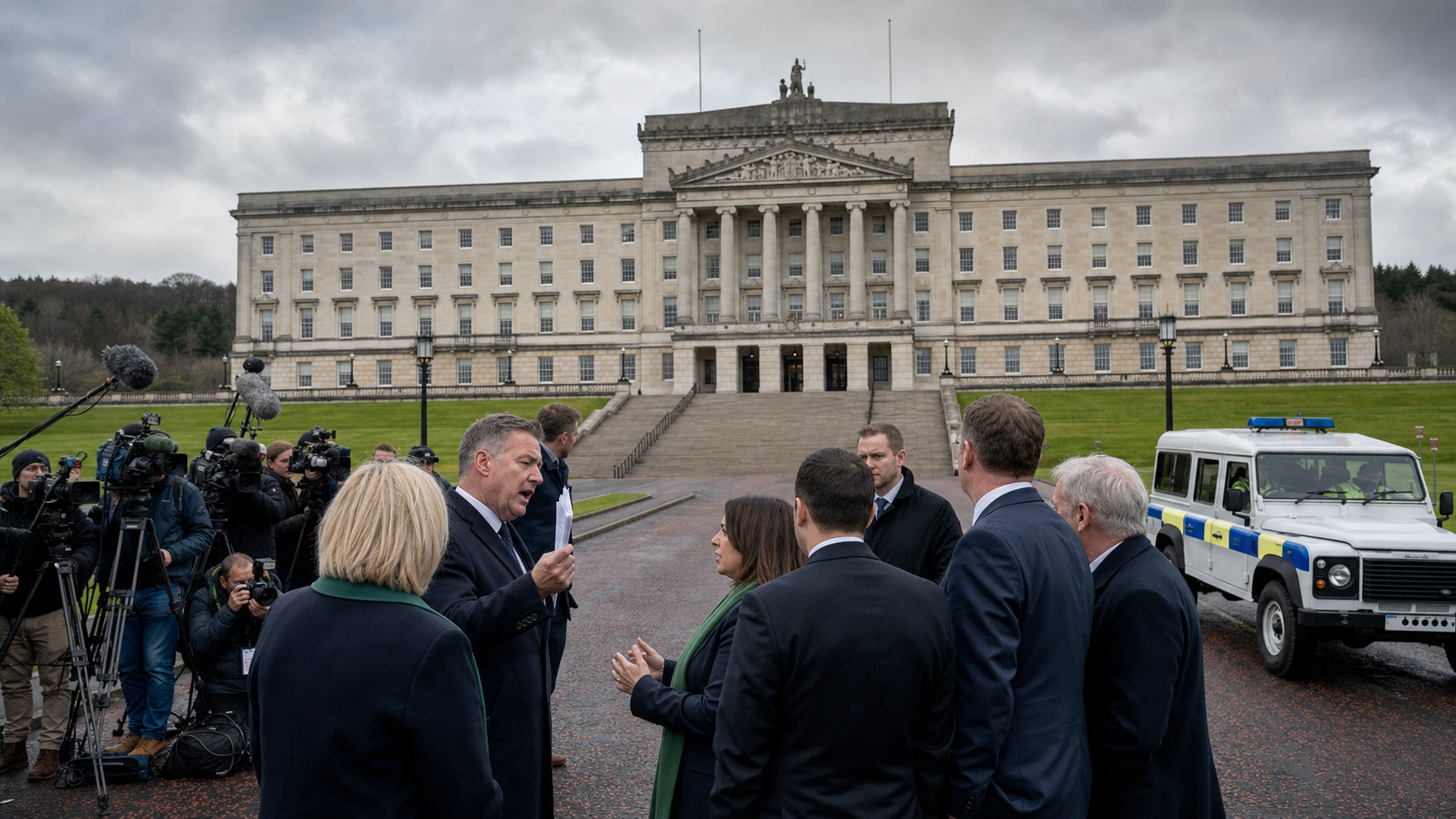
At Stormont itself, the crisis has disrupted the normal business of the Assembly, with scheduled debates and committee meetings postponed or overshadowed by the Drumcree emergency. Ministers from both the DUP and Sinn Féin have been diverted from their departmental responsibilities to manage the political fallout, creating a backlog of decisions on issues ranging from health service reform to infrastructure investment. In constituencies across Northern Ireland, elected representatives are fielding calls from constituents who are concerned about the stability of the institutions and the impact of the crisis on public services. The sense of political uncertainty is palpable, and community leaders across the province have urged politicians to prioritise the institutions over party advantage.
What's Next
The Assembly is expected to debate the Drumcree crisis when it sits later this week. Northern Ireland Secretary Bryant has indicated that he will continue talks with all parties and has not ruled out convening a formal multi-party process to address the underlying issues. The Assembly election must be held by May 2027, and the question of whether the institutions will survive until then is now genuinely open. Political analysts have identified the next two to three weeks as critical — if a resolution to the Drumcree standoff can be found, the immediate threat to the institutions may recede; if not, the pressure for an early election or a return to direct rule will intensify.