FAI Faces Oireachtas Reckoning Over Israel Fixtures as Goalkeepers' Exclusion from Vote Revealed
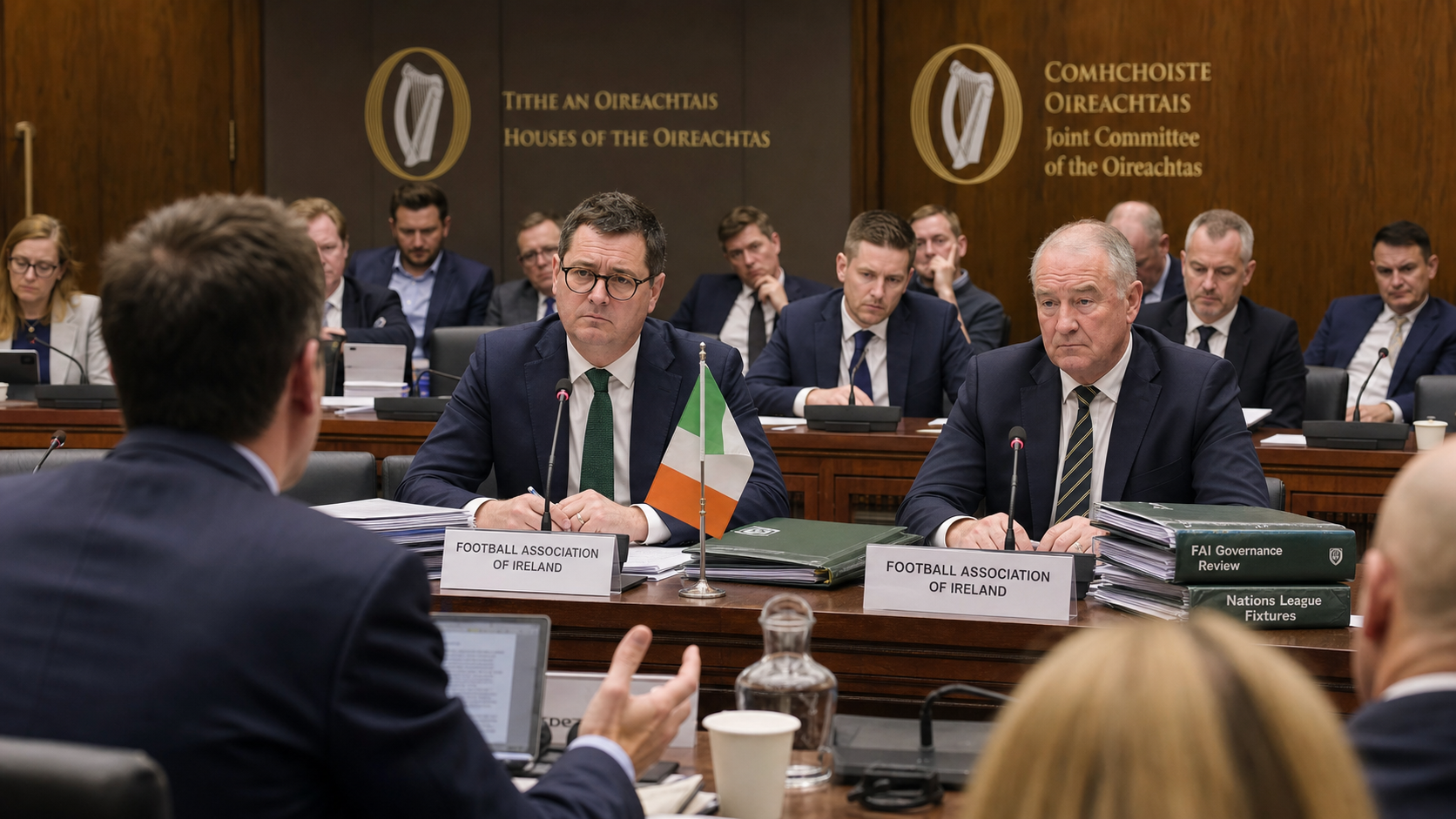
Senior Football Association of Ireland officials faced a searching Oireachtas committee hearing on Tuesday over the association's decision to fulfil UEFA Nations League fixtures against Israel, with TDs extracting the admission that the goalkeeping unit — including Gavin Bazunu — was never consulted in the player vote that determined whether the games would go ahead.
Background
The controversy surrounding Ireland's Nations League fixtures against Israel has been one of the most divisive episodes in Irish football in a generation. The conflict in Gaza, and Ireland's response to it, has generated intense public debate, and the question of whether the national football team should play against Israel — a country whose military actions in Gaza have been condemned by the Irish government and by a significant majority of the Irish public — has divided players, supporters, and politicians.
The FAI conducted two separate player votes to gauge support for playing the fixtures, ultimately proceeding with both games after a "significant majority" of players voted in favour. Ireland won the first fixture 3-0, with goals from Troy Parrott, Adam Idah, and Jack Moylan. The second fixture, against Israel in Serbia, is scheduled for Sunday. The controversy has not abated despite the result, with protest groups planning demonstrations at the Aviva Stadium and political pressure on the FAI continuing to mount.
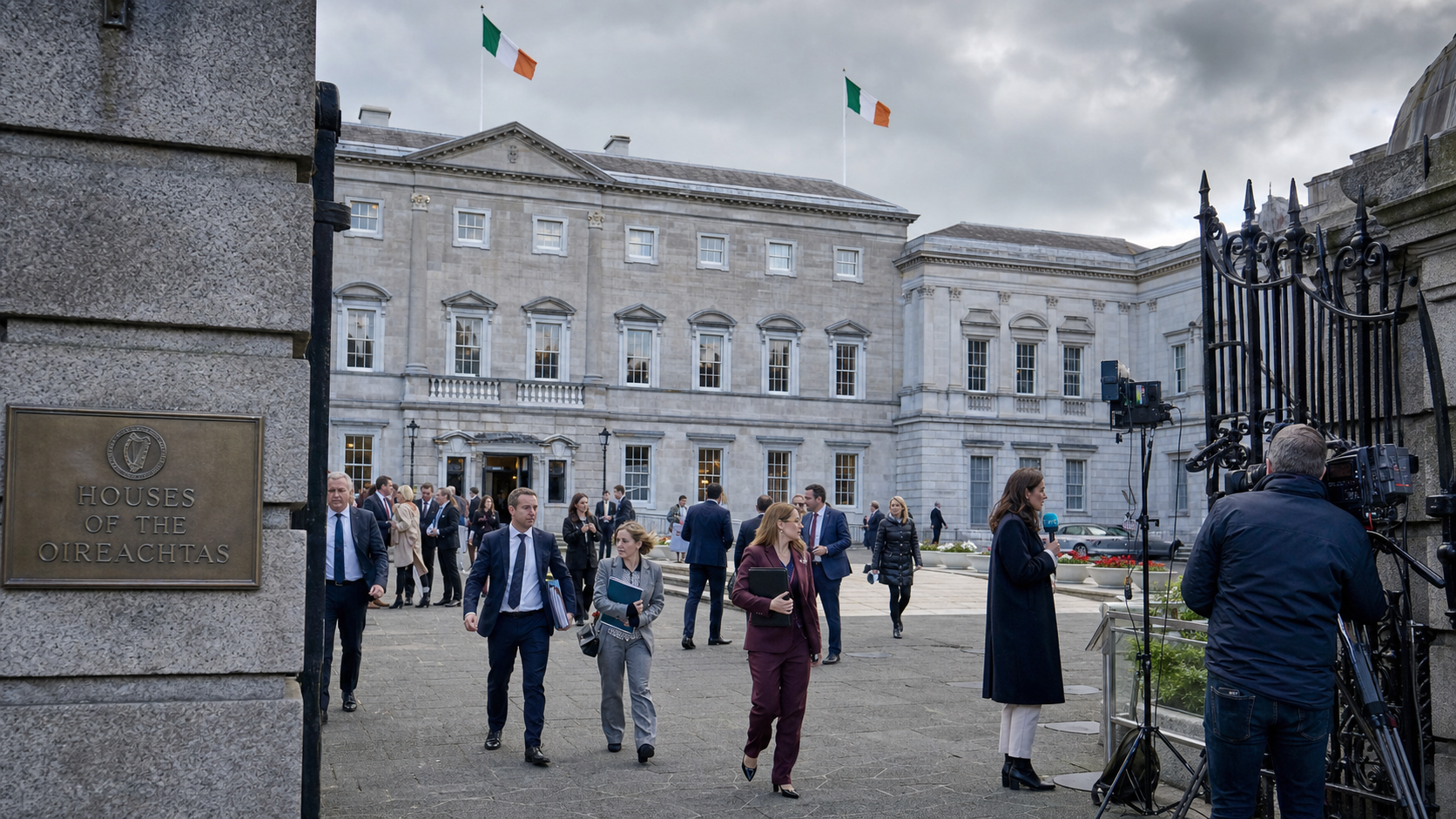
The Oireachtas Committee on Arts, Media, Communications, Culture and Sport called FAI CEO David Courell and president Paul Cooke to appear before it on Tuesday, in a hearing that covered not only the Israel fixtures but also broader governance and safeguarding concerns within the organisation.
Key Developments
The most damaging revelation of the hearing was the admission by FAI Director of Football John Martin that the goalkeeping unit had not been consulted in the player vote. "Truthfully, it appears nobody talked to the goalkeepers," Martin told the committee — a statement that drew sharp criticism from TDs who argued it undermined the FAI's claim that the decision to play had the full support of the squad.
Courell defended the decision to proceed as a "difficult institutional decision" made in the best interests of Irish football, citing the financial consequences of refusal. He estimated that withdrawing from the fixtures would have cost the FAI €5.5 million in immediate penalties, with the potential for further losses through UEFA sanctions. He explicitly rejected claims that the FAI was complicit in "sports washing" or genocide.
The withdrawal of Gavin Bazunu from the first fixture was a central topic. FAI officials clarified that Bazunu was not excluded from the voting process but chose not to participate following personal consultation with his family. Bazunu has since returned to the squad for the Austria fixture on Thursday evening.
Several TDs, including Joanna Byrne and Richard Boyd Barrett, called for the resignation of the FAI board and CEO, arguing that the association had failed to provide adequate support to players who had moral objections to playing. The "Stop the Game" campaign has called for a boycott of Sunday's fixture in Serbia.
Why It Matters
The FAI's appearance before the Oireachtas committee is significant because it represents a rare moment of political accountability for a sporting body that has historically operated with considerable autonomy. The committee's ability to compel senior officials to answer questions in public — and to extract admissions like the goalkeepers' exclusion from the vote — demonstrates the value of parliamentary oversight of organisations that receive public funding and exercise significant public influence.
The broader question of whether sporting bodies should be required to consider the political and ethical implications of their fixture schedules is one that goes well beyond Irish football. The FAI's experience with the Israel fixtures will be studied by other national associations facing similar dilemmas, and the Oireachtas hearing has added a new dimension to that debate by establishing that political accountability is a real and meaningful constraint on sporting bodies' freedom of action.
Local Impact
The controversy has divided Irish football supporters, with some arguing that the team should have refused to play on moral grounds and others contending that sport and politics should be kept separate. In Dublin, where the Aviva Stadium is located, protest groups have been active in the weeks leading up to the Austria fixture, and a significant demonstration is expected outside the ground on Thursday evening. The FAI has indicated it is working with the Garda Síochána to manage the security situation around the game. For players who have moral objections to the Israel fixtures, the experience of navigating public pressure, political scrutiny, and team dynamics simultaneously has been described by several as the most difficult of their careers.
What's Next
Ireland faces Austria at the Aviva Stadium on Thursday evening in a Nations League B fixture, with kick-off at 7:45pm. The second Israel fixture — in Serbia — is scheduled for Sunday. Heimir Hallgrímsson has confirmed that Ireland will fulfil the fixture, describing the decision as "already made". The FAI has indicated it will cooperate with any further Oireachtas scrutiny and has committed to reviewing its player consultation processes ahead of future controversial fixtures. A full governance review, covering safeguarding and other issues raised at Tuesday's hearing, is expected to be published before the end of the year.