Stormont on the Brink as DUP Threatens No-Confidence Motion Against O'Neill Over Drumcree Protest
Northern Ireland's power-sharing executive is facing its most serious internal crisis in years as the Democratic Unionist Party threatens a formal no-confidence motion against First Minister Michelle O'Neill over her participation in the Garvaghy Road protest, while Sinn Féin accuses the DUP of exploiting the Drumcree dispute to destabilise the institutions — a confrontation that has brought normal Assembly business to a standstill.
Background
The Good Friday Agreement's power-sharing arrangements require the DUP and Sinn Féin to govern Northern Ireland together, regardless of their political differences. This mandatory coalition — unique in democratic politics — has survived numerous crises over the past quarter century, including the collapse of the executive in 2017 and the three-year suspension that followed. The current crisis, triggered by the Drumcree parading dispute, is testing the arrangements in a new and particularly acute way.
First Minister Michelle O'Neill's decision to attend the Garvaghy Road protest — alongside Sinn Féin president Mary Lou McDonald — has been characterised by the DUP as a fundamental breach of the First Minister's duty to uphold the rule of law. The PSNI has described the protest as "unlawful", and a criminal investigation is under way. The DUP argues that a First Minister who participates in an unlawful protest has forfeited the moral authority to hold the office.
Sinn Féin's position is that O'Neill was exercising her democratic right to stand with a community that has been denied its rights, and that the DUP's response is a politically motivated attempt to use the Drumcree crisis to undermine the power-sharing arrangements. The party has accused the DUP of "goading" it into a confrontation that would allow unionists to collapse the executive and blame nationalists for the consequences.
Key Developments
DUP MP Gavin Robinson has claimed that Sinn Féin is trying to "goad" him into collapsing Stormont, while simultaneously threatening a no-confidence motion against the First Minister. The apparent contradiction — threatening action while accusing the other side of provoking it — reflects the complex political dynamics at play. The DUP is under pressure from its own base to take a strong stand, but is also aware that collapsing the executive would carry significant political and reputational costs.
DUP MLA Paul Givan has called for a boycott of a meeting convened to discuss the Drumcree situation, citing what he described as "unacceptable behaviour" by Sinn Féin. The boycott has further disrupted the normal functioning of the Assembly, adding to the sense that the institutions are under severe strain.
O'Neill has defended her decision to attend the Garvaghy Road protest, saying she "stands over" her choice to support the residents. She has rejected the DUP's characterisation of her actions as unlawful, arguing that peaceful protest is a fundamental democratic right. The PSNI's investigation into the protest is ongoing, and its outcome could significantly affect the political dynamics of the dispute.
Why It Matters
The threat of a no-confidence motion against the First Minister is not merely a political manoeuvre — it is a test of whether the power-sharing arrangements can survive a crisis of this magnitude. The Good Friday Agreement's institutions were designed to manage exactly this kind of intercommunal tension, but they depend on the willingness of both sides to remain within the framework even when they are deeply at odds. If the DUP proceeds with a no-confidence motion and the executive collapses, the consequences for public services, political stability, and the peace process would be severe.
The crisis also exposes a fundamental tension in the power-sharing model: the requirement to govern together does not require the parties to agree, but it does require them to maintain a basic level of institutional trust. When that trust breaks down — as it appears to be doing now — the mechanisms for restoring it are limited and slow. The British and Irish governments, as co-guarantors of the Good Friday Agreement, have a role to play in managing the crisis, but their ability to intervene directly in the internal politics of the executive is constrained.
Local Impact
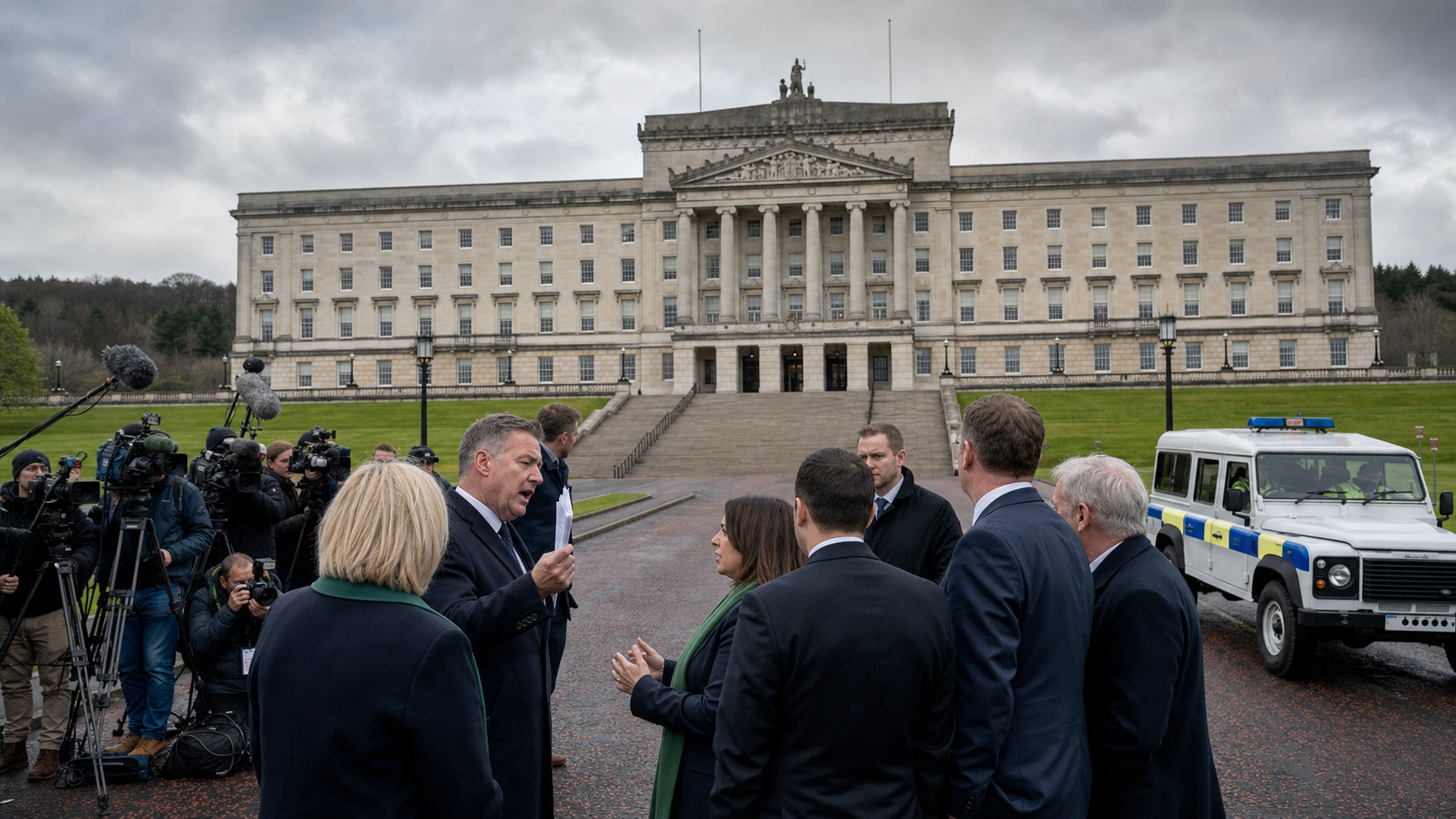
The political crisis at Stormont has real consequences for the people of Northern Ireland. Decisions on health, education, infrastructure, and social services are being delayed as the executive is consumed by the Drumcree dispute. In Belfast, where the Assembly sits, the atmosphere at Stormont has been described by officials as "toxic", with normal working relationships between DUP and Sinn Féin ministers severely strained. In Portadown, the political crisis adds to the tension already generated by the parading dispute itself. Across Northern Ireland, there is a growing sense of frustration among the public that the political class is once again prioritising constitutional and communal conflict over the practical business of government.
What's Next
The DUP has not yet formally tabled a no-confidence motion, and there is speculation that the threat is primarily a political pressure tactic rather than a firm intention. The outcome of the fresh legal challenge lodged by the Garvaghy Road Residents Coalition — which is expected to be heard in the coming days — could significantly alter the political dynamics. If the court grants an injunction blocking the march, the immediate pressure on the DUP to act is reduced. If it refuses, the question of how the march is managed returns to the political arena with renewed urgency. The British and Irish governments are expected to intensify their engagement with all parties in the coming days in an effort to prevent the crisis from escalating further.