Taoiseach Tells UN General Assembly the World Has 'Failed Palestine' as Gaza Horrors Will 'Shame the World'
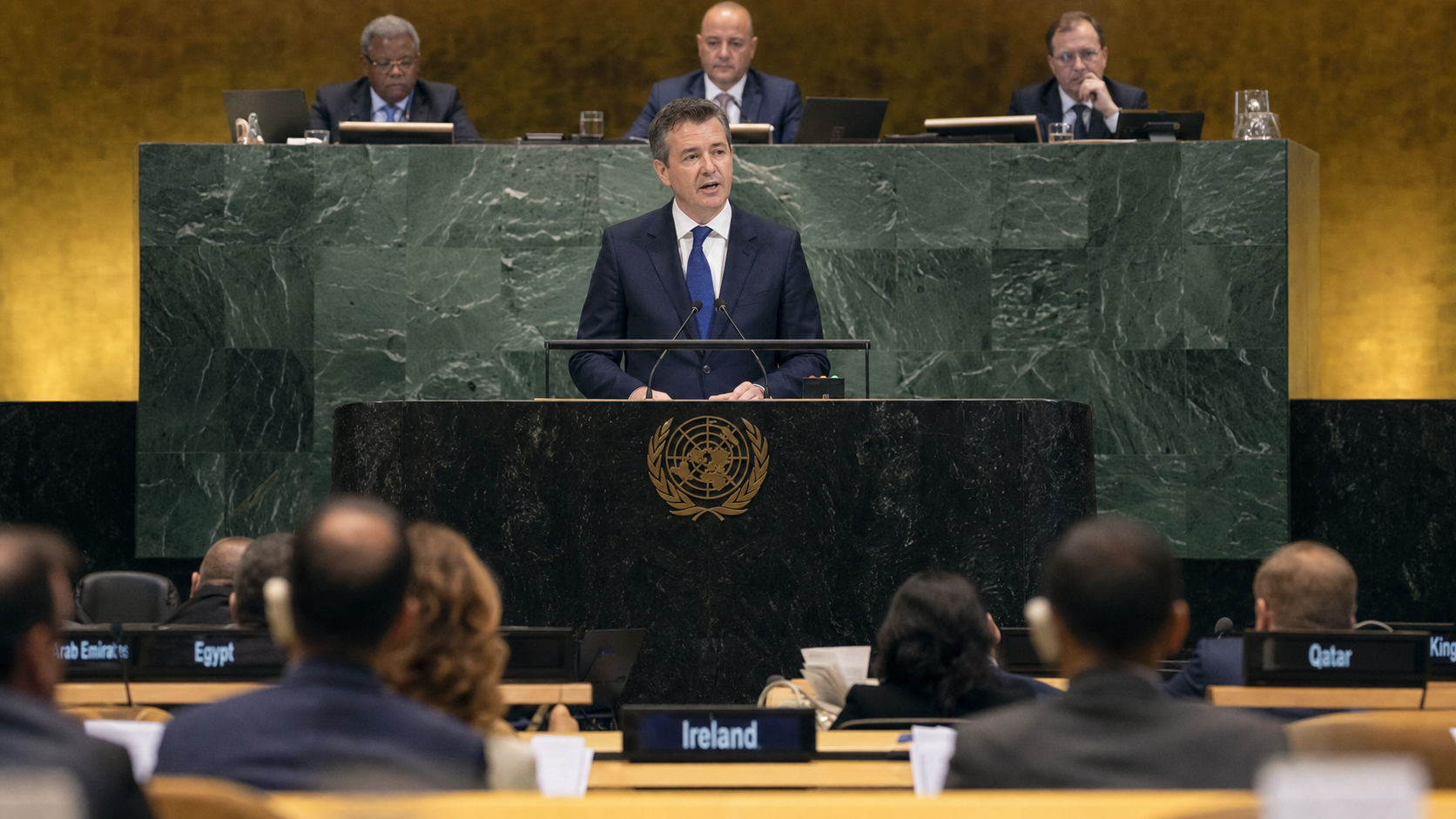
Taoiseach Micheál Martin has delivered one of the most direct condemnations of the international community's response to the Gaza conflict ever made by an Irish head of government, telling the United Nations General Assembly in New York that the world has failed Palestine and that when the full scale of the horrors in Gaza is revealed, it will be a source of global shame. Speaking at the 81st session of the UNGA on September 24 and 25, the Taoiseach called on world leaders to apply sustained pressure on Israel to cease military operations and to allow unimpeded humanitarian access to the civilian population of Gaza.
Background
Ireland's position on the Israel-Palestine conflict has been among the most clearly articulated of any EU member state, reflecting a long-standing tradition of Irish solidarity with peoples living under occupation and a foreign policy that places international law and human rights at its centre. The Irish government recognised the State of Palestine in May 2024, alongside Norway and Spain, in a move that drew fierce criticism from Israel and warm praise from Palestinian leaders. Since then, Ireland has been at the forefront of EU efforts to increase pressure on Israel over its military campaign in Gaza, which has resulted in the deaths of tens of thousands of Palestinian civilians and the displacement of the vast majority of Gaza's population.
The Taoiseach's attendance at the UNGA High-Level Week is an annual fixture in the Irish diplomatic calendar, providing an opportunity to engage with world leaders, advance Ireland's foreign policy priorities, and demonstrate the country's commitment to multilateralism and the rules-based international order. This year's UNGA has been dominated by the Gaza conflict, the war in Ukraine, and the risks posed by emerging technology to democratic processes — all issues on which Ireland has taken clear positions.
The UN proceedings were marked by significant tension, with dozens of envoys walking out during a speech by Israeli Prime Minister Benjamin Netanyahu. Ireland did not participate in the walkout, a decision that reflects the government's preference for engagement over symbolic gestures, though the Taoiseach's own address left no ambiguity about Ireland's assessment of the situation in Gaza.
Key Developments
In his address to the UNGA, the Taoiseach stated that the world has failed Palestine and that the international community's inability to bring the conflict to an end represents a profound moral failure. He warned that when the full scale of the horrors in Gaza is revealed — the civilian casualties, the destruction of hospitals and schools, the collapse of the food and water supply — it will be a source of shame for the entire international community. He called on all member states to use whatever leverage they possess to pressure Israel to agree to a ceasefire and to allow unimpeded humanitarian access.
The Taoiseach also co-hosted a high-level UN side event on Security in Politics alongside European Commissioner Michael McGrath, focusing on the risks of algorithmically generated disinformation to democratic processes — an issue that Ireland has been championing in its capacity as a hub for major technology companies and as a country with a strong tradition of democratic governance. He met New York Mayor Zohran Mamdani and engaged with a range of world leaders on the sidelines of the UNGA, including discussions on the situation in Ukraine and Ireland's forthcoming EU Council presidency.
The Taoiseach's remarks on Gaza were welcomed by Palestinian representatives and by Irish civil society organisations working on humanitarian issues in the region. The Israeli government has not yet formally responded to the Taoiseach's UNGA address, though the Israeli Football Association's recent attack on Republic of Ireland manager Heimir Hallgrímsson — accusing him of "stupidity, ignorance and hypocrisy" over his comments on the conflict — reflects the broader deterioration in Irish-Israeli relations since Ireland's recognition of Palestinian statehood.
Why It Matters
Ireland's voice at the UNGA carries weight disproportionate to the country's size, for several reasons. Ireland's history of colonialism and partition gives it a particular credibility when speaking about the rights of peoples living under occupation. Its tradition of military neutrality and its long record of participation in UN peacekeeping operations — including UNIFIL in Lebanon, where Irish troops have served for decades — give it a standing in the international community that larger, more powerful states sometimes lack. And its position as an EU member state with close ties to both the United States and the Global South allows it to act as a bridge between different blocs in international negotiations.
The Taoiseach's willingness to use the UNGA platform to make such a direct statement about the failure of the international community on Gaza reflects a calculation that Ireland's moral authority on this issue is best exercised through clear, unambiguous language rather than diplomatic hedging. Whether that approach will translate into concrete policy changes — a ceasefire, increased humanitarian access, a political process — remains to be seen, but it ensures that Ireland's position is clearly on the record at the highest level of international diplomacy.
Local Impact
In Ireland, the Taoiseach's UNGA address has been broadly welcomed by opposition parties and civil society organisations, though Sinn Féin has argued that the government's rhetoric on Gaza is not matched by sufficiently concrete action, including the expulsion of the Israeli ambassador and the imposition of sanctions. The Irish Congress of Trade Unions and a range of humanitarian organisations have called on the government to go further in its practical support for Palestinian civilians, including increased funding for UNRWA and the Irish Red Cross's Gaza operations. The government has indicated that it will continue to press for a ceasefire through EU channels and through Ireland's bilateral relationships with key players in the region.
What's Next
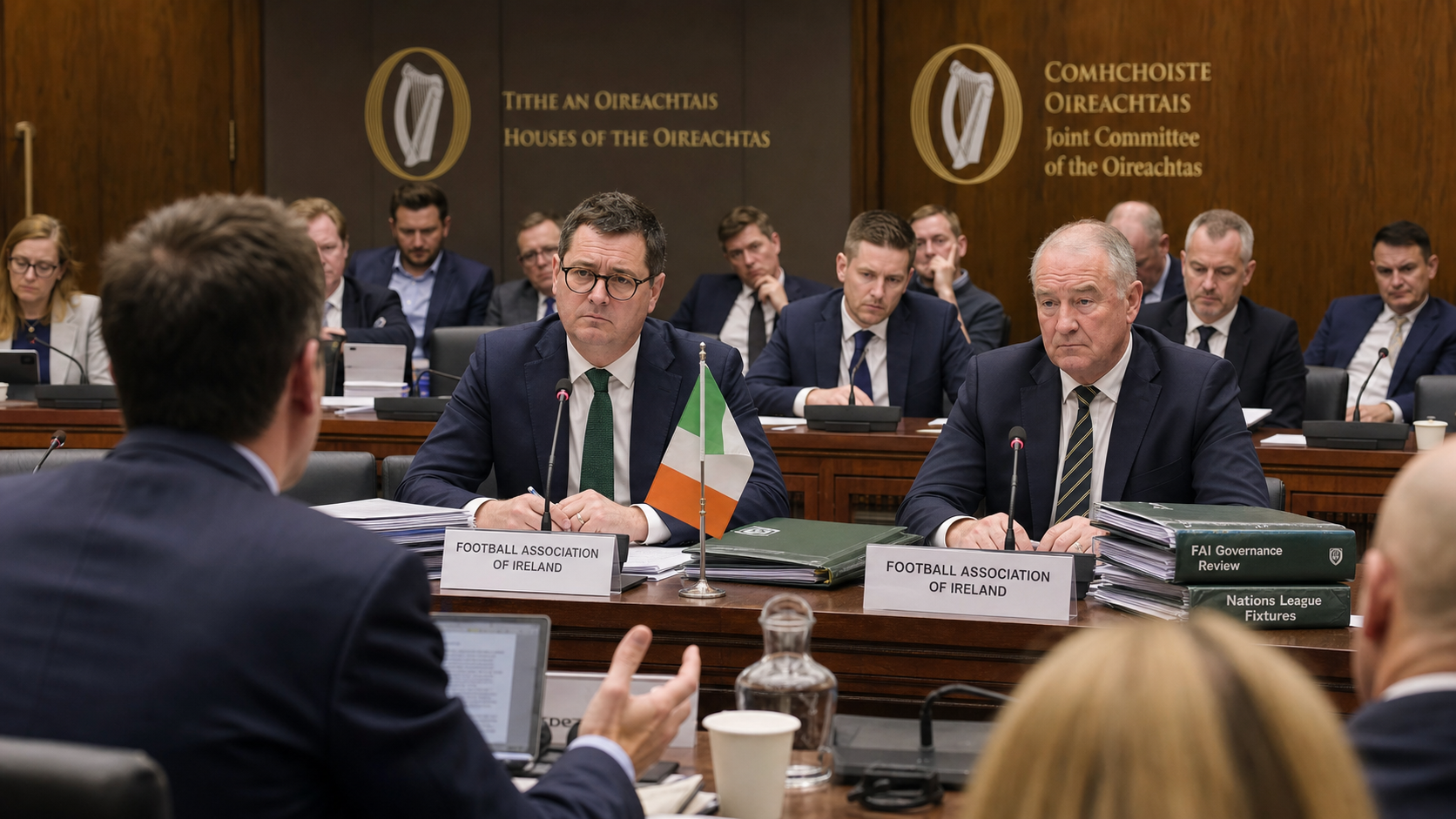
The Taoiseach is expected to return to Dublin before the end of the week, with a full schedule of domestic engagements ahead of Budget 2027 on October 6. Ireland's EU Council presidency, which begins in January 2027, will provide a further platform for the government to advance its foreign policy priorities, including on the Middle East. The government is also expected to make a further statement on the Republic of Ireland football team's upcoming Nations League fixture against Israel — scheduled for a neutral venue in Hungary — following Jason Knight's public suggestion that the match should not proceed. The Department of Foreign Affairs is monitoring the situation closely and has been in contact with UEFA about the arrangements for the fixture.