Taoiseach Rejects Oireachtas Committee Call for Emergency Eviction Ban as Homelessness Figures Hit Record High
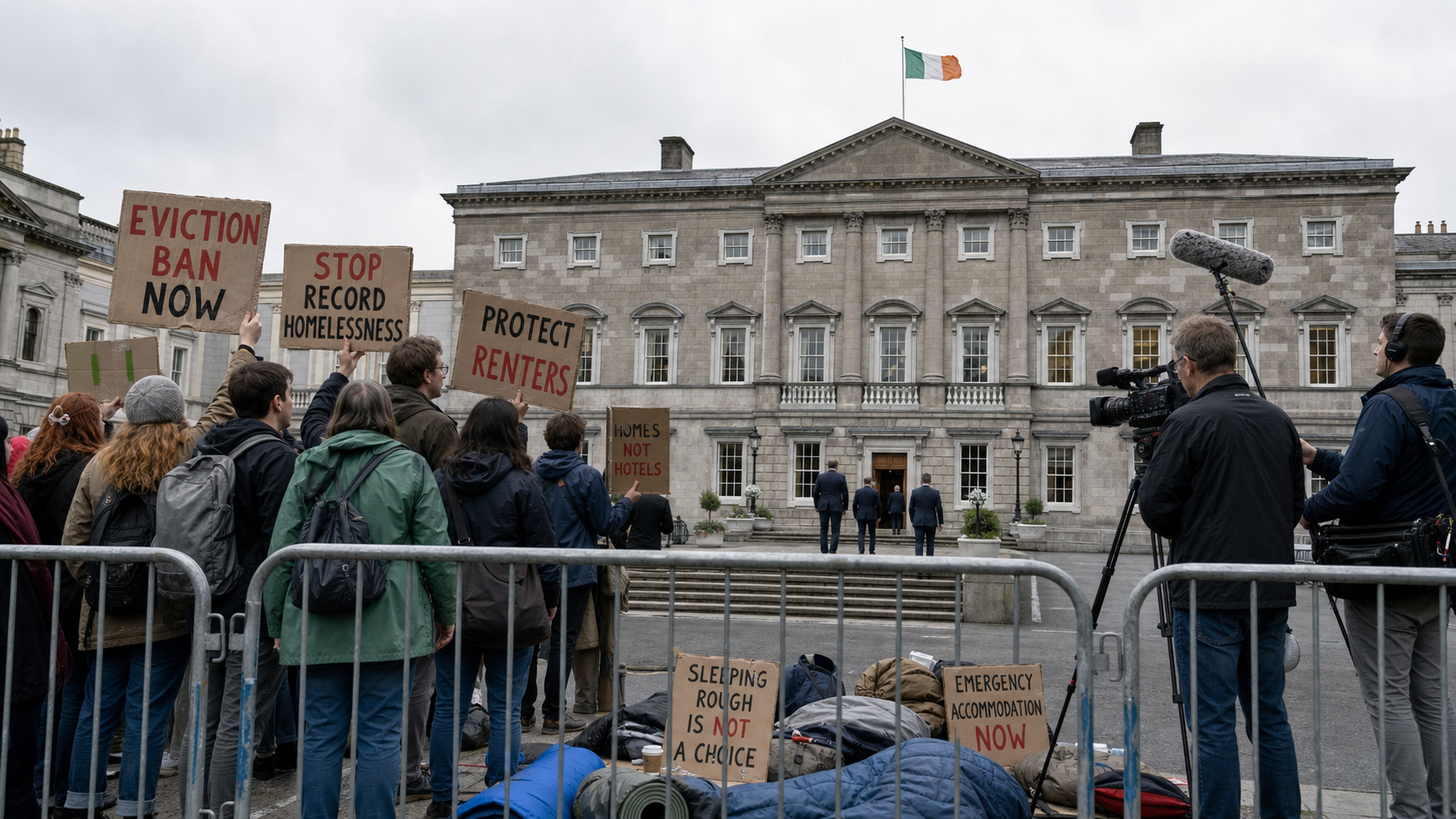
The Taoiseach has explicitly rejected a recommendation from the Oireachtas Housing Committee to implement another emergency eviction ban, insisting that such a measure would be counterproductive by suppressing housing supply and discouraging landlord investment, even as homelessness figures have reached a record high of over 17,000 people and the committee has warned that emergency accommodation services are at breaking point.
Background
Ireland has used emergency eviction bans on two previous occasions in recent years — during the Covid-19 pandemic and during the energy crisis of 2022-23 — as temporary measures to prevent a surge in homelessness during periods of acute economic stress. Each ban was controversial, with landlord organisations arguing that the measures discouraged investment in the rental sector and contributed to the long-term contraction of supply, while housing charities maintained that they provided essential protection for tenants at risk.
The current call for a third emergency ban comes against the backdrop of record homelessness figures. The number of people in emergency accommodation exceeded 17,000 in February 2026, including over 4,000 children, and the figures have remained at historically high levels throughout the year. Emergency accommodation services in Dublin, Cork, and Galway are operating at or beyond capacity, with some families being placed in hotels and bed-and-breakfast accommodation far from their communities and their children's schools.
The Oireachtas Housing Committee, which includes members from across the political spectrum, concluded after a series of hearings that the current situation constitutes an emergency that warrants emergency measures. The committee's recommendation for a ban was supported by a majority of its members, including some from government parties, reflecting the depth of concern about the scale of the crisis.
Key Developments
The Taoiseach's rejection of the committee's recommendation was unequivocal. Speaking this weekend, he argued that a further eviction ban would send the wrong signal to landlords at a time when the government is trying to encourage greater investment in the rental sector. The Tánaiste echoed this position, maintaining that supply-side solutions — building more homes — are the only sustainable answer to the housing crisis.
The government's position is that previous eviction bans, while providing short-term relief, contributed to the long-term contraction of the private rental sector by encouraging landlords to exit the market. Official figures show that the number of properties available to rent has fallen significantly over the past five years, and the government attributes a significant portion of this decline to the uncertainty created by emergency legislative interventions.
Opposition parties, including Sinn Féin, the Social Democrats, and People Before Profit, have condemned the rejection as evidence that the government is prioritising the interests of landlords over those of tenants and homeless families. Sinn Féin's housing spokesperson described the decision as "a betrayal of the 17,000 people sleeping in emergency accommodation tonight."
Why It Matters
The debate over the eviction ban encapsulates the fundamental ideological divide in Irish housing policy. The government's position — that supply is the only solution and that demand-side interventions are counterproductive — is coherent in economic theory but has struggled to translate into political credibility when homelessness figures are at record levels and families are being housed in hotels far from their communities.
The committee's recommendation reflects a different analysis: that the pace of supply-side solutions is simply too slow to address the immediate human crisis, and that emergency measures are justified when the alternative is leaving thousands of families in precarious and damaging circumstances. This is not a fringe position — it is supported by a majority of the Oireachtas Housing Committee and by the main housing charities.
The government's rejection of the ban also raises questions about the relationship between the executive and the Oireachtas committee system. If a cross-party committee makes a formal recommendation on a matter of urgent public concern and the government dismisses it without substantive engagement, it undermines the credibility of the committee process as a meaningful check on executive power.
Local Impact
In Dublin, where the homelessness crisis is most concentrated, the rejection of the eviction ban will be felt most acutely. Families in areas like Finglas, Ballymun, and Clondalkin who are at risk of eviction will have no additional protection beyond the existing notice-to-quit periods. In Cork, where the Simon Community has reported record demand for emergency accommodation, the decision means that the pressure on services will continue to intensify. Bus Éireann and Irish Rail have reported an increase in the number of families travelling long distances to access emergency accommodation, a consequence of the shortage of provision in major urban centres.
What's Next
The government has committed to publishing an updated housing action plan in the autumn, which it says will include measures to accelerate supply and to provide additional support for those at risk of homelessness. Opposition parties have indicated they will bring a Dáil motion calling for an emergency eviction ban before the summer recess, though it is unlikely to pass given the government's majority. The Oireachtas Housing Committee has said it will continue to monitor the situation and will publish a follow-up report in September.