Ireland Sizzles at 32.1°C as Thunderstorm Warnings Sweep 16 Counties and Climate Scientists Sound the Alarm
Ireland provisionally recorded its highest temperature of 2026 — 32.1°C at a weather station in Athenry, Co. Galway — on 25 June, as Met Éireann extended a Status Yellow thunderstorm warning to 16 counties and a rapid climate attribution study identified the event as the most severe heatwave ever recorded in Europe, with human-driven climate change identified as the primary cause.
Background
Ireland's relationship with extreme heat has changed dramatically in the past decade. A country that once defined itself by its mild, damp climate now faces the prospect of regular summer heatwaves that push temperatures into the low thirties — conditions that the country's infrastructure, housing stock, and public health systems were not designed to handle. The June 2026 event is the latest and most intense in a series of heatwaves that have tested Ireland's preparedness and accelerated the conversation about climate adaptation.
Met Éireann's warning system uses a colour-coded scale — Yellow, Orange, and Red — to communicate the severity of weather events. A Status Yellow warning indicates conditions that are significant but manageable with appropriate precautions. By the morning of 26 June, Yellow thunderstorm warnings were in effect for 16 counties, covering much of Munster, Connacht, and parts of Leinster, with the warnings cautioning of heavy downpours, localised flooding, and hazardous driving conditions as the hot air mass that had dominated the country for several days began to break down.
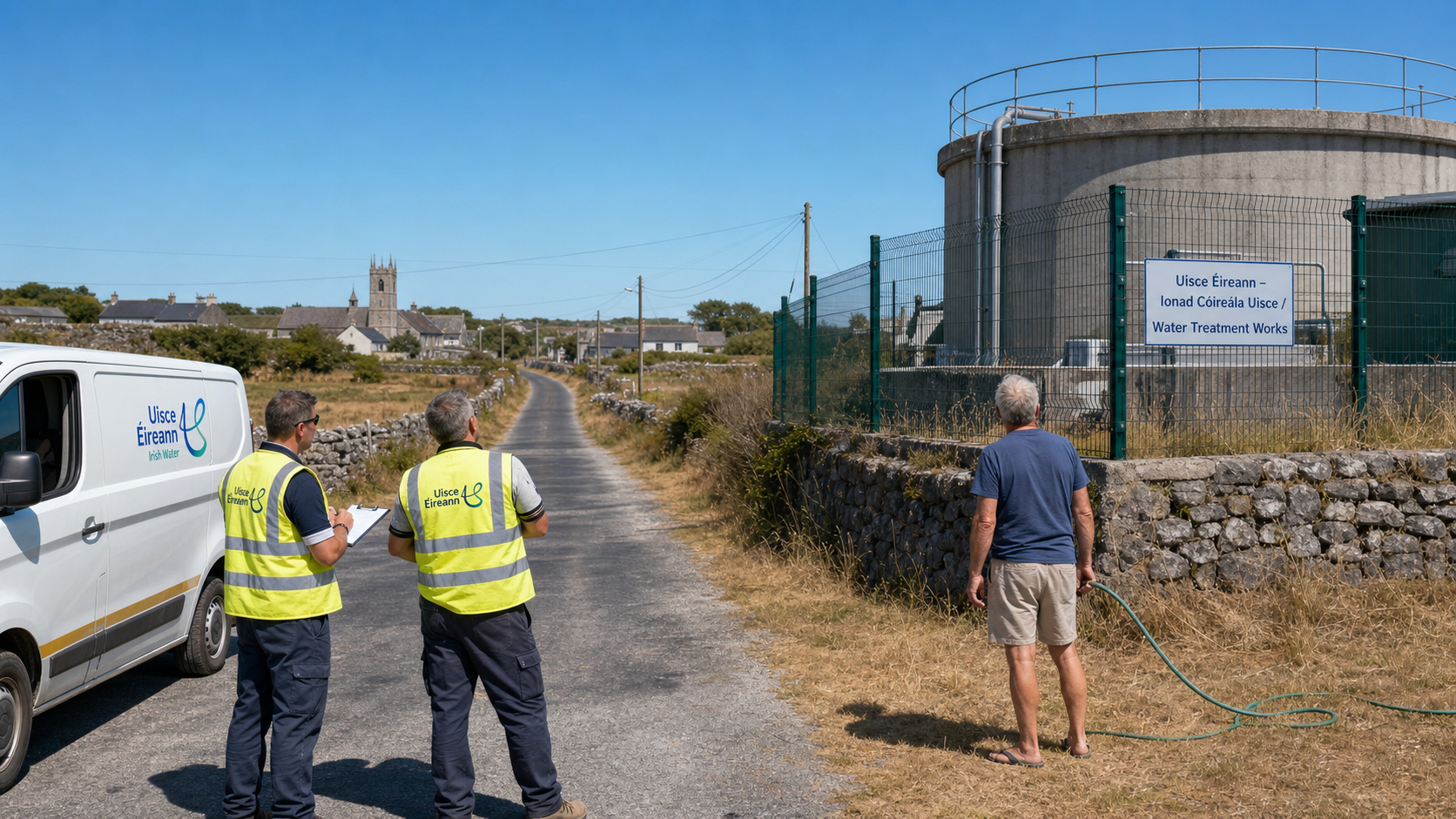
The heatwave arrived on the back of a sustained period of warm, dry weather that had already depleted soil moisture levels across much of the country and placed pressure on water supplies. Uisce Éireann, the national water utility, had been monitoring demand closely for several days before the peak temperatures arrived, and had begun implementing precautionary measures to protect network stability.
Key Developments
The provisional recording of 32.1°C at Athenry on 25 June broke the station's previous June record and contributed to multiple local records being broken across the country. Temperatures in Dublin reached 30°C for the first time since 2018, while Cork, Limerick, and Waterford all recorded temperatures in the high twenties. The heat was accompanied by high humidity levels that made the conditions feel significantly more oppressive than the thermometer readings alone suggested.
The HSE issued urgent public health guidance throughout the day, advising the public to stay in the shade between 11am and 3pm, to avoid strenuous physical activity, and to monitor their hydration levels carefully. The health service placed particular emphasis on the vulnerability of elderly people, young children, and those with chronic health conditions, and urged neighbours and community groups to check on vulnerable individuals in their area.
A rapid attribution study published on 26 June by World Weather Attribution, an international scientific group that analyses the link between extreme weather events and climate change, concluded that the June 2026 heatwave was the most severe ever recorded in Europe. The study found that human-driven climate change had made the event significantly more likely, and that cities including Dublin, Galway, Waterford, and Belfast were experiencing unprecedented levels of heat stress. The report called for urgent investment in urban cooling infrastructure and public health preparedness across the island.
Speaking on RTÉ, GP Dr. Brian Higgins warned: "The key advice is trying to stay out of the sun and avoid strenuous activity between 11am and 3pm. The other thing is to stay well hydrated and a good way of knowing that is the colour of your urine." A spokesperson for Met Éireann noted that the plume of very warm air influencing the country's weather would be gradually displaced as a cooler Atlantic airmass moved in from the northwest, with the transition accompanied by widespread thunderstorms.
Why It Matters
The June 2026 heatwave matters not just as a weather event but as a policy challenge. Ireland's housing stock is among the worst insulated in Europe, designed to retain heat in a cold, damp climate rather than to stay cool during hot spells. The result is that many homes — particularly older terraced houses in Dublin, Cork, and Limerick — become dangerously hot during heatwaves, with internal temperatures that can significantly exceed outdoor readings. This is a particular risk for elderly people living alone, who may not have access to air conditioning or the mobility to seek cooler environments.
The health system's response to the heatwave also exposed gaps in preparedness. Ambulance services in Dublin reported increased call volumes for heat-related illness, and several emergency departments saw higher-than-normal attendance. The HSE's public health guidance was clear and practical, but the underlying infrastructure — the availability of cool public spaces, the capacity of community health services to conduct welfare checks, the resilience of the ambulance service — is not yet calibrated for a climate in which heatwaves of this intensity may occur several times each summer.
The World Weather Attribution study's finding that this was the most severe European heatwave on record is a significant escalation of the scientific language around climate risk in Ireland. Previous attribution studies have described Irish heatwaves as "more likely" due to climate change; the 2026 study goes further, identifying the event as unprecedented in the European record and calling for immediate action on adaptation.
Local Impact
In Dublin, the heatwave was felt most acutely in the city's older residential neighbourhoods — Inchicore, Ballyfermot, Crumlin, and the north inner city — where housing density is high and green space is limited. The Dublin Fire Brigade reported a significant increase in ambulance call-outs during the peak heat period, and several public parks in the city were closed to barbecues and open fires as a precautionary measure. Irish Rail suspended some services on the DART line during the hottest part of the day due to concerns about track expansion, causing disruption for commuters in north and south Dublin.
In Galway, where the record temperature was recorded, the city's beaches and coastal areas saw large crowds despite warnings from water safety authorities about the risks of swimming in unsupervised locations. The HSE West region issued additional guidance for Galway, Mayo, and Roscommon, where the combination of high temperatures and limited access to air-conditioned public spaces created particular risks for vulnerable residents.
What's Next
Met Éireann's forecast for the coming days indicates a gradual return to more typical summer conditions, with the thunderstorm warnings expected to clear by the weekend of 27-28 June. However, forecasters have warned that the underlying atmospheric conditions that produced the June 2026 heatwave are likely to recur, and that Ireland should expect further extreme heat events before the end of the summer. The Department of Health is expected to publish a review of the health system's response to the heatwave in the coming weeks, with particular attention to the adequacy of community-level welfare check systems for vulnerable people.