Uisce Éireann Halts Non-Essential Works as Heatwave Drives Water Demand to Record Levels Across Ireland
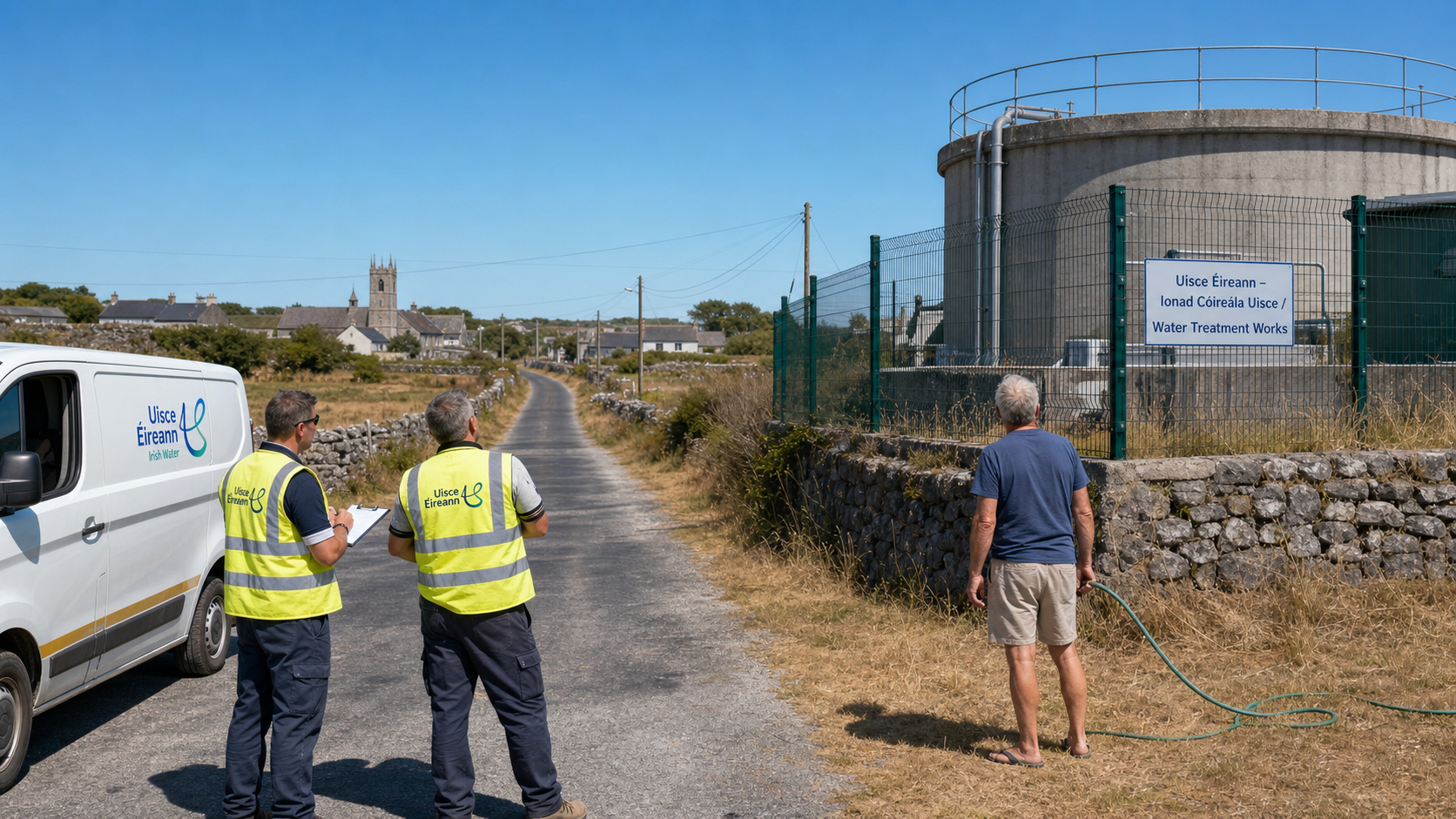
Uisce Éireann, the national water utility for the Republic of Ireland, postponed all non-essential maintenance and construction works across the country on 25 June as the heatwave drove water demand to record levels, urging households to reduce consumption and warning that some rural areas in Connacht and Munster could experience reduced pressure if demand continued to surge through the hottest part of the day.
Background
Uisce Éireann manages the water and wastewater infrastructure that serves the Republic of Ireland's 5.1 million people. The utility operates more than 900 water treatment plants, 1,600 wastewater treatment plants, and approximately 88,000 kilometres of water mains and sewers — a network that was built over many decades and that reflects the fragmented, locally managed approach to water services that characterised Ireland's infrastructure development for most of the 20th century.
The consolidation of water services under a single national utility, which began in 2014, was intended to bring greater efficiency, investment, and strategic planning to a sector that had been chronically underfunded. Progress has been made, but the network still contains significant vulnerabilities — ageing pipes that are prone to leakage, treatment plants that operate close to capacity during periods of high demand, and distribution systems that were not designed for the kind of sustained, intense demand that a heatwave produces.
Water demand in Ireland typically peaks in summer, driven by garden irrigation, car washing, and increased personal consumption. During a heatwave, that peak demand can be significantly higher than normal, and it can arrive simultaneously across the entire network rather than being spread across the day. The June 2026 heatwave, with temperatures reaching 32°C in parts of Connacht and Munster, represented one of the most severe demand tests the network has faced since Uisce Éireann was established.
Key Developments
On the morning of 25 June, as temperatures began to climb towards their daily peak, Uisce Éireann issued a public statement announcing the postponement of all non-essential maintenance and construction works across the country. The decision was taken to ensure that the maximum possible capacity of the network was available to meet household and business demand during the hottest part of the day, and to reduce the risk of supply disruptions caused by planned works coinciding with peak demand.
The utility also issued a direct public appeal for households to reduce their water consumption, asking people to avoid garden watering, car washing, and other non-essential uses during the peak demand period between 11am and 4pm. This was a more direct and transparent communication than that issued by NI Water to its customers on the same day, and reflected a different approach to public engagement during a demand crisis.
Uisce Éireann's monitoring systems showed demand running significantly above normal levels throughout the day, with some treatment plants operating at or near their maximum output capacity. The utility's network operations centre maintained continuous monitoring of pressure levels across the country, with particular attention to rural areas where distribution infrastructure is older and more vulnerable to pressure drops.
Why It Matters
The Uisce Éireann response to the June 2026 heatwave illustrates both the progress that has been made in managing Ireland's water infrastructure since the establishment of the national utility and the challenges that remain. The decision to postpone non-essential works and issue a direct public conservation appeal reflects a more sophisticated and transparent approach to demand management than was possible under the old local authority model, where 34 separate bodies managed water services with varying degrees of competence and resources.
However, the fact that the network was operating at or near capacity during the heatwave also reflects the scale of the investment challenge that Uisce Éireann faces. The utility's capital investment programme has been increasing in recent years, but the backlog of infrastructure upgrades required to bring the network to a modern standard is substantial. Climate projections suggest that heatwaves of the kind experienced in June 2026 will become more frequent and more intense in the coming decades, meaning that the network will face similar or greater demand challenges on a regular basis.
The episode also raises questions about Ireland's approach to water conservation more broadly. Unlike many European countries, Ireland does not have a culture of water conservation — a legacy of the country's historically wet climate and the absence of domestic water charges for most of the past decade. Building that culture, and the infrastructure to support it, will be essential if the country is to manage water demand sustainably in a warming climate.
Local Impact
In rural areas of Connacht and Munster, where the temperatures were highest and the distribution infrastructure is oldest, some households experienced reduced water pressure during the peak demand period on 25 June. Uisce Éireann's customer service lines reported a significant increase in calls from rural customers in counties Galway, Mayo, Clare, and Kerry, with many reporting lower-than-normal pressure in the afternoon hours. The utility deployed additional monitoring teams to the most affected areas and worked to redistribute supply from areas of lower demand.
In urban areas, the impact was less severe, though Dublin's older residential neighbourhoods — particularly in the north inner city and the older suburbs of the south side — reported some pressure reduction during the hottest part of the day. Irish Rail's water supply at several stations was also affected, with some platform facilities operating at reduced capacity during the afternoon peak.
What's Next
Uisce Éireann has indicated that the postponed works will be rescheduled for the coming weeks, subject to weather conditions. The utility is also conducting a review of its demand management protocols in light of the June 2026 experience, with a particular focus on the threshold at which a public conservation appeal should be issued and the mechanisms for communicating that appeal effectively to all households. A report on the network's performance during the heatwave is expected to be presented to the utility's board in July.