Taoiseach Defends Ireland Manager at UN as Israel-FAI Row Escalates into Diplomatic Incident
The controversy surrounding the Republic of Ireland's UEFA Nations League fixtures against Israel has escalated into a full diplomatic incident, with Taoiseach Micheál Martin using the platform of the United Nations General Assembly in New York to defend manager Heimir Hallgrímsson after the Israel Football Association publicly accused the Icelandic coach of "stupidity, ignorance and hypocrisy." The matches have been relocated to neutral venues in Hungary and Serbia, with Sunday's fixture in Debrecen set to take place amid intense political scrutiny.
Background
The Republic of Ireland's UEFA Nations League group stage draw placed the team in the same group as Israel, a fixture that has generated controversy of a kind that football administrators describe as unprecedented for two nations not actively in conflict with one another. Ireland's long-standing pro-Palestinian stance, rooted in historical identification with anti-colonial struggles and reinforced by the government's recognition of Palestinian statehood in May 2024, has made the prospect of playing Israel deeply uncomfortable for many in the Irish football community.
The controversy intensified when manager Heimir Hallgrímsson stated publicly that his team would be "playing against genocide" rather than simply playing against Israel — a comment that drew an immediate and fierce response from the Israel Football Association, which accused Hallgrímsson of "stupidity, ignorance and hypocrisy" in a public statement. The IFA's language was widely condemned in Ireland as disproportionate and inflammatory, and it was this response that prompted the Taoiseach to intervene at the United Nations.
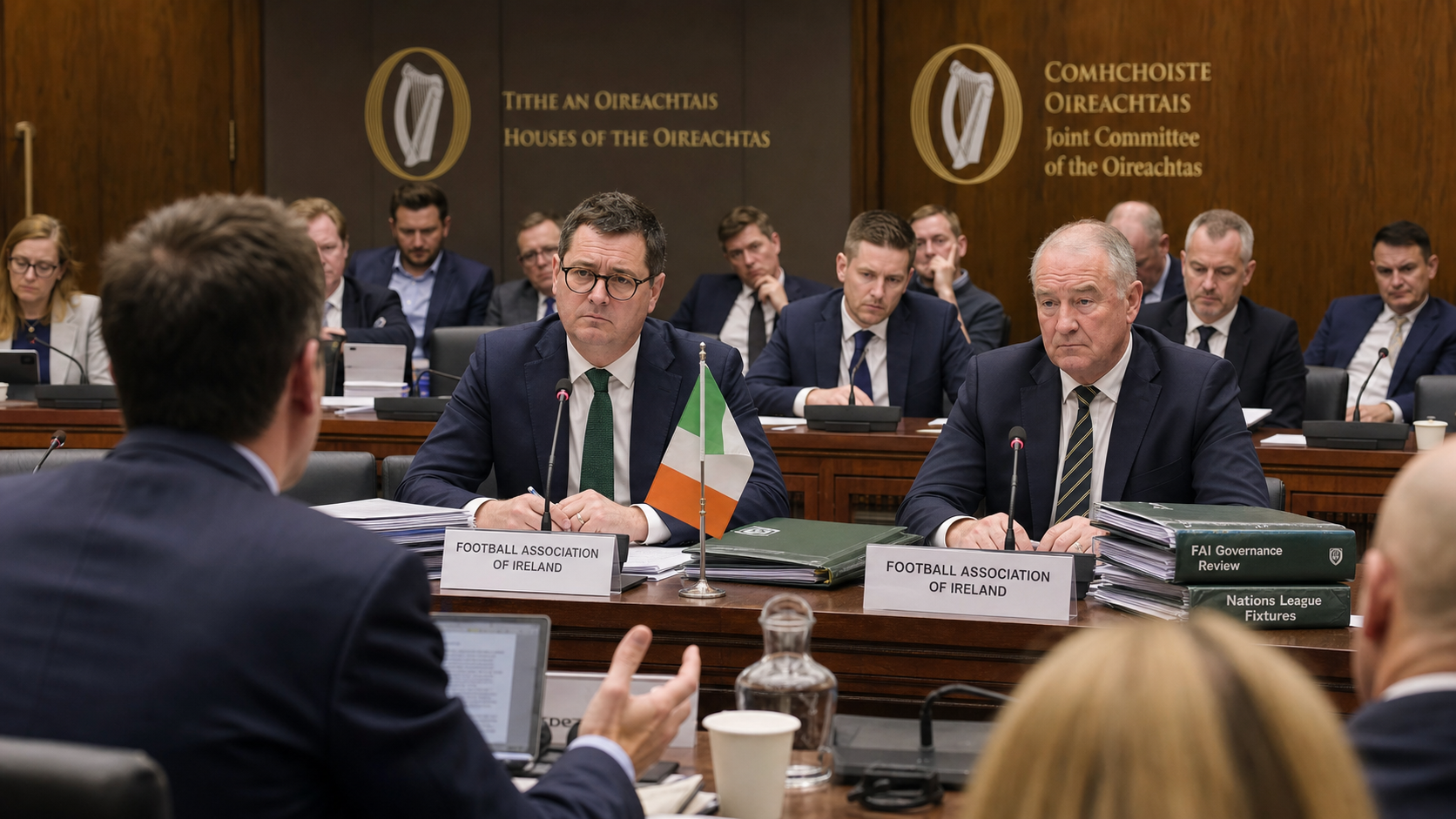
The Football Association of Ireland faced significant pressure from a grassroots "Stop the Game" campaign to boycott the fixtures entirely, but ultimately decided to proceed, citing concerns about potential financial penalties from UEFA and the long-term interests of Irish football. The decision to play the matches at neutral venues — Israel's "home" game in Debrecen, Hungary, and Ireland's "home" game in Bačka Topola, Serbia — was presented as a pragmatic response to the "operational challenges" of hosting such a contentious fixture in either country.
Key Developments
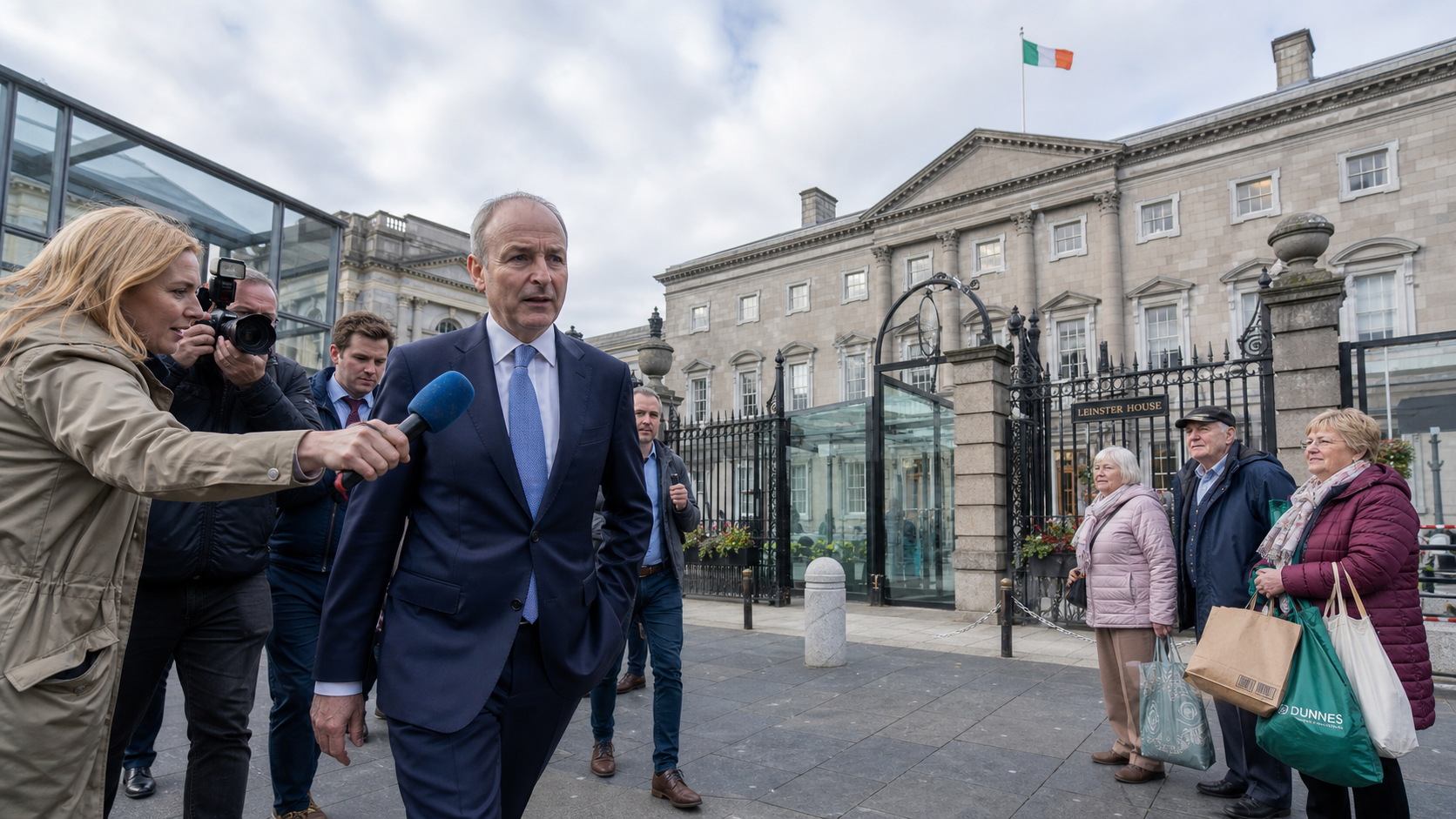
Taoiseach Micheál Martin's intervention at the United Nations General Assembly was notable for its directness. Speaking on the margins of the UNGA in New York, Martin defended Hallgrímsson's right to express his views and criticised the tone of the Israeli Football Association's response. The Taoiseach's comments were welcomed by pro-Palestinian groups in Ireland but drew criticism from some quarters who argued that a head of government should not be intervening in a sporting dispute.
The Republic of Ireland squad met on Friday, following their opening Nations League fixture against Kosovo, to discuss whether to perform a symbolic protest during Sunday's match against Israel in Debrecen. Reports indicate that players are considering donating their match fees to Gaza aid organisations, a gesture that would allow them to express solidarity with Palestinian civilians without crossing the line into a formal boycott of the fixture. RTÉ has limited its coverage of the matches to a live feed without commentary, punditry, or advertising, in a decision that reflects the broadcaster's assessment of the political sensitivity of the fixtures.
Both Ireland and Israel enter Sunday's match having lost their opening group fixtures, leaving them with zero points in League B, Group 3. The result of the match will therefore have significant implications for both teams' Nations League campaigns, adding a sporting dimension to what has been primarily a political story.
Why It Matters
The Ireland-Israel controversy matters because it sits at the intersection of sport, politics, and international law in a way that has no easy resolution. UEFA's position — that national associations remain separate from the actions of their respective states and that teams should not be banned from competition on political grounds — is a principled one, but it places individual players, managers, and administrators in an impossible position. The FAI has been left, as it acknowledged, in a difficult position by the lack of top-level intervention from UEFA or FIFA. The controversy also raises broader questions about the role of sport in international relations and the extent to which sporting bodies can or should remain neutral in the face of conflicts that generate strong moral responses.
Local Impact
The controversy has generated significant public debate in Ireland, with opinion divided between those who believe the FAI should have refused to play the fixtures and those who argue that sport should remain separate from politics. The decision to relocate the "home" fixture to Serbia has deprived Irish fans of the opportunity to attend the match and has denied the FAI the revenue that a home fixture at the Aviva Stadium would have generated. The squad's reported plan to donate match fees to Gaza aid organisations has been widely supported by the Irish public, with several prominent figures from outside football expressing solidarity with the players' position.
What's Next
Sunday's fixture between Israel and the Republic of Ireland is scheduled to take place at the Nagyerdei Stadion in Debrecen, Hungary. The match will be followed closely in Ireland, both for its sporting significance and for any symbolic gestures made by the Irish players. The FAI is expected to face further questions about its handling of the controversy in the weeks that follow, and the organisation has indicated that it will lobby UEFA to keep Ireland and Israel apart in future competition draws. The broader question of how UEFA and FIFA handle the participation of nations involved in armed conflicts is likely to remain a live issue in international football governance for the foreseeable future.