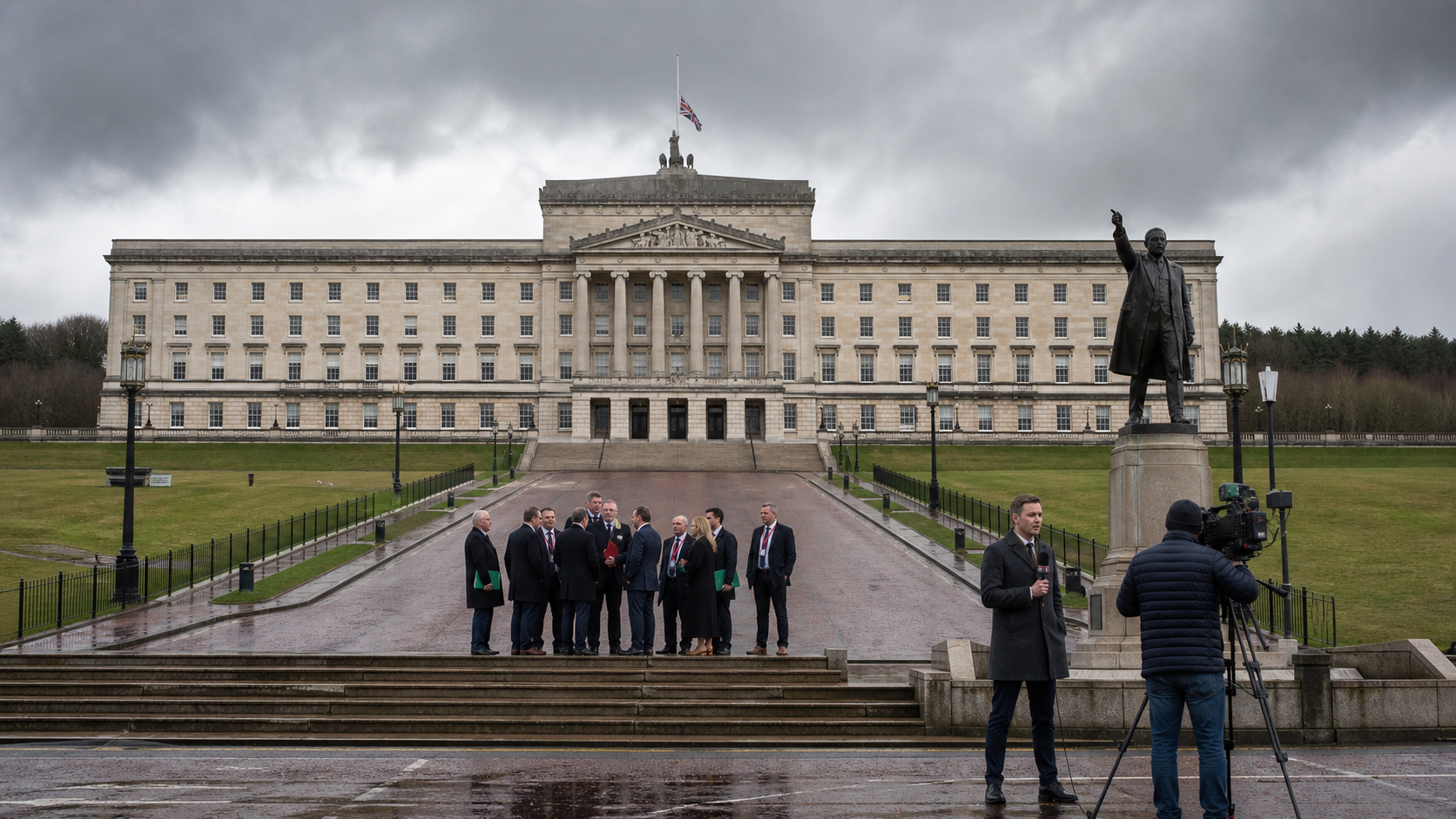
Stormont Crisis: Collapse Would Benefit No One, But the Assembly Cannot Stay the Same
Northern Ireland's power-sharing institutions are once again under strain, with Sinn Féin and the DUP locked in a cycle of mutual recrimination that has prompted warnings from political analysts, smaller parties, and both governments that the current model of governance is unsustainable — even as all sides acknowledge that a collapse of the Assembly ahead of the May 2027 election would serve nobody's interests.
Background
The Northern Ireland Executive has never been an easy institution to operate. The consociational model established by the Good Friday Agreement — in which the two largest parties from each community must share power, and either can effectively veto or collapse the government — was designed to ensure that no single tradition could dominate. In practice, it has created a system in which the threat of collapse is a permanent feature of political life, and in which the largest parties have periodically used that threat as a lever to extract concessions or to satisfy their own electoral bases.
The current period of instability has its roots in a combination of factors. The DUP is still recovering from the reputational damage caused by the conviction of former leader Jeffrey Donaldson, and faces pressure from the more hardline Traditional Unionist Voice on its right flank. Sinn Féin, meanwhile, has seen its support decline from the historic highs of the 2022 Assembly election, and faces criticism from within its own base over the delivery of specific projects — including the long-delayed A5 road upgrade and the downscaling of the Casement Park redevelopment. Both parties have an incentive to project strength and grievance, even when the practical consequences of doing so are damaging to the institutions they are supposed to be running.
The tensions have been exacerbated by a series of specific disputes, including Sinn Féin's accusation that the DUP is "frustrating" the passage of a Good Jobs Bill, and the DUP's counter-accusation that Sinn Féin is manufacturing outrage to distract from its own governance failures. Observers have noted that the rhetoric has been particularly heated in recent weeks, coinciding with a period of poor polling for both parties.
Key Developments
Sinn Féin Finance Minister John O'Dowd has explicitly stated that the party has "no intent, plan or otherwise" to walk out of the Executive, and First Minister Michelle O'Neill has clarified that Sinn Féin has no intention of bringing down the institutions ahead of the scheduled May 2027 election. The DUP has made similar assurances. But the smaller parties — Alliance, the SDLP, and the UUP — have warned that the constant threat of collapse is itself damaging to public confidence in the institutions, regardless of whether it is ever carried out.
Taoiseach Micheál Martin has signalled his support for reform of the Stormont model, pledging to discuss the matter with UK Northern Ireland Secretary Chris Bryant. The specific reform most widely discussed is the removal or modification of the rule that allows the Executive to collapse upon the withdrawal of a single large party — a mechanism that critics argue has been used as a political weapon rather than a genuine safeguard for community interests.
Research published earlier this year found that only 19 per cent of the Northern Ireland public are confident the institutions will not collapse again, while 83 per cent still support the principle of power-sharing and 57 per cent believe the system requires fundamental changes. The gap between support for the principle and confidence in the practice is the central challenge facing those who want to reform Stormont without undermining the foundations of the peace process.
Why It Matters
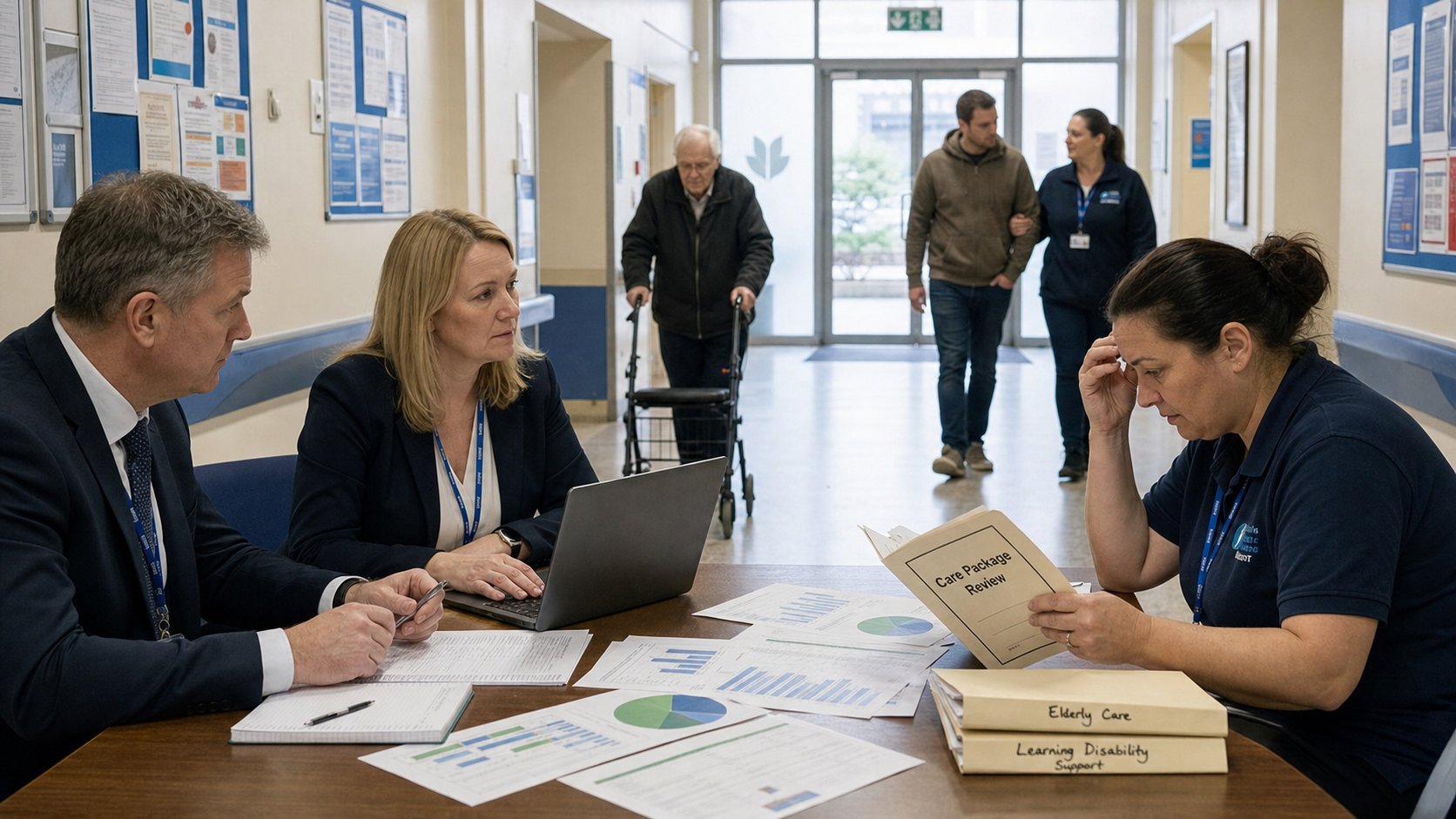
The periodic collapse of the Stormont institutions is not merely a political inconvenience — it has real and measurable consequences for the people of Northern Ireland. During the most recent period of Executive absence, between 2022 and 2024, decisions on health service reform, infrastructure investment, and education policy were either delayed or made by civil servants operating without democratic mandate. The waiting lists that now plague the Northern Ireland health service are, in part, a product of years of political dysfunction that prevented the kind of strategic planning and investment that a functioning Executive would have enabled.
The reform debate is therefore not an abstract constitutional discussion — it is a question about whether Northern Ireland can have a government that functions reliably enough to address the very real problems facing its citizens. The current model, in which the threat of collapse is always present and the incentive to use that threat is always tempting, is not compatible with the kind of long-term governance that the region needs.
Local Impact
The political instability has tangible effects across Northern Ireland. In Belfast, the uncertainty around Executive decision-making has delayed planning approvals and infrastructure projects. In Derry, the A5 road upgrade — a project that has been promised for decades and that would significantly improve connectivity between the north-west and Dublin — remains stalled. In rural areas of Fermanagh, Tyrone, and Armagh, health service reform decisions that require Executive sign-off have been in limbo. The smaller parties have argued that the people of Northern Ireland deserve better than a system in which governance is held hostage to the electoral calculations of the two largest parties.
What's Next
Taoiseach Martin is expected to raise the issue of Stormont reform in bilateral discussions with the UK government in September. The Northern Ireland Secretary has indicated openness to reform discussions, though the UK government has been careful not to be seen as imposing changes on the institutions without the consent of the parties. The Assembly's Committee on the Executive Office is expected to begin a formal inquiry into institutional reform in the autumn. The May 2027 Assembly election now looms as the next major political milestone, and the question of whether the institutions can survive until then — and in what form — will dominate Northern Ireland politics for the months ahead.