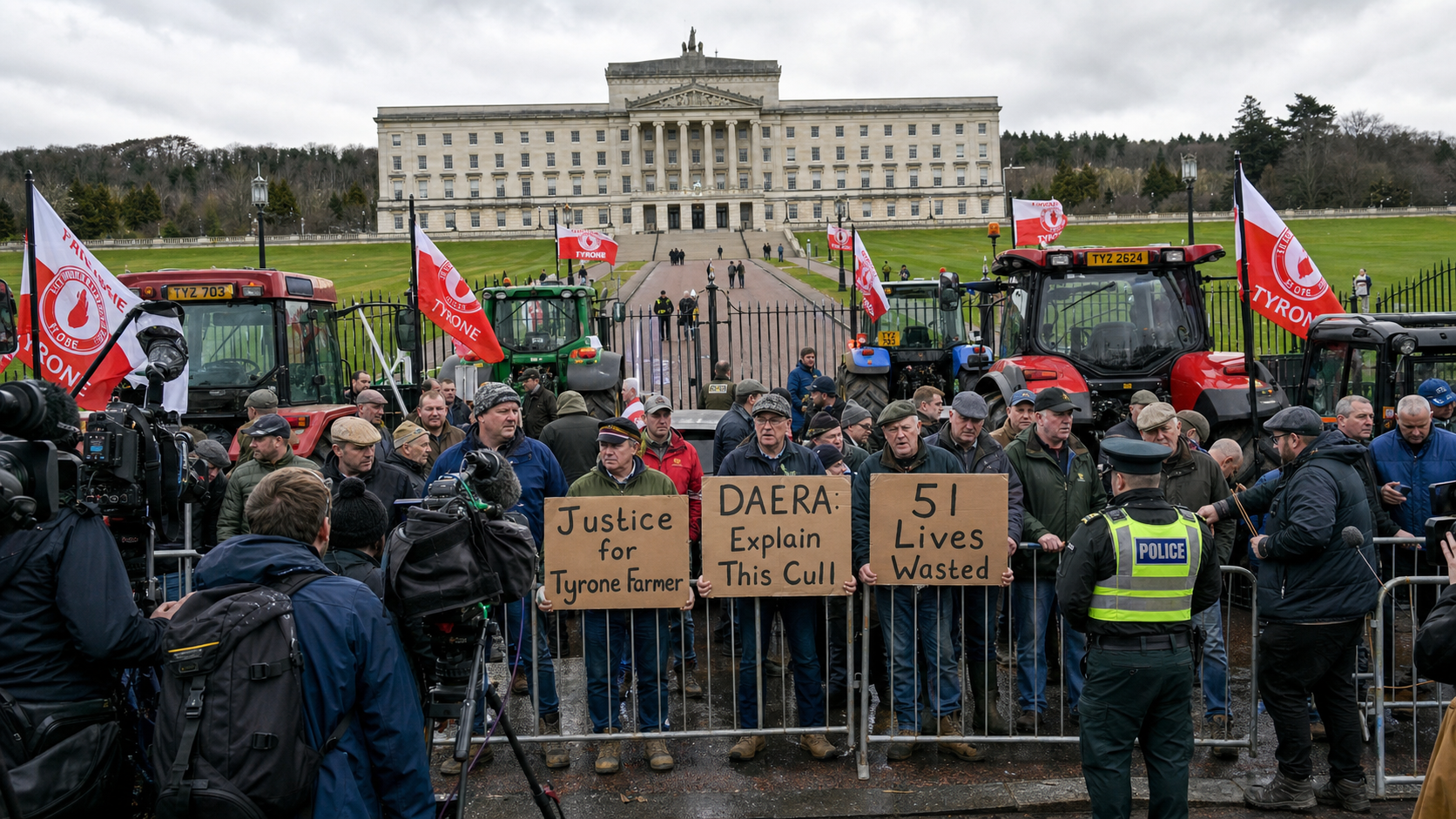
Stormont Committee Holds Emergency Hearing on Tyrone Cattle Cull as Farmers Protest Outside
The Northern Ireland Assembly's Agriculture, Environment and Rural Affairs Committee convened an extraordinary sitting on Monday to question DAERA Minister Andrew Muir and senior departmental officials over the mass culling of 51 cattle on a farm near Fivemiletown, County Tyrone, in late June — an operation that sparked widespread public outrage and prompted the Ulster Farmers' Union to demand a comprehensive independent review of how the cull was conducted.
Background
The incident at the centre of the controversy took place on 29 June 2026, when DAERA's Humane Slaughter Team carried out a court-ordered removal of a herd from a farm near Fivemiletown. The farm's owner had been convicted of 21 animal welfare, veterinary medicine, and by-product offences, and a court had issued a deprivation order requiring the animals to be removed from his care. DAERA reported that 50 cattle were euthanised on 29 June, with a further animal put down the following morning.
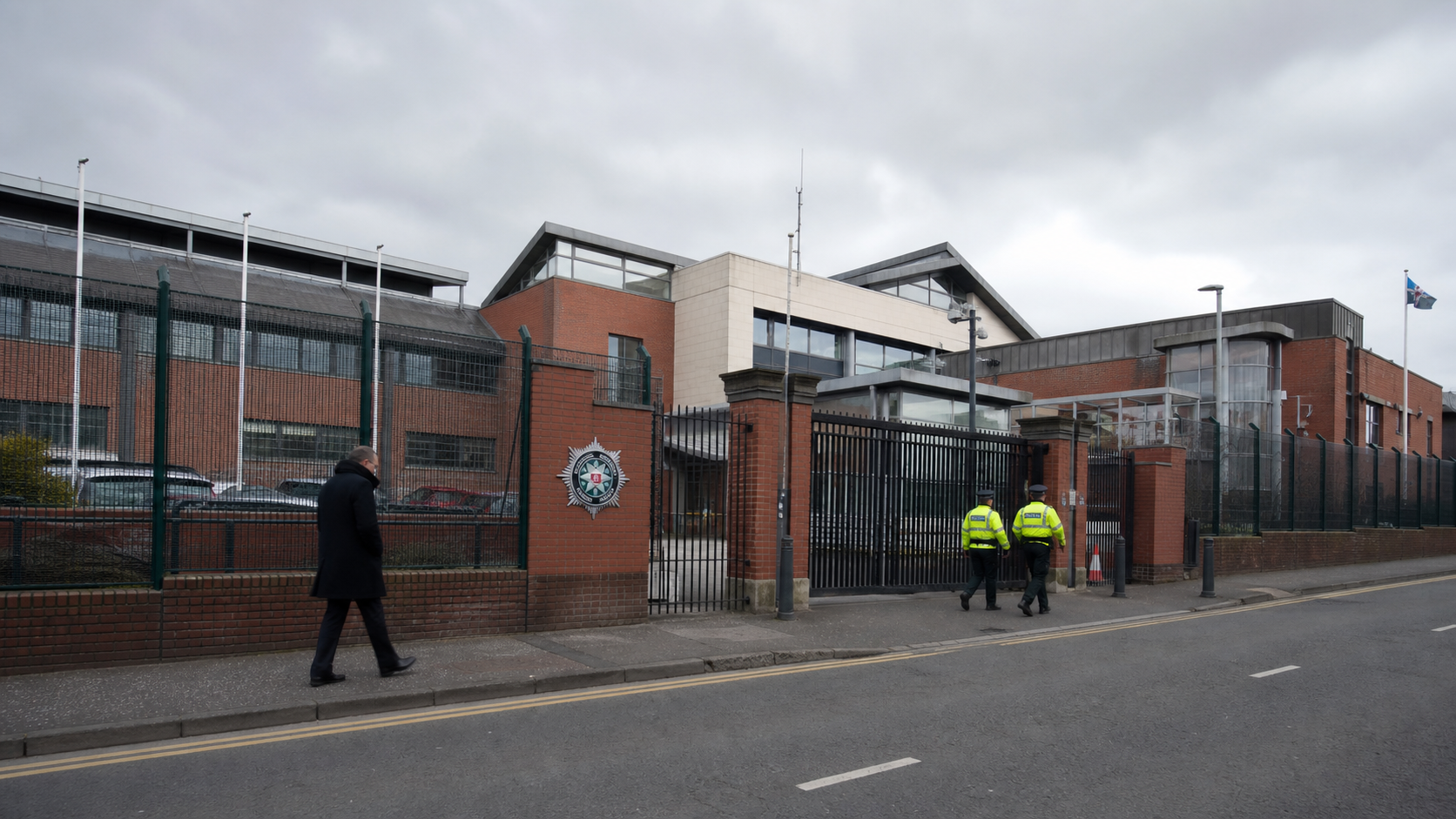
What transformed a routine enforcement action into a national controversy was the manner in which the cull was conducted. Rather than being carried out in a yard or enclosed space, the animals were shot in open fields, in public view. Witnesses reported scenes of distress, with allegations that some animals were shot in the neck and left running in the fields, and that calves were left behind. The PSNI was not present during the operation, a fact that drew particular criticism given the nature of what was taking place.
The Ulster Farmers' Union responded with unusual force, describing the scenes as reminiscent of a "wild west" and demanding to know why the animals could not have been sold rather than destroyed. The UFU noted that some animals from the herd had previously been sold, raising questions about why that option was not pursued in this instance. DAERA maintained that the Humane Slaughter Team followed best practices and that the department had no reasonable alternative to comply with the court's order, citing "operational difficulties and health and safety considerations" unique to the case.
Key Developments
Minister Muir ordered an independent review of the operation in the immediate aftermath of the public outcry, to be conducted by individuals outside the department. That review is ongoing. However, the AERA Committee, chaired by UUP assembly member Robbie Butler, determined that the matter was sufficiently serious to warrant an emergency hearing before the review's conclusions are published.
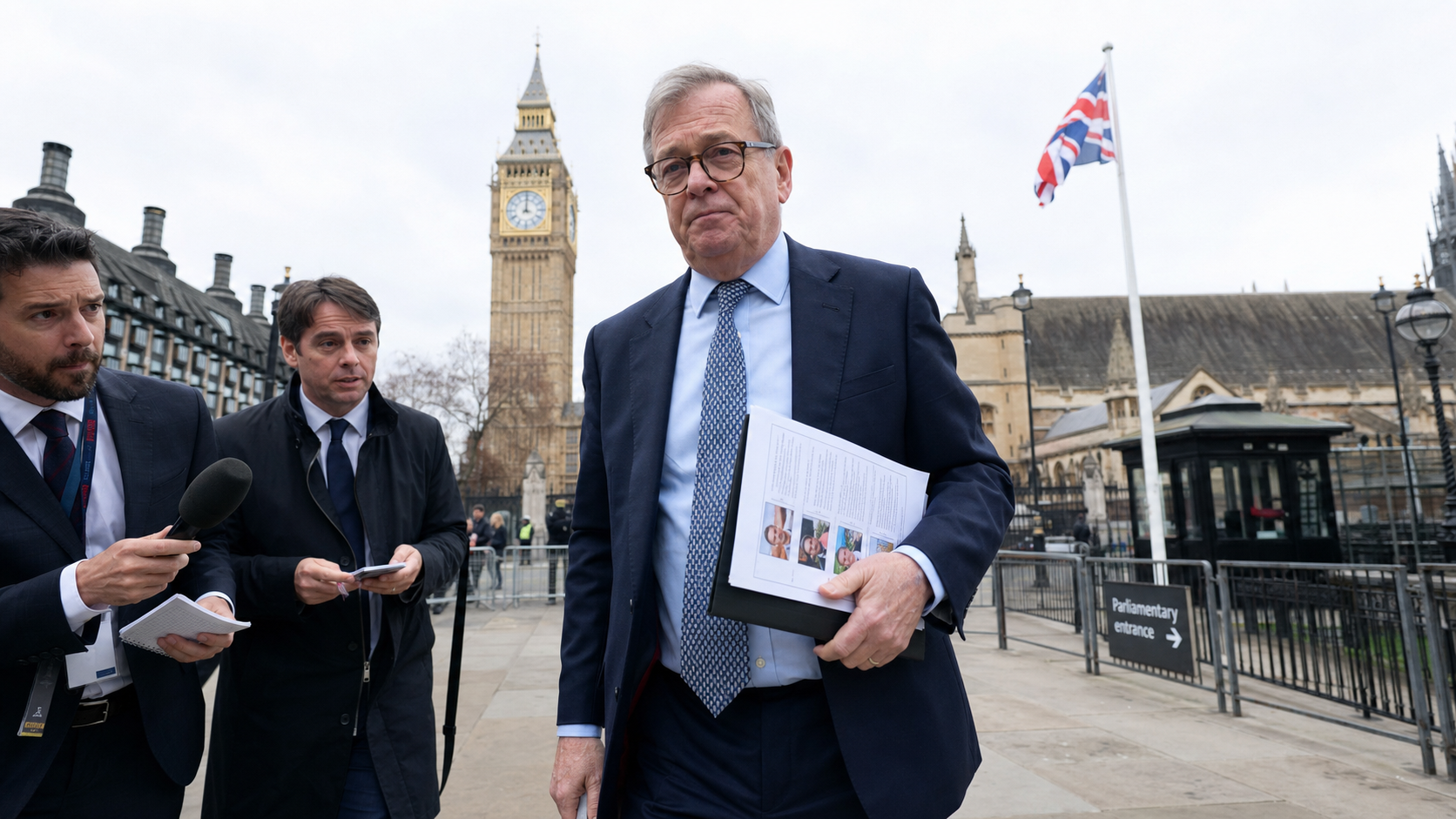
Monday's hearing focused on several key questions: the planning and decision-making process that led to the field-based cull; the absence of PSNI officers during the shooting; the failure to explore the option of selling the animals; and the adequacy of risk assessments for both the public and the farmer. Minister Muir faced sustained questioning from committee members across the political spectrum, with DUP, UUP, and SDLP members all pressing for detailed explanations of the departmental decision-making process.
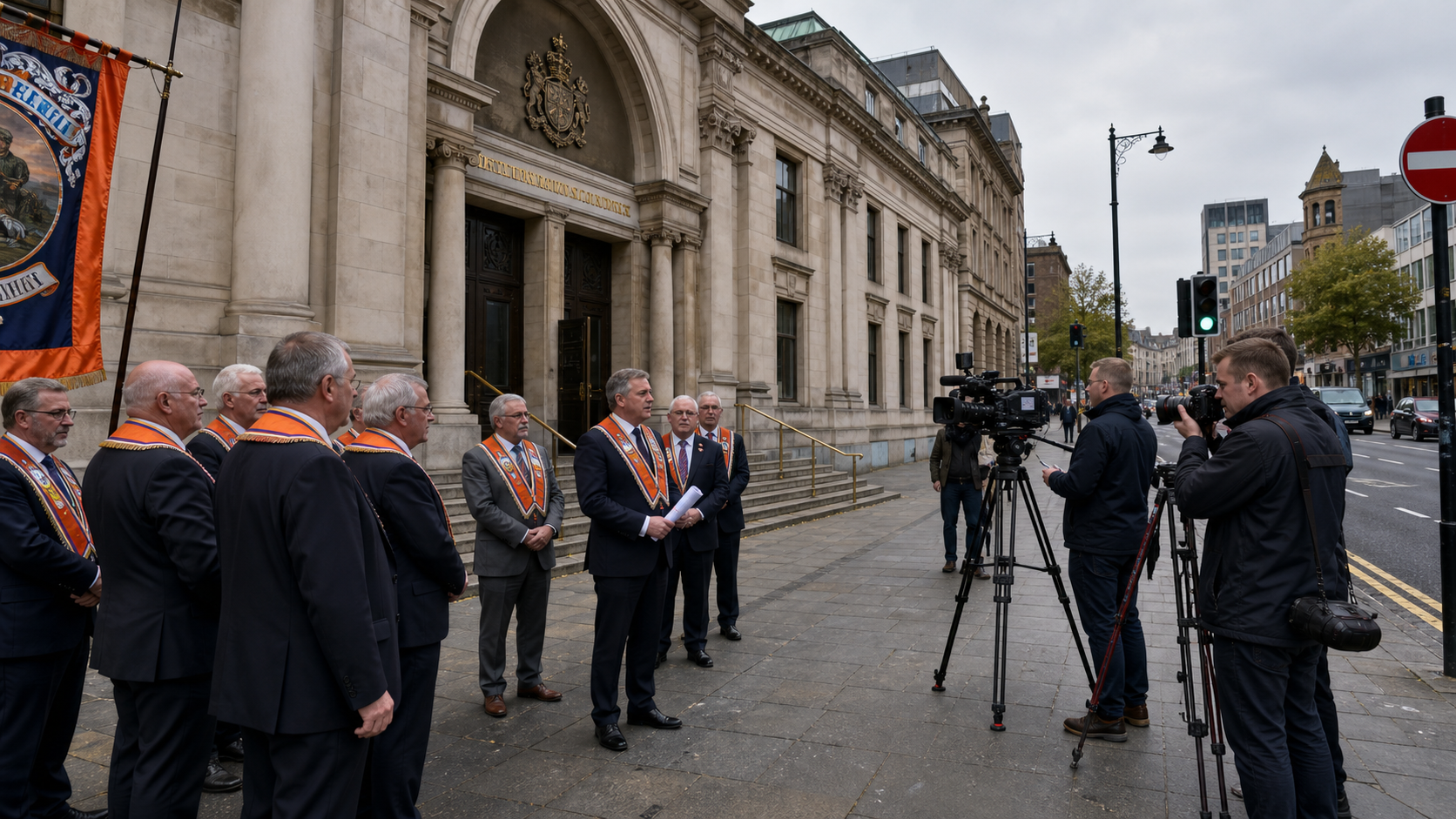
Outside Parliament Buildings, a group of farmers and members of the public staged a protest, carrying placards and calling for full transparency and accountability. The Ulster Farmers' Union's chief executive was among those who addressed the gathering, reiterating the organisation's call for a comprehensive review and expressing concern that the incident had damaged public confidence in DAERA's enforcement procedures.
Why It Matters
The Tyrone cattle cull controversy matters on several levels. At the most immediate level, it raises serious questions about the procedures used by DAERA when enforcing court orders involving the removal of animals — procedures that, in this case, appear to have been inadequate to prevent scenes that caused significant public distress. The absence of PSNI officers during an operation involving the shooting of animals in open fields is particularly difficult to explain, and the committee will want a clear account of why that decision was made.
More broadly, the incident touches on the relationship between the farming community and the regulatory state in Northern Ireland. Farmers operate within a complex web of animal welfare, veterinary, and environmental regulations, and the vast majority comply with those regulations conscientiously. When enforcement actions are carried out in a manner that appears disproportionate or poorly planned, it damages the trust that is essential for effective regulation. The UFU's intervention reflects a genuine concern within the farming community that the department's approach to enforcement needs to be reviewed.
The political dimension is also significant. The AERA Committee's decision to hold an emergency hearing reflects the seriousness with which elected representatives are treating the matter, and the cross-party nature of the criticism suggests that this is not a partisan issue but a genuine governance concern.
Local Impact
For the farming community in County Tyrone and across Northern Ireland, the incident has been deeply unsettling. Fivemiletown is a market town at the heart of a predominantly agricultural area, and the events of 29 June were witnessed by local people who found the scenes distressing and difficult to reconcile with the standards they expect from a government department. The Ulster Farmers' Union has members across all six counties, and the organisation's forceful response reflects the breadth of concern within the sector. The outcome of the independent review and the committee's findings will be watched closely by farmers, vets, and animal welfare advocates throughout Northern Ireland.
What's Next
The independent review ordered by Minister Muir is expected to report within the coming weeks. The AERA Committee will consider its findings and may make recommendations for changes to DAERA's enforcement procedures. The committee has also indicated that it may seek further evidence from the Ulster Farmers' Union, animal welfare organisations, and legal experts before finalising its own report. Minister Muir has committed to implementing any recommendations that emerge from the review process, and has acknowledged that the manner in which the cull was conducted fell short of the standards the public rightly expects.