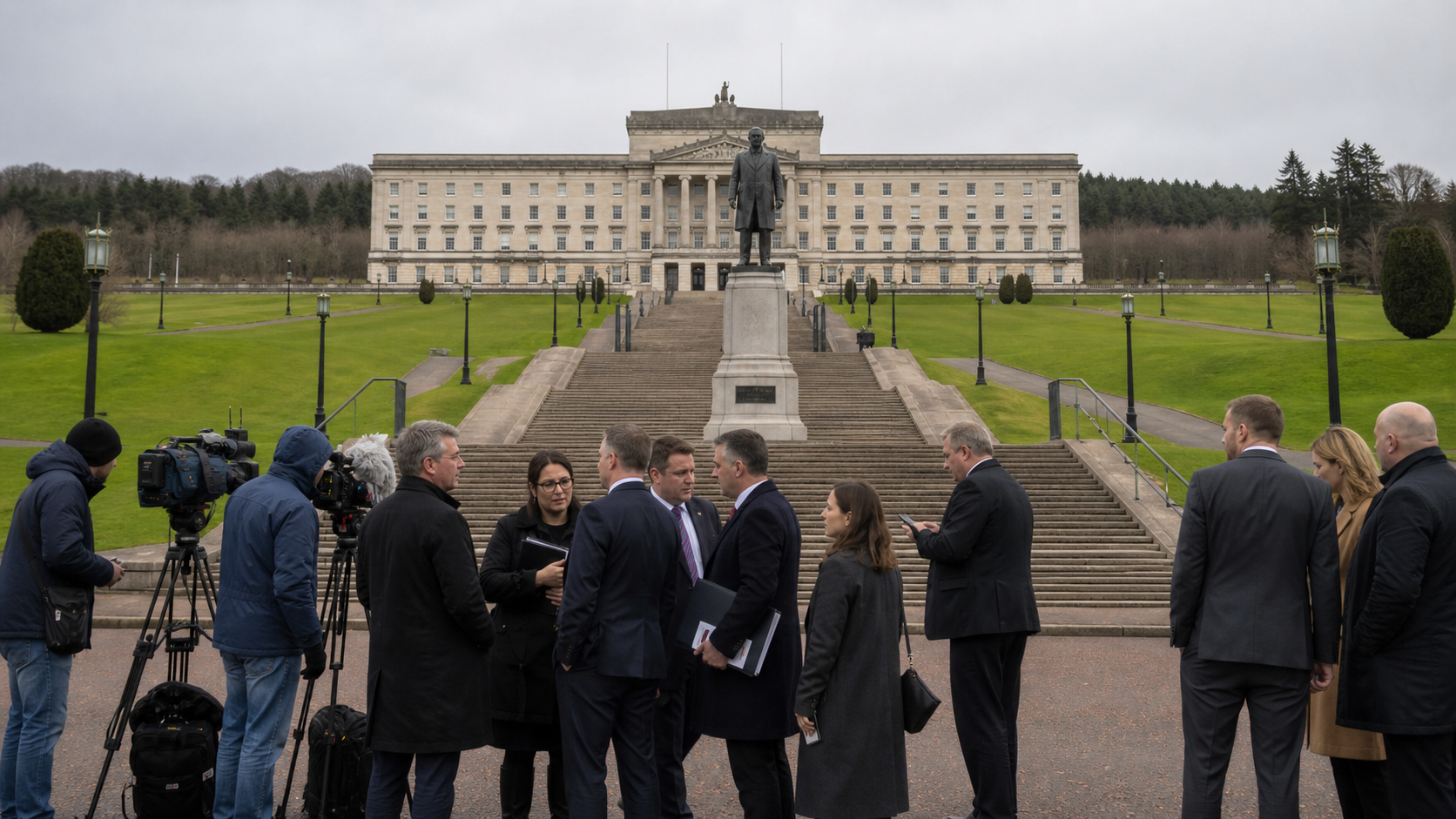
Stormont Budget Deadline Passes Without Deal as Contingency Spending Provisions Kick In
The Northern Ireland Executive has failed to agree a budget for the 2026/27 financial year before the end-of-July legal deadline, triggering automatic contingency spending provisions under the Northern Ireland Act 1998 that technically cap departmental expenditure at 95% of the previous year's funding levels — a development that deepens a financial crisis now entering its second consecutive year without a formal budget.
Background
Northern Ireland's public finances have been in a state of sustained crisis for several years, driven by a combination of structural underfunding, the legacy costs of public sector pay deals, and a persistent failure by the Executive to agree multi-year spending plans. The 2025/26 financial year was managed through a series of emergency measures and one-off Treasury interventions, including a £400 million reserve claim provided by the UK government in February 2026 — a sum that Stormont is required to repay over three years.
The Northern Ireland Fiscal Council, an independent body established to scrutinise public finances, has consistently argued that Northern Ireland is funded at or slightly below its assessed need compared to Scotland and Wales. The council has noted that it is "mathematically possible" for Northern Ireland to receive between £1 billion and £3.5 billion in additional annual funding if treated on the same basis as other devolved administrations, though it has cautioned that such an outcome is not the most likely scenario given Treasury priorities.
Finance Minister John O'Dowd has been the most vocal advocate for increased Treasury funding, arguing that the current settlement is structurally inadequate and that asking Stormont departments to absorb further cuts would cause irreparable damage to public services already operating at the margins of viability.
Key Developments
With the end-of-July deadline now passed, the Department of Finance Permanent Secretary has activated the legal contingency provisions that allow continued spending to be authorised in the absence of a formal budget. While these provisions ensure that public services do not face an immediate interruption, they create significant uncertainty for departments attempting to plan beyond the immediate term.
In early July, Northern Ireland Secretary Hilary Benn convened a meeting at Hillsborough Castle with party leaders to address the financial crisis. The meeting produced an agreed "programme of work" involving officials from the Treasury, the Northern Ireland Office, and the Northern Ireland Civil Service, but fell short of the structural funding settlement that Executive ministers had sought. Incoming Northern Ireland Secretary Sir Chris Bryant has since scheduled meetings with political parties to continue the discussions.
The Treasury has maintained that any further funding would be contingent upon structural reforms, including potential water charges, increased rates, and a reduction in the size of the civil service — proposals that have met with resistance from local ministers across the political spectrum.
Why It Matters
The failure to agree a budget by the legal deadline is not merely a procedural inconvenience — it has real consequences for the delivery of public services across Northern Ireland. Departments operating under contingency arrangements cannot commit to new spending, cannot fill vacant posts, and cannot enter into long-term contracts. For the health service, which is already under severe pressure from waiting lists and staffing shortages, the uncertainty is particularly damaging. This is the second successive year in which Northern Ireland has entered the summer without an agreed budget, a situation without precedent in the devolved era. Unlike the Republic, where the government can draw on a substantial fiscal surplus to manage short-term pressures, Northern Ireland has no such buffer and is entirely dependent on the block grant from Westminster.
Local Impact
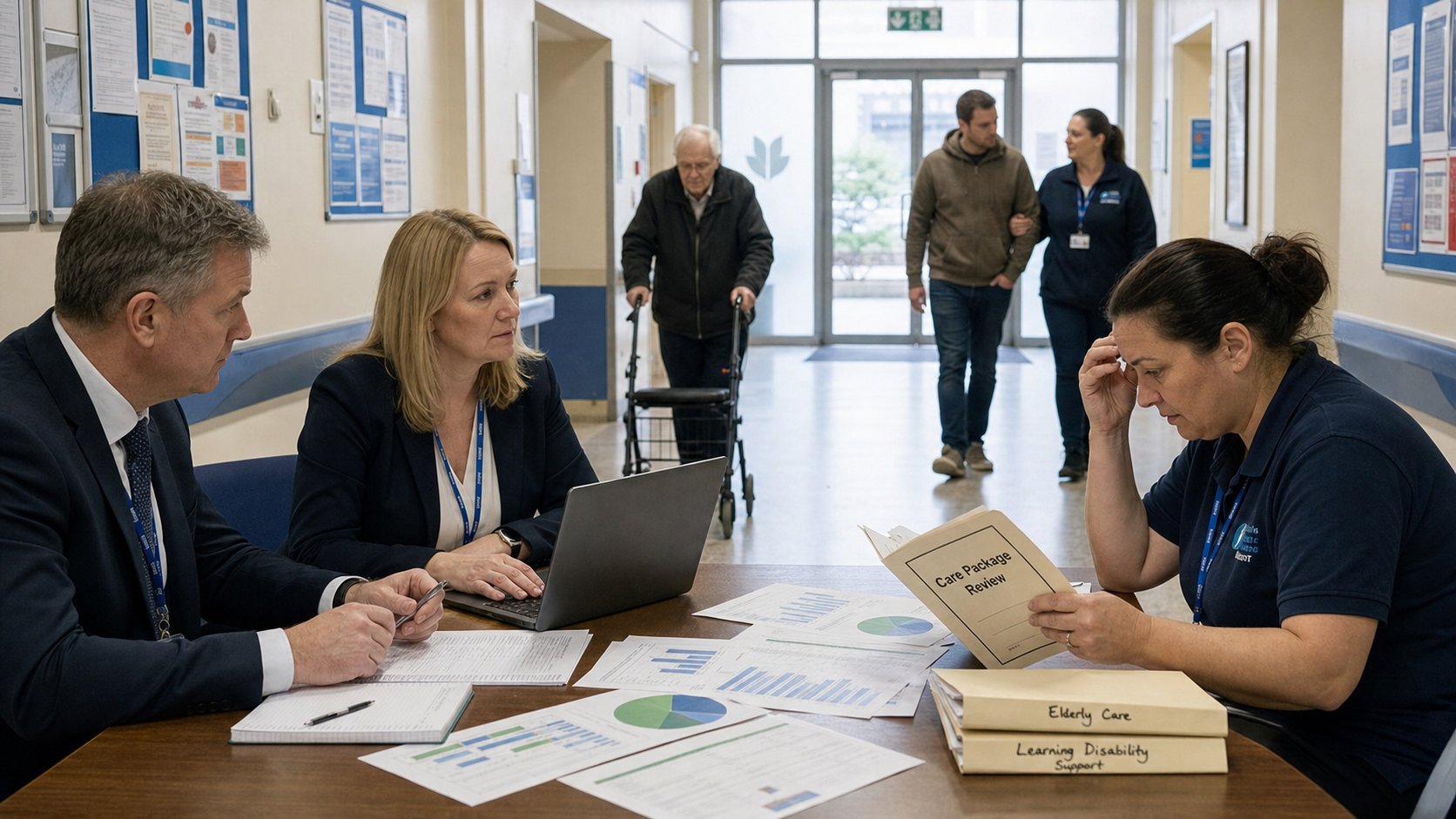
The practical consequences of the budget impasse are felt most acutely in frontline services. The five health and social care trusts — Belfast, South Eastern, Southern, Western, and Northern — have all been operating under spending restrictions that have delayed capital projects, limited recruitment, and constrained the development of new services. Schools across Northern Ireland have similarly been unable to plan for the coming academic year with any certainty about their funding allocations. In areas such as Derry/Londonderry, Newry, and Armagh, where public sector employment is a significant component of the local economy, the uncertainty has a broader economic ripple effect that extends well beyond the public sector itself.
What's Next
Sir Chris Bryant is expected to meet with Executive party leaders in the coming days to assess the state of negotiations. The Treasury has indicated that it will not provide further emergency funding without a credible plan for structural reform, while Executive ministers have insisted that reform cannot be delivered without adequate baseline funding. A formal budget is now unlikely before the autumn, with some analysts suggesting that Westminster intervention — in the form of a Secretary of State budget — may ultimately be required if the impasse continues into October.