Siptu Announces October 14 Strike as 10,000 Health Workers Demand New Pay Agreement
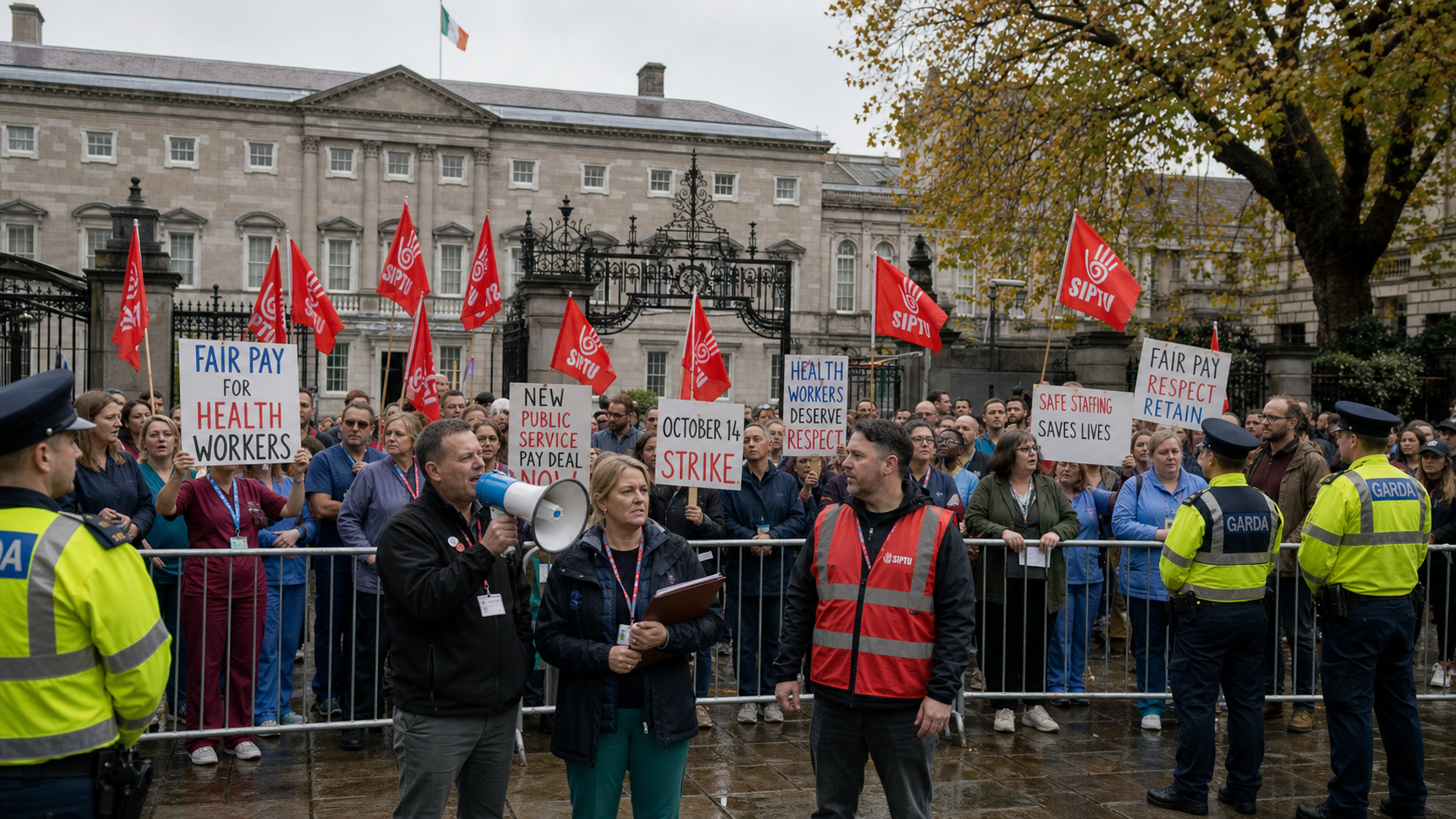
Siptu has announced that more than 10,000 health workers across 30 hospitals will participate in a one-day strike on October 14, 2026, after the government failed to establish a forum for negotiating a successor to the public service pay agreement that expired at the end of June — a development the union has described as a "significant intensification" of its campaign for dignity, fairness, and financial certainty for its members.
Background
The public service pay agreement that governed wages for health workers and other public servants expired at the end of June 2026, leaving a significant gap in the industrial relations framework that has historically provided stability in the sector. Siptu, which represents a substantial proportion of health workers across Ireland's hospital network, has been seeking the establishment of a negotiating forum to agree a successor deal since the spring, but the government — specifically the Department of Public Expenditure under Minister Jack Chambers — has not engaged with those requests in a manner that the union regards as meaningful.
The health sector has been under sustained pressure for several years, with staffing shortages, waiting list backlogs, and the ongoing challenge of retaining experienced workers in the face of competition from the private sector and from health systems in other countries. Pay is a central factor in retention, and the union has argued consistently that health workers have exercised "extraordinary patience" in continuing to provide essential services while managing the rising costs of housing, energy, and food.
The announcement of the October 14 strike follows a ballot of Siptu members in which workers voted overwhelmingly in favour of industrial action. The union has been careful to frame the action as a last resort, emphasising that it has sought engagement through every available channel before reaching this point.
Key Developments
Siptu health divisional organiser Kevin Figgis announced the strike date on Tuesday, stating that the union had been left with no alternative after the government's continued failure to establish a negotiating forum. "Health workers have shown extraordinary patience," Figgis said. "They have continued to provide essential services while managing the rising cost of living, and they deserve a government that takes their concerns seriously. The responsibility for this action lies entirely with the Minister for Public Expenditure."
Labour Party TD Ged Nash expressed support for the workers' position, warning that the government faces a significant political challenge on October 14. "If the government does not address these pay disputes within the upcoming budget, it could lead to the most widespread trade union action in Ireland since 2009," Nash said. "The Minister needs to come to the table now, before this escalates further."
The strike is expected to affect 30 hospitals across the country, with services significantly disrupted for the duration of the one-day action. Hospital management teams are expected to implement contingency plans to maintain emergency and critical care services, but elective procedures and outpatient appointments are likely to be cancelled or postponed.
Why It Matters
The October 14 strike is the most significant piece of industrial action in the Irish health service in many years, and its implications extend well beyond the immediate question of pay. It reflects a broader breakdown in the relationship between the government and the public sector workforce — a breakdown that has been building for several years as the cost of living has risen faster than public sector wages and as the government has been slow to respond to the resulting pressure.
The timing is also politically significant. Budget 2027 is expected to be announced in mid-October, and the strike will take place in the days immediately before or after the budget announcement. The government will be under intense pressure to include meaningful pay measures for health workers in the budget, and the strike will serve as a powerful reminder of the consequences of failing to do so.
Local Impact
Across Ireland's hospital network — from the Mater and St Vincent's in Dublin to Cork University Hospital, University Hospital Galway, and University Hospital Limerick — patients and their families are being advised to contact their hospitals in advance of October 14 to check whether their appointments or procedures will be affected. The HSE has indicated that it will publish detailed information about service disruptions in the days leading up to the strike. Community health services, including GP practices and primary care centres, are not expected to be directly affected by the action, though increased demand on these services is anticipated as patients seek alternatives to hospital-based care.
What's Next
Siptu has indicated that it remains open to engagement with the government and that the strike could be called off if meaningful negotiations begin before October 14. The union has set out three conditions for suspending the action: the establishment of a formal negotiating forum, a commitment to a timeline for agreeing a new pay deal, and an acknowledgement from the Minister for Public Expenditure that the current situation is unsustainable. Budget 2027 is expected to be announced on October 14 or 15, and the government's response to the pay demands will be closely scrutinised in the days that follow.