Sinn Féin Leads New Opinion Poll as Government Parties Lose Ground Ahead of Budget 2027 Season
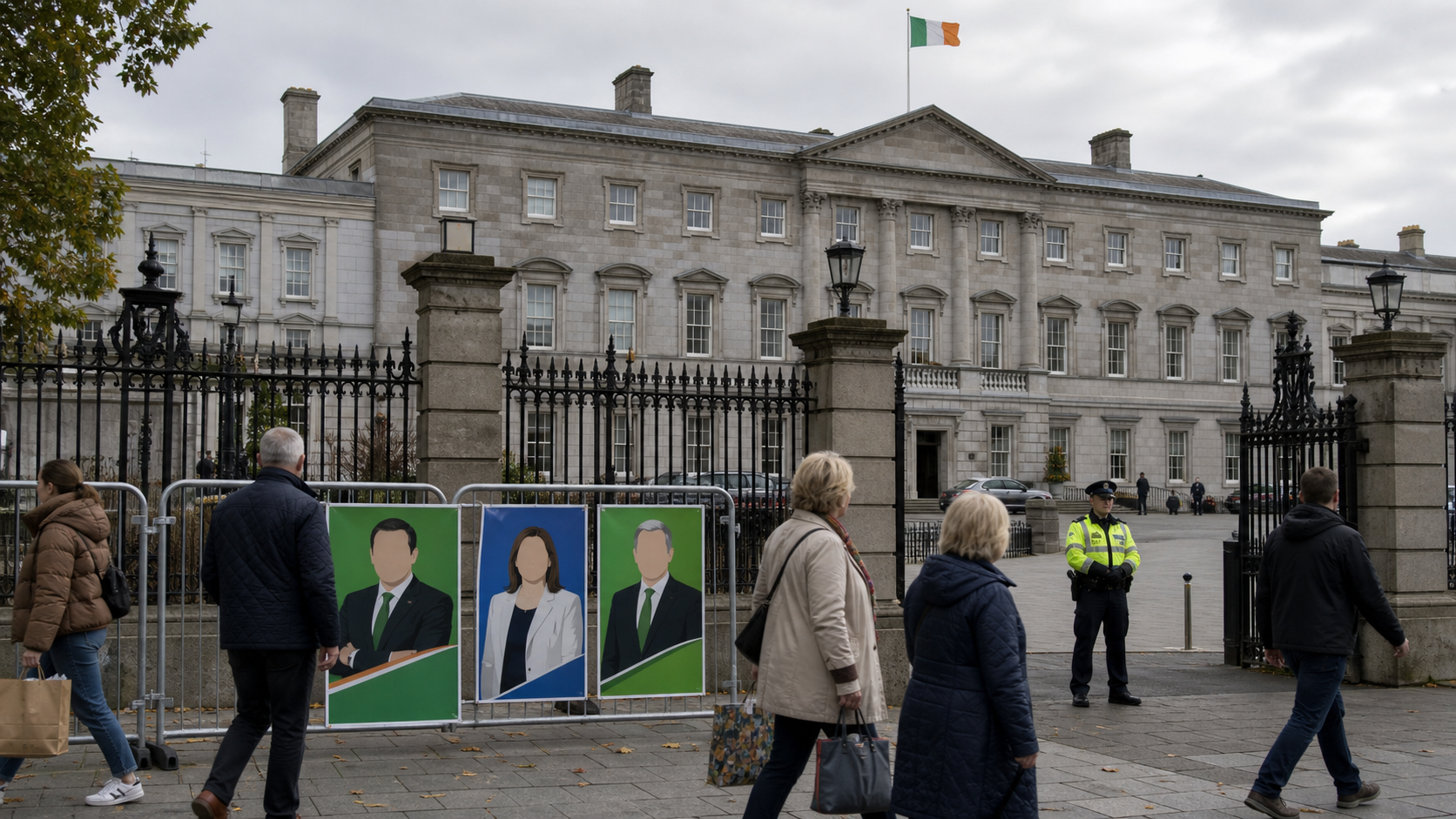
A new opinion poll has confirmed Sinn Féin as the most popular party among voters in the Republic of Ireland, with the party maintaining a consistent lead over the government coalition partners Fine Gael and Fianna Fáil as the political season enters its most intensive phase — the autumn think-ins, the Budget 2027 negotiations, and the positioning that will define the electoral landscape for the next general election, due by June 2027.
Background
Sinn Féin's rise to the top of the opinion polls in the Republic is one of the defining political stories of the past decade. The party, which was historically associated primarily with Northern Ireland and the republican movement, has transformed itself into the largest party in the Dáil and the most popular party in the country — a transformation driven by its positioning on housing, cost of living, and generational inequality, and by the failure of the traditional parties to adequately address those issues during their years in government.
The current Fine Gael-Fianna Fáil coalition, which took office after the 2024 general election, has faced persistent criticism over the pace of housing delivery, the cost of living, and the management of public services. The government's record on housing in particular — where output has consistently fallen short of targets despite significant investment — has been a source of ongoing political vulnerability. The upcoming Budget 2027, which will be presented in October, is seen as a critical test of the government's ability to demonstrate that it is delivering for ordinary voters.
The Labour Party, which is not in government, has been positioning itself as a potential coalition partner for Sinn Féin in the event of a change of government, with a series of high-profile policy proposals designed to differentiate it from both the government parties and from Sinn Féin itself. Labour's proposal for a €100 monthly child benefit top-up, announced at its recent think-in, has attracted significant attention and has been credited with boosting the party's poll ratings.
Key Developments
The new poll, published by RTÉ, shows Sinn Féin leading the field with a figure that places it comfortably ahead of Fine Gael and Fianna Fáil. The poll was conducted in the days following the Katie Taylor fight at Croke Park — an event that generated significant national goodwill and positive sentiment — and before the full impact of the Budget 2027 debate has been felt. Political analysts caution that poll ratings at this stage of the electoral cycle are indicative rather than predictive, and that the Budget's reception will be a more significant determinant of the parties' relative positions heading into the election.
The poll comes as the political parties hold their autumn think-ins — the annual retreats at which parties develop and refine their policy platforms. The government parties have been focused on the Budget, with Taoiseach Micheál Martin indicating that the package will be "substantial" but "responsible," and that the government will not repeat the inflationary mistakes of previous budgets. The Fiscal Advisory Council has warned that a large budget package could exacerbate inflation, which reached 3.4 per cent in August.
Transport Minister Darragh O'Brien has indicated that a further delay in the carbon tax hike is "on the table" for Budget 2027, a signal that the government is sensitive to the cost-of-living pressures facing households and businesses. The PRSI threshold for low-paid workers is also under consideration, with civil servants having recommended raising the threshold to improve the financial position of those on lower incomes.
Why It Matters
The opinion poll matters because it reflects a sustained pattern of voter dissatisfaction with the government parties that has persisted across multiple electoral cycles. Sinn Féin's consistent lead in the polls is not a temporary phenomenon driven by a single issue — it reflects a deeper realignment of Irish politics in which the traditional dominance of Fine Gael and Fianna Fáil is being challenged by a party that has successfully positioned itself as the voice of those who feel left behind by Ireland's economic success.
The Budget 2027 is the government's most significant opportunity to change that dynamic before the election. A budget that is seen as genuinely addressing the cost-of-living pressures facing ordinary households — on energy, on housing, on childcare — could shift the political weather. A budget that is seen as cautious, technocratic, or insufficiently responsive to those pressures will reinforce the narrative that the government is out of touch with the concerns of ordinary voters.
Local Impact
The political dynamics reflected in the opinion poll have concrete consequences for communities across the Republic. In Dublin, where housing costs are most acute, the poll reflects the frustration of renters and first-time buyers who feel that the government's housing policies have not delivered the change they were promised. In Cork, Galway, and Limerick, the cost-of-living pressures — on energy, on food, on transport — are felt most acutely by households on middle and lower incomes. In rural Ireland, the concerns are different but equally pressing: access to public services, the viability of farming, and the future of rural communities in an economy increasingly concentrated in the major urban centres.
What's Next
Budget 2027 will be presented on 14 October 2026, with the Finance Minister and Public Expenditure Minister delivering their statements to the Dáil. The budget is expected to include a significant income tax package, measures on housing, and a response to the cost-of-living pressures facing households. The political parties will then spend the following weeks assessing the budget's reception and adjusting their electoral strategies accordingly. The next general election must be held by June 2027, and the government is expected to call it in the spring of that year.