Sinn Féin Issues Code of Conduct Barring Members from Public Criticism of Party
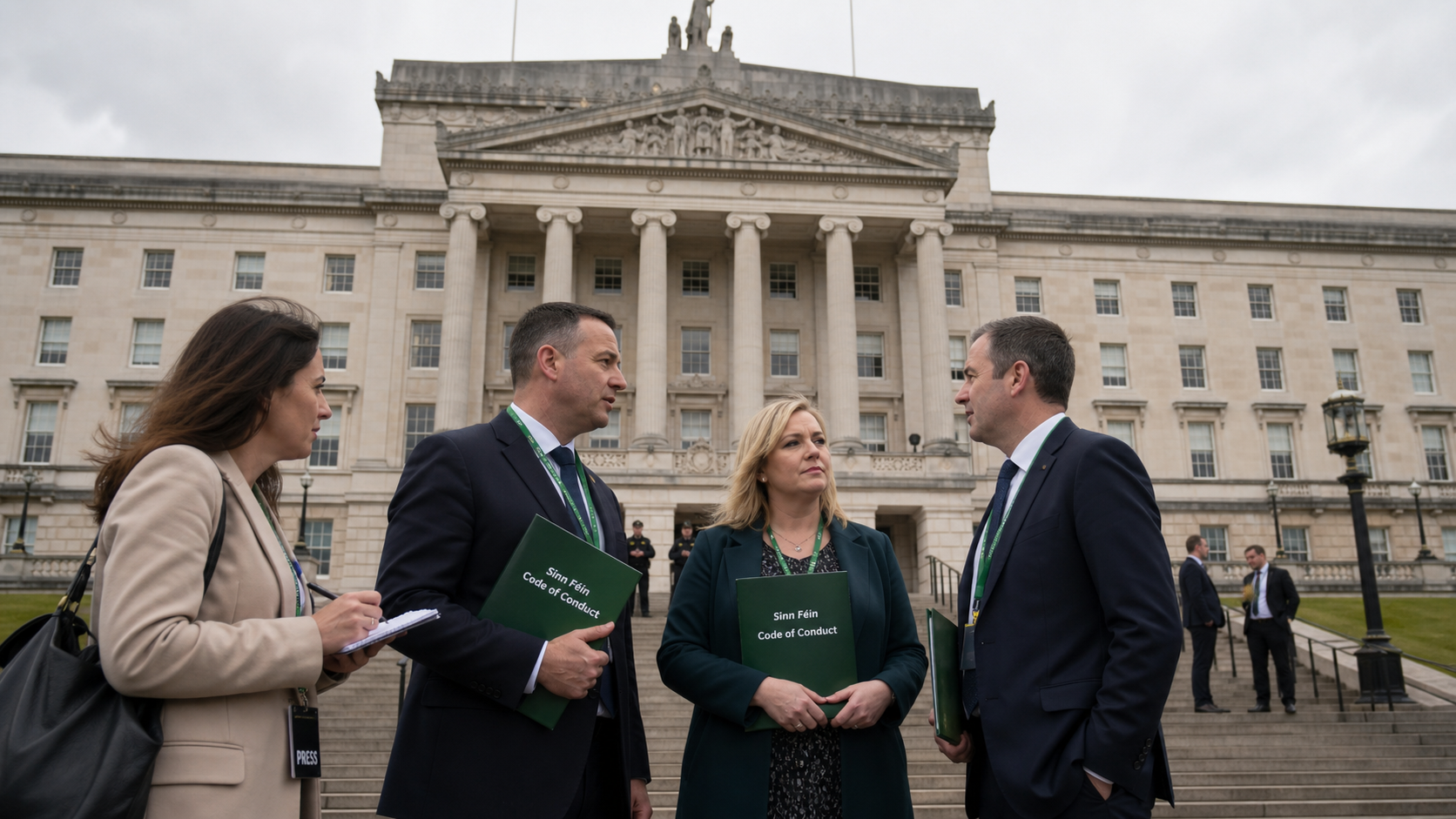
Sinn Féin has distributed a new code of conduct to its membership that explicitly states members do not have the right to publicly criticise, undermine, or work against the party or its representatives, a document that has drawn immediate criticism from political opponents and civil liberties advocates who characterise it as an attempt to suppress internal dissent.
Background
The new code of conduct was distributed by party chairman and MLA Declan Kearney and replaces a previous "charter of ethics" that dated from 2015. The document was developed following a review of the party's internal processes, a review that was itself prompted by a period of unusually public internal friction within Sinn Féin over the past year.
The most prominent recent example of that friction involved Máirín Mhic Lochlainn, a member in Galway West, who faced disciplinary action in July 2026 after publicly criticising the party's candidate selection for a by-election. Mhic Lochlainn had challenged the selection of Mark Lohan, citing his lack of fluency in the Irish language as a significant issue for a constituency with a substantial Gaeltacht population. Her comments, which included expressions of a lack of confidence in party leader Mary Lou McDonald, drew a sharp response from the party leadership and triggered the disciplinary proceedings that have since become a cause célèbre within Sinn Féin circles.
The party has also faced broader challenges in recent months, including questions about its electoral performance and its ability to manage the transition from opposition to government in the Republic while maintaining its position as the largest party in the Stormont Executive.
Key Developments
The new code of conduct acknowledges that members retain the right to express opinions and disagree with party policy, but stipulates that such disagreement must be channelled through "established procedures" rather than expressed publicly. The document explicitly states that members do not have the right to "publicly criticise, undermine or work against the party or its representatives."
The code also addresses digital conduct, warning that trolling, disruptive behaviour, and the use of anonymous accounts for the purpose of abuse are impermissible. It includes provisions regarding bullying, harassment, and safeguarding, with potential sanctions for breaches ranging from censure to suspension or expulsion.
Critics have characterised the document as a "chilling effort to quell internal dissent" at a time when the party is facing genuine questions about its direction and leadership. Kevin O'Hara, a Sinn Féin member who had previously criticised the disciplinary proceedings against Mhic Lochlainn, described the new code as having "neither rhyme nor reason" in the context of a party that presents itself as a democratic and progressive force.
Why It Matters
The Sinn Féin code of conduct raises important questions about internal party democracy that extend beyond the specifics of any individual disciplinary case. Political parties in Ireland and across Europe have long grappled with the tension between the need for collective discipline and the right of members to express dissent. Sinn Féin's particular challenge is that it operates across two jurisdictions with different political cultures and different electoral pressures, and managing that complexity requires a degree of internal coherence that can sit uneasily with open debate. The explicit prohibition on public criticism is unusual in its directness — most party codes of conduct address the issue through more general provisions about loyalty and collective responsibility. The Irish Times has noted that the document's language is notably more prescriptive than comparable codes in other Irish parties.
Local Impact
At Stormont, where Sinn Féin holds the First Minister's office through Michelle O'Neill, the code of conduct is likely to be scrutinised by political opponents who will use it to question the party's commitment to open and accountable governance. The DUP and Alliance Party have already indicated they will raise the matter in the Assembly chamber. Within the party's own membership in Northern Ireland, the reaction has been mixed — some members have welcomed the clarity the new code provides, while others have expressed concern that it will discourage the kind of frank internal debate that healthy political organisations require.
What's Next
The code of conduct takes immediate effect. The disciplinary case involving Máirín Mhic Lochlainn in Galway West is understood to be ongoing. The Irish Times has reported that several other members who have been critical of party decisions in recent months are watching the situation closely. Sinn Féin's Ard Fheis, the party's annual conference, is expected to provide a forum for members to raise concerns about the new code, though the code itself would presumably govern how those concerns can be expressed in the interim.