Sinn Féin Calls for Emergency Stormont Debate on Public Sector Pay as Strike Threat Looms Over Schools and Hospitals
Sinn Féin has called for an emergency debate at Stormont on public sector pay as unions representing teachers, nurses, and civil servants warn that strike action is imminent unless the Executive agrees a budget that addresses years of real-terms pay cuts — with the party's finance spokesperson accusing the DUP of blocking progress on a deal that could avert widespread industrial action across Northern Ireland's public services.
Background
Northern Ireland's public sector workers have experienced a prolonged period of real-terms pay cuts, with wage increases consistently failing to keep pace with inflation over the past decade. The situation has been particularly acute in health and education, where staff shortages have been exacerbated by the inability of the Executive to offer competitive salaries relative to the rest of the United Kingdom. The five teaching unions in Northern Ireland secured strike mandates earlier this year, citing workload pressures and pay that has fallen significantly behind comparable roles in England, Scotland, and Wales.
The Executive's failure to agree a formal budget for the 2026-27 financial year has made it impossible for departments to make new pay commitments, as the contingency budget under which they are operating does not permit significant new spending. This has created a vicious circle in which the inability to agree a budget prevents pay increases, which in turn fuels industrial unrest that further destabilises the political environment in which a budget deal must be reached.
Sinn Féin, as the party of the First Minister, has been under pressure to demonstrate that it can deliver tangible improvements in public services and public sector pay. The party's finance spokesperson has been increasingly vocal in blaming the DUP for blocking progress on a budget deal, a charge the DUP disputes, arguing that the fundamental problem is the inadequacy of the block grant from Westminster.
Key Developments
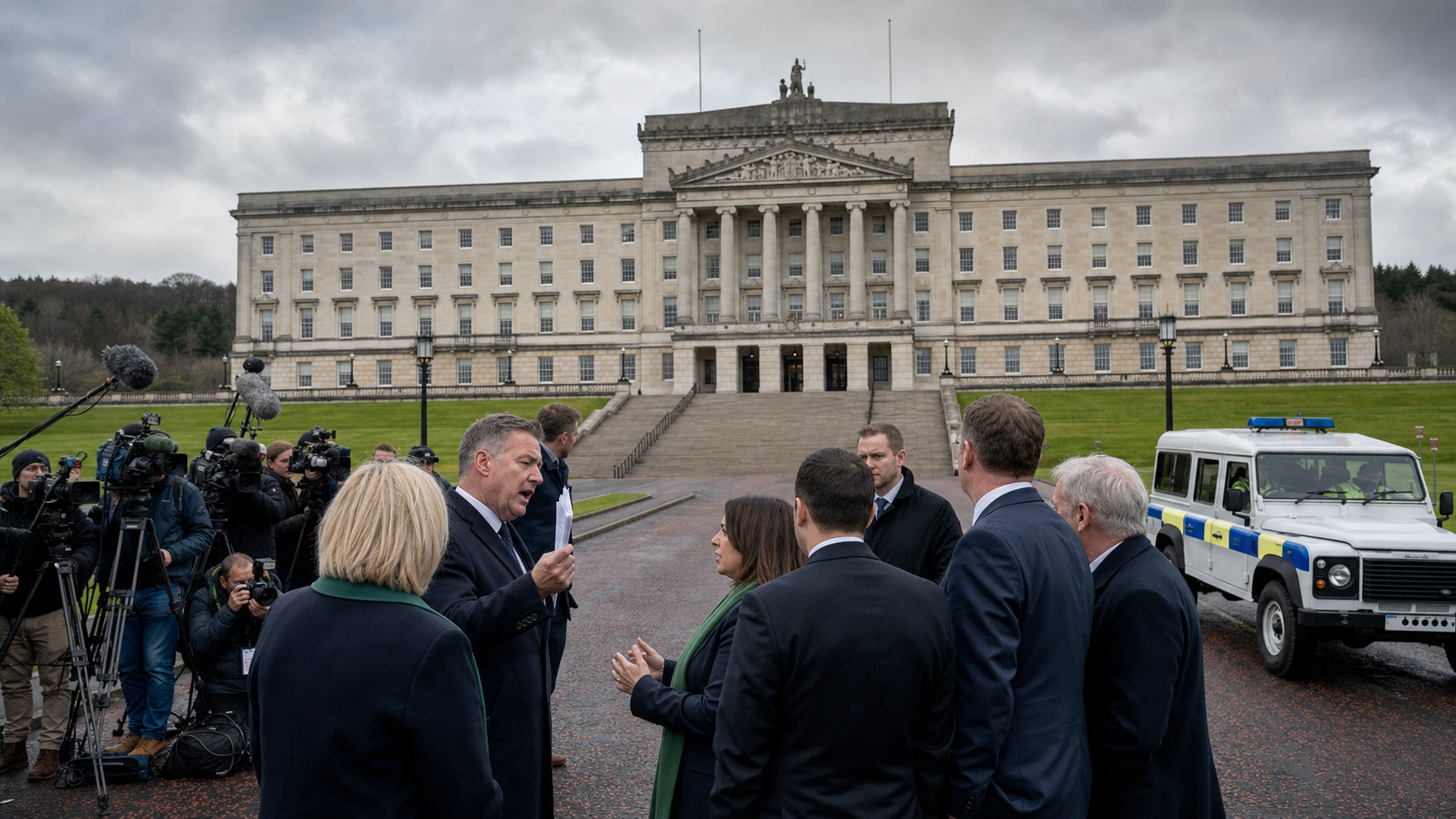
Sinn Féin's finance spokesperson tabled a motion calling for an emergency debate at the Assembly on public sector pay, arguing that the threat of widespread strike action in schools and hospitals requires urgent political attention. The motion calls on the Executive to prioritise a budget deal that includes meaningful pay increases for public sector workers, and on the UK government to provide additional financial support to enable Northern Ireland to address the pay gap with the rest of the United Kingdom.
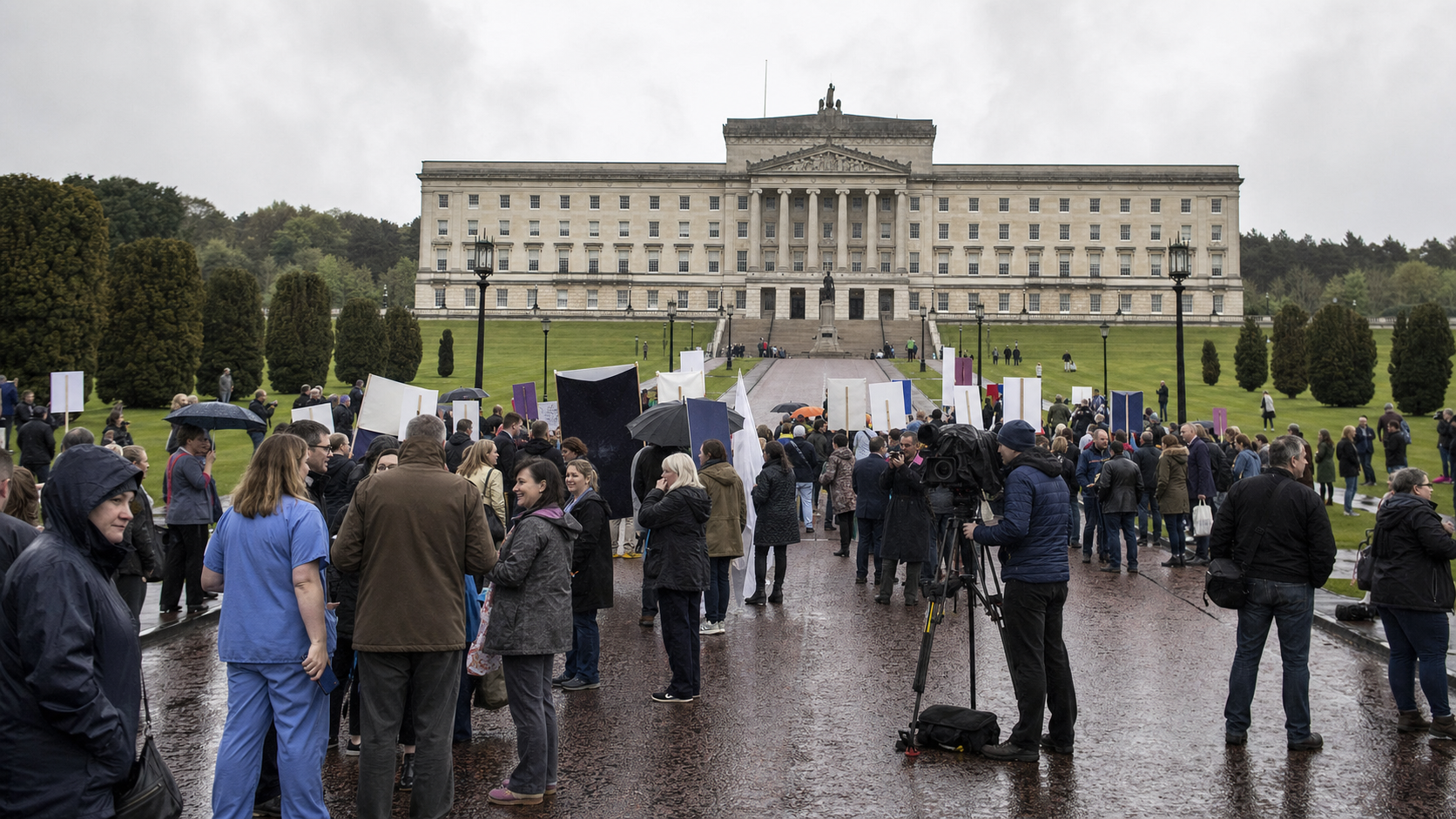
The unions representing Northern Ireland's teachers — the Ulster Teachers' Union, the National Association of Schoolmasters Union of Women Teachers, the National Union of Teachers, the Association of Teachers and Lecturers, and the Irish National Teachers' Organisation — have all secured strike mandates and have indicated they will proceed to industrial action if the pay dispute is not resolved before the end of September. The Royal College of Nursing has also warned that nursing staff in Northern Ireland are at breaking point, with vacancy rates in some trusts exceeding 20 per cent.
The DUP has responded to Sinn Féin's motion by arguing that the party is engaging in political theatre rather than genuine problem-solving, and that the real solution lies in securing additional funding from Westminster rather than in internal political manoeuvring at Stormont. The party's finance spokesperson has called on the UK government to provide a supplementary allocation to Northern Ireland's block grant to address the pay gap.
Why It Matters
The public sector pay dispute in Northern Ireland is not merely a labour relations issue — it is a symptom of a deeper structural problem in the funding of public services in the region. Northern Ireland's public services are funded primarily through the block grant from Westminster, which is calculated using the Barnett formula. Critics have long argued that the Barnett formula does not adequately reflect the higher costs of delivering public services in Northern Ireland, particularly in health and education, and that the region has been systematically underfunded relative to its needs.
The threat of strike action in schools and hospitals would have serious consequences for the people of Northern Ireland. School closures would affect tens of thousands of pupils and their families, while industrial action in hospitals would put additional pressure on a health service that is already struggling with record waiting lists and staff shortages. The prospect of simultaneous strikes in multiple sectors of the public service is a scenario that the Executive is desperate to avoid.
The political dynamics of the dispute are also significant. With the May 2027 Assembly election approaching, both Sinn Féin and the DUP are acutely aware of the electoral consequences of being seen to have failed to protect public services. The public sector pay dispute is a test of the Executive's ability to govern effectively under pressure, and the outcome will have implications for the political landscape in Northern Ireland for years to come.
Local Impact
The threat of strike action is felt most acutely in communities that depend heavily on public services. In north and west Belfast, where public sector employment is particularly high and where many families rely on state schools and NHS services, the prospect of strikes is a source of significant anxiety. In rural areas of Northern Ireland, where private sector alternatives to public services are limited, the impact of industrial action would be particularly severe. The Education Authority has been asked to prepare contingency plans for school closures, and the five health trusts have been asked to identify essential services that would need to be maintained in the event of nursing strikes.
What's Next
The Assembly is expected to debate Sinn Féin's motion on public sector pay in the coming week. The Executive is under pressure to make progress on a budget deal before the end of September, when the teaching unions have indicated they will begin their strike action. The UK government has been asked to provide additional financial support, and a meeting between the First Minister, the deputy First Minister, and the Secretary of State for Northern Ireland is expected to take place before the end of the month.