Sinn Fein Staff Considered Mass Resignation Over O Donnghaile Handling, New Book by Party Adviser Reveals
A new memoir by former Sinn Fein press officer Siobhan Fenton reveals that party staff in Leinster House were distraught and furious with leader Mary Lou McDonald over the handling of revelations about former senator Niall O Donnghaile, and that employees discussed resigning en masse in protest before ultimately deciding to remain in their roles out of a sense of duty and concern for their colleagues ahead of a critical general election.
Background
The controversy surrounding Niall O Donnghaile has been one of the most damaging internal episodes in Sinn Fein's recent history. O Donnghaile, a prominent Belfast politician who served as a senator in Leinster House, resigned from the Seanad in December 2023, with a public statement from Mary Lou McDonald praising his service and wishing him well. What was not disclosed at the time was that O Donnghaile had been suspended from the party in September 2023 following a complaint about inappropriate text messages sent to a 17-year-old. The gap between the public narrative — a valued colleague stepping back for health reasons — and the private reality — a suspension following a safeguarding complaint — became public knowledge in the months that followed, causing significant damage to Sinn Fein's reputation and raising serious questions about the party's internal culture and its commitment to transparency on safeguarding matters. The episode came at a particularly sensitive time, as Sinn Fein was preparing for a general election in which it was hoping to enter government for the first time. Siobhan Fenton served as a press officer for Sinn Fein in Leinster House during this period. Her memoir, published this week, provides the most detailed insider account yet of how the party's staff experienced the O Donnghaile revelations and their aftermath.
Key Developments
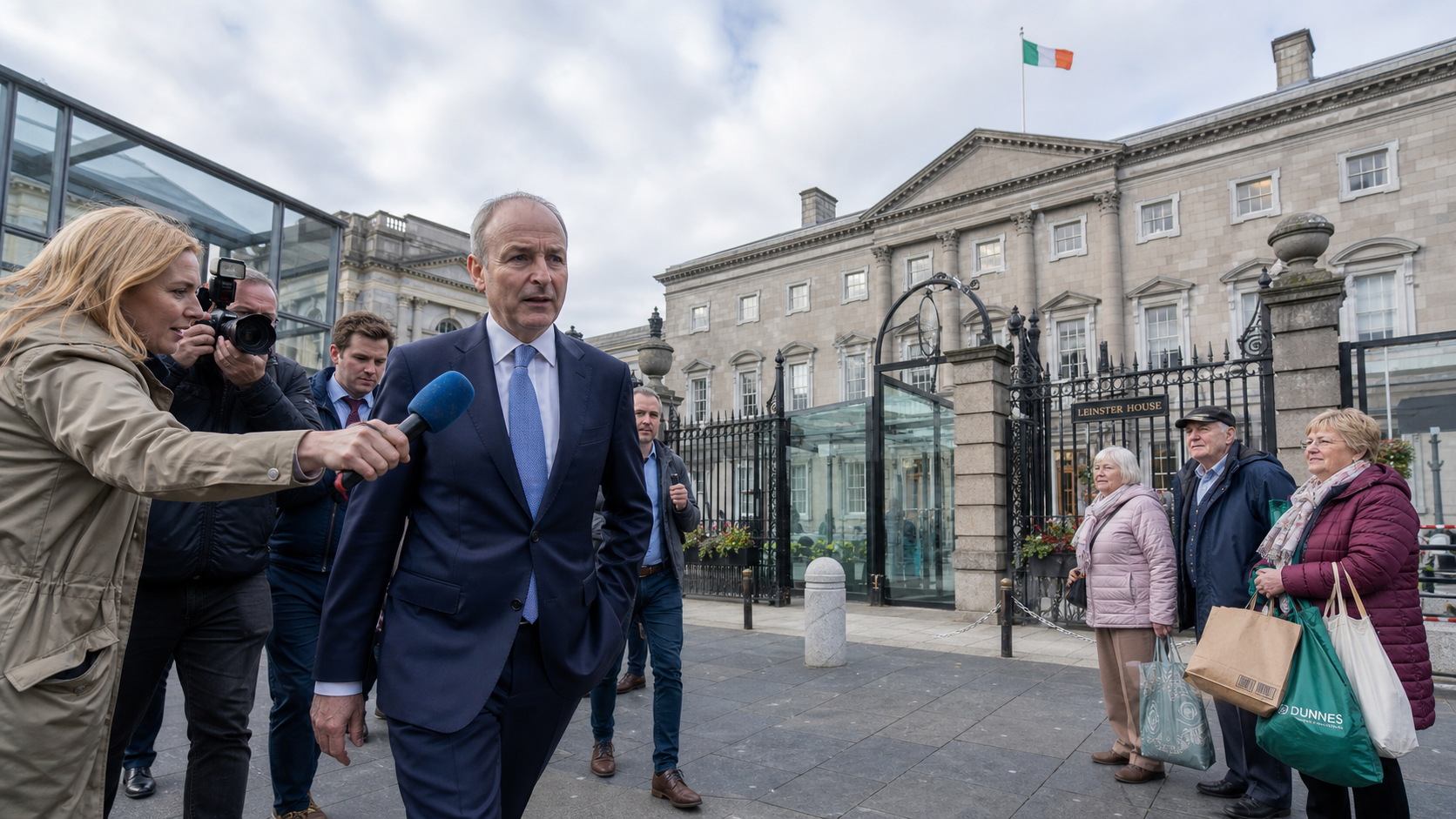
Fenton's account describes a Leinster House staff room in turmoil following the disclosure of the full circumstances of O Donnghaile's departure. Staff were, in her words, distraught and furious with McDonald over how the leadership had managed the situation — not just the original handling of the complaint, but the decision to allow the public statement praising O Donnghaile to stand without correction for months after his suspension. The book reveals that employees discussed resigning in protest, with some feeling that remaining in their roles made them complicit in a cover-up. Ultimately, the staff decided against mass resignation for two reasons: they believed that resigning would have no practical impact on improving the party's internal safeguarding procedures, and they felt a sense of guilt about leaving their colleagues to manage the significant workload during the lead-up to a critical general election. Fenton notes that the staff remained in their positions until the dissolution of their Oireachtas contracts, despite their anger. The memoir is the latest in a series of accounts that have shed light on the internal culture of Sinn Fein during a period of significant political pressure.
Why It Matters
The O Donnghaile episode and its aftermath raise fundamental questions about how political parties handle safeguarding complaints — questions that are not unique to Sinn Fein but that have particular resonance given the party's stated commitment to progressive values and its ambition to lead government. The gap between public statements and private reality in the handling of the complaint is precisely the kind of institutional defensiveness that erodes public trust in political parties. Fenton's account also illuminates the position of party staff — people who are employed to serve the party's political interests but who have their own ethical commitments and their own sense of what is right. For Sinn Fein, the publication of the memoir is an unwelcome reminder of an episode the party would prefer to have moved beyond. With Assembly elections in Northern Ireland scheduled for May 2027, the party cannot afford further damage to its reputation on safeguarding and transparency.
Local Impact
In Belfast, where O Donnghaile was a prominent political figure and where Sinn Fein's electoral base is strongest, the memoir's revelations have been received with a mixture of disappointment and resignation. The party's local representatives have declined to comment on the book's contents. In Leinster House, the publication has prompted renewed calls from opposition parties for a Dail debate on political party safeguarding procedures and the obligations of party leaders when complaints are made against elected members.
What's Next
Sinn Fein has not yet issued a formal response to the memoir's revelations. Mary Lou McDonald is expected to be asked about the book's contents at her next media availability. The party's internal safeguarding procedures have been revised since the O Donnghaile episode, and the leadership is likely to point to those changes as evidence that lessons have been learned. Fenton's memoir is expected to generate significant media coverage in the coming weeks, and its publication ahead of the 2027 Assembly elections will ensure that the O Donnghaile episode remains a live political issue for the party.