Sinn Féin Insists It Has No Intention of Collapsing Stormont as O'Dowd Moves to Calm Stability Fears
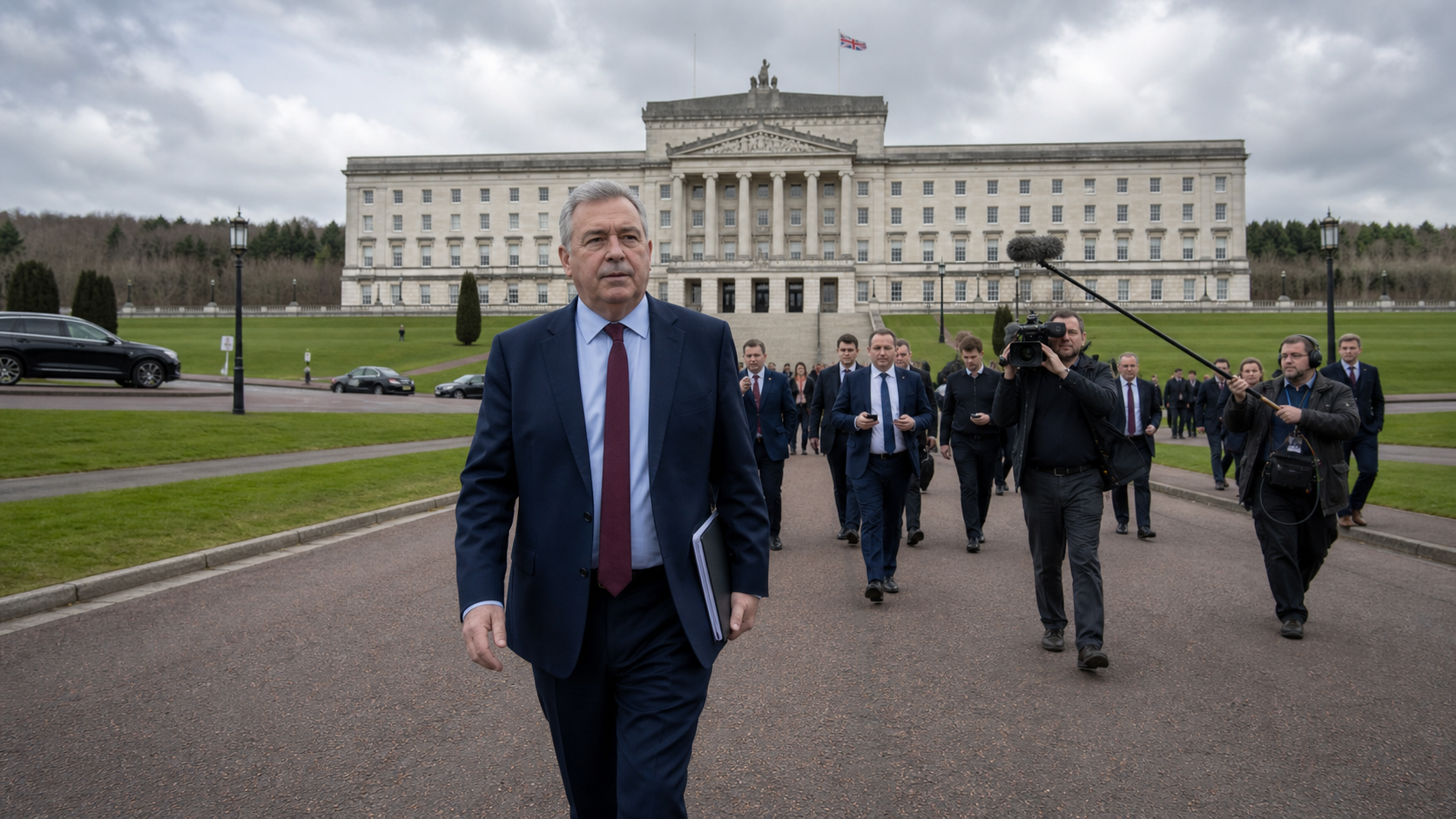
Sinn Féin Finance Minister John O'Dowd has moved to reassure political observers and the public that his party has no intention of collapsing the Stormont Executive, following remarks by colleague Conor Murphy that power-sharing was in a "precarious place" due to what he described as a lack of political will from the DUP. O'Dowd's intervention, delivered on Tuesday, sought to draw a clear distinction between expressing concern about the institutions' direction and threatening their existence.
Background
The Stormont Executive, restored in February 2024 after a two-year DUP boycott over post-Brexit trading arrangements, has operated in a state of managed tension ever since. The power-sharing arrangement requires the two largest parties — currently Sinn Féin and the DUP — to govern together under the terms of the Good Friday Agreement, a structure that demands a level of cross-community cooperation that has historically proved difficult to sustain over extended periods.
The current Executive faces a range of pressures that would test any administration: a structural budget deficit that has required difficult decisions about public services, a housing crisis that is acute in both Belfast and rural areas, and a series of policy disagreements between the parties on issues ranging from legacy legislation to Irish language provision. Against this backdrop, the language used by senior figures to describe the state of the institutions carries significant weight.
Conor Murphy's suggestion that the wheels could "come off" power-sharing if the institutions were not reformed was interpreted by some commentators as a signal that Sinn Féin was preparing the ground for a potential withdrawal — a reading that O'Dowd moved quickly to correct. The party's strategic interest in maintaining the Executive is clear: with Assembly elections scheduled for 2027, Sinn Féin has every incentive to demonstrate that it can govern effectively rather than to trigger a crisis that would reset the political clock.
Key Developments
O'Dowd's statement on Tuesday was unambiguous in its intent. "Sinn Féin has no intent, plan or otherwise to walk away from these institutions," he said, adding that the party had "genuine concerns" about the DUP's approach to governance but that those concerns were being expressed through political channels rather than through any threat to the Executive's existence.
The Finance Minister acknowledged that coalition governance presented significant challenges but rejected the characterisation that the institutions were on the verge of collapse. Ulster Unionist Health Minister Mike Nesbitt offered a similar assessment, noting that while the Executive faced real difficulties, he did not believe there was "imminent danger" of a breakdown.
The DUP, for its part, rejected Sinn Féin's framing of the situation, with party representatives accusing their coalition partners of attempting to destabilise the government through public commentary while simultaneously claiming to support it. The party has been particularly critical of what it describes as Sinn Féin's use of "culture war" rhetoric — a reference to ongoing disputes over Irish language legislation, legacy issues, and the naming of public spaces.
The political backdrop is complicated by a reported slump in Sinn Féin's support in recent polling, which has led to speculation about whether the party's strategic calculus regarding the Executive might shift as the 2027 election approaches. O'Dowd's intervention appeared designed in part to address that speculation directly.
Why It Matters
The stability of the Stormont Executive matters not merely as a political question but as a practical one for the 1.9 million people who live in Northern Ireland. When the institutions collapse — as they have done repeatedly since 1998 — the consequences are felt most acutely in public services: budgets go unset, decisions are deferred, and the civil service operates in a state of managed paralysis that serves no one well. The two-year DUP boycott that ended in February 2024 left a legacy of deferred decisions and accumulated pressures that the current Executive is still working through.
The current budget situation is particularly acute. Northern Ireland's block grant from Westminster has not kept pace with the cost of delivering public services, and the Executive has been forced to make cuts across departments that have drawn criticism from trade unions, voluntary organisations, and opposition parties alike. The Local Growth Fund allocation — £27.4 million for 2026-27, announced last week — has been criticised by O'Dowd himself as insufficiently flexible, with its capital-heavy structure limiting the Executive's ability to address revenue pressures in the voluntary and community sector.
Local Impact
For communities across Northern Ireland — from the Shankill Road to the Falls, from Derry's Bogside to the Glens of Antrim — the stability of Stormont is not an abstract constitutional question but a matter of direct practical consequence. Health waiting lists, school funding, road maintenance, and social housing allocation all depend on a functioning Executive capable of setting and implementing a budget. The uncertainty generated by public statements about the institutions' fragility has a real cost, even when those statements are subsequently walked back. Businesses considering investment in Northern Ireland, families planning their futures, and public servants trying to plan service delivery all need a degree of political predictability that the current atmosphere does not always provide.
What's Next
The Executive is expected to finalise its 2026-27 budget position in the coming weeks, with Finance Minister O'Dowd under pressure to identify additional savings or to make the case to Westminster for supplementary funding. Assembly elections are scheduled for May 2027, and the political temperature is likely to rise as parties position themselves for that contest. The next significant test of Executive cohesion will come when the Programme for Government's mid-term review is published, expected before the end of the year.