Senator Frances Black to Introduce New Bill Extending Occupied Territories Trade Ban to Services in September Push
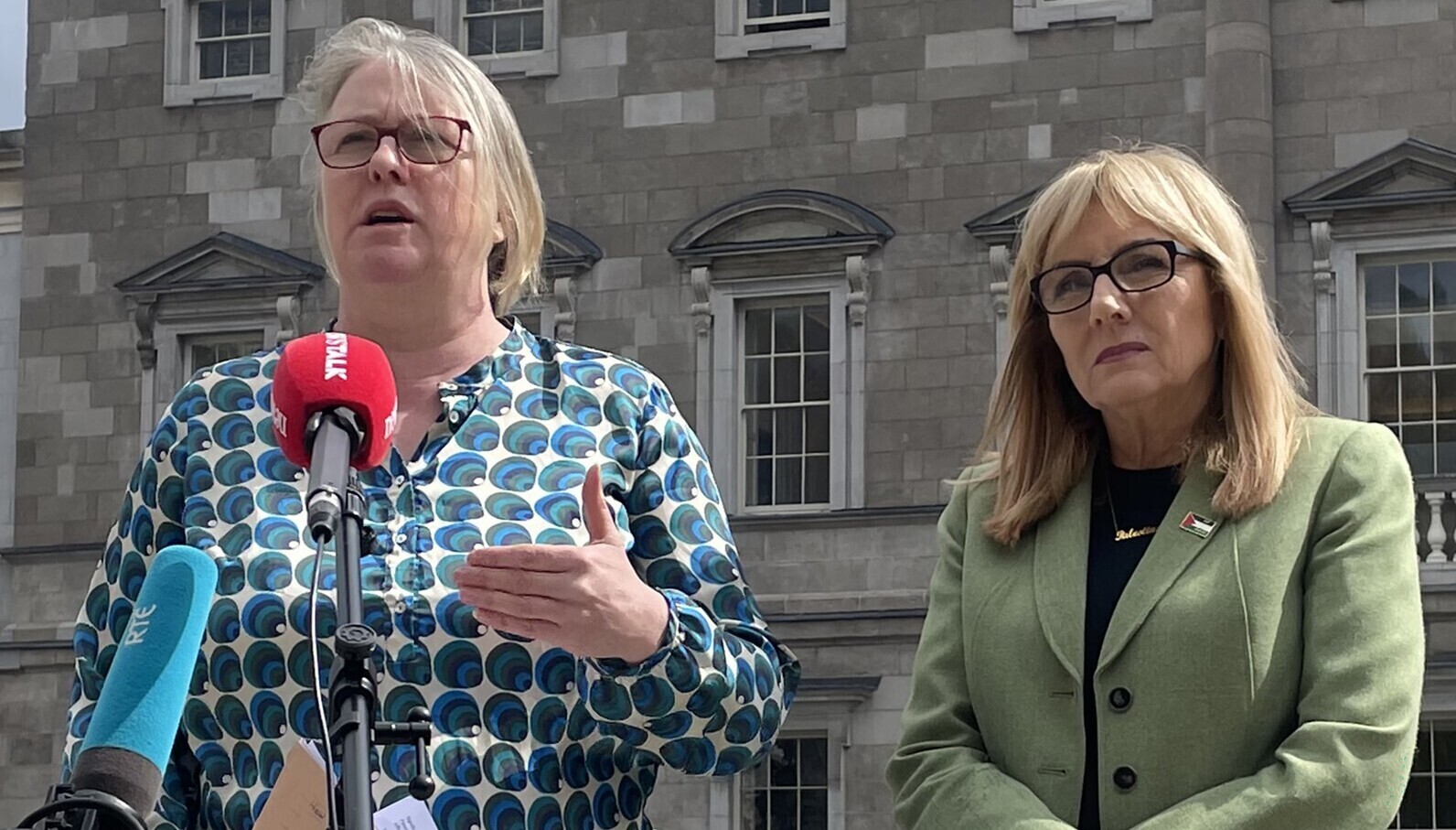
Senator Frances Black has announced plans to introduce new legislation in September 2026 to extend Ireland's Occupied Territories trade ban to cover services, following the enactment in July of the Israeli Settlements in the Occupied Palestinian Territories (Prohibition of Importation of Goods) Act 2026 — a law that critics, including Black herself, have described as "symbolic" because it excludes services, which are estimated to account for approximately 70% of trade with Israeli settlements in the occupied Palestinian territories.
Background
The campaign to legislate against trade with Israeli settlements in the occupied Palestinian territories has been one of the most sustained and politically charged legislative efforts in the history of the Oireachtas. Senator Frances Black first introduced the Control of Economic Activity (Occupied Territories) Bill in 2018, a comprehensive measure that sought to criminalise both trade in goods and services with illegal settlements. The bill attracted significant public support and passed the Seanad, but was blocked in the Dáil by the government of the day, which argued that it was incompatible with EU law.
The legal landscape changed significantly following the International Court of Justice's 2024 advisory opinion on Israel's occupation of the Palestinian territories, which provided a stronger legal basis for states to restrict trade with settlements. The Irish government subsequently introduced its own, narrower legislation — the Israeli Settlements in the Occupied Palestinian Territories (Prohibition of Importation of Goods) Act 2026 — which was signed into law by President Catherine Connolly on July 23, 2026. The Act prohibits the importation of goods from Israeli settlements but does not include a ban on services.
The government's decision to exclude services from the legislation was justified by Minister for Foreign Affairs Helen McEntee on the grounds that while a ban on goods had a strong legal basis following the ICJ opinion, the legal foundation for a ban on services was less certain and posed greater implementation challenges. Critics, including Black and various opposition parties, argued that this distinction rendered the law largely ineffective given the dominance of services in the trade relationship.
Key Developments
Senator Black's announcement that she will introduce new legislation in September 2026 to cover services represents the next phase of a campaign that has been running for eight years. The new bill will be developed in consultation with NGOs, trade unions, and activist groups that have been central to the campaign, and will seek to address the legal concerns raised by the government about the services dimension of the trade ban.
The legal basis for a services ban has been strengthened by the ICJ's advisory opinion and by subsequent developments in international law, and Black's legal team is confident that a well-drafted services bill can withstand the scrutiny that the government applied to the original 2018 legislation. The bill is expected to focus on services that are directly connected to the operation of Israeli settlements — construction, financial services, and tourism — rather than seeking a blanket ban on all services trade.
The political context for the new bill is different from that of the 2018 original. The enactment of the Goods Act has established the principle that Ireland can legislate against trade with settlements, and the government's own legislation provides a precedent that the services bill can build on. The question is whether the government will support or oppose the new legislation, and whether the legal arguments that were used to block the original bill can be overcome.
Why It Matters
The Occupied Territories legislation matters because it represents Ireland's most concrete expression of its foreign policy position on the Israeli-Palestinian conflict. Ireland has been among the most vocal European countries in criticising Israeli settlement policy and in calling for a two-state solution, and the legislation gives that position practical effect by restricting the economic relationships that sustain the settlements. The extension of the ban to services would significantly increase its impact, given that services account for the majority of economic activity in the settlements.
The legislation also has broader significance as a test of Ireland's willingness to use its domestic legal system to give effect to international law obligations. The ICJ's advisory opinion has created a legal framework within which states can act against the settlements, and Ireland's response to that framework will be watched closely by other countries that are considering similar measures.
Local Impact
The Occupied Territories legislation has generated significant public interest across Ireland, with opinion polls consistently showing strong public support for restrictions on trade with Israeli settlements. The campaign has been particularly active in university towns and cities, where student unions and academic staff have been among the most vocal advocates for the legislation. The new services bill is expected to generate a similar level of public engagement, with the campaign coalition — which includes Trócaire, Amnesty International Ireland, and the Irish Congress of Trade Unions — already mobilising in support of the initiative.
What's Next
Senator Black is expected to publish the text of the new services bill in the coming weeks, with the Seanad debate likely to begin in October or November 2026. The government's response to the bill will be a key indicator of whether the political consensus around the Goods Act extends to the more contested question of services. If the government opposes the bill, it will face pressure from opposition parties and civil society organisations to explain why the legal arguments that justified the Goods Act do not apply to services. If it supports the bill, it will represent a significant expansion of Ireland's legislative engagement with the Israeli-Palestinian conflict.