SDLP Initiates Stormont Debate on New Ireland as DUP and UUP Round on 'Divisive' Border Poll Focus
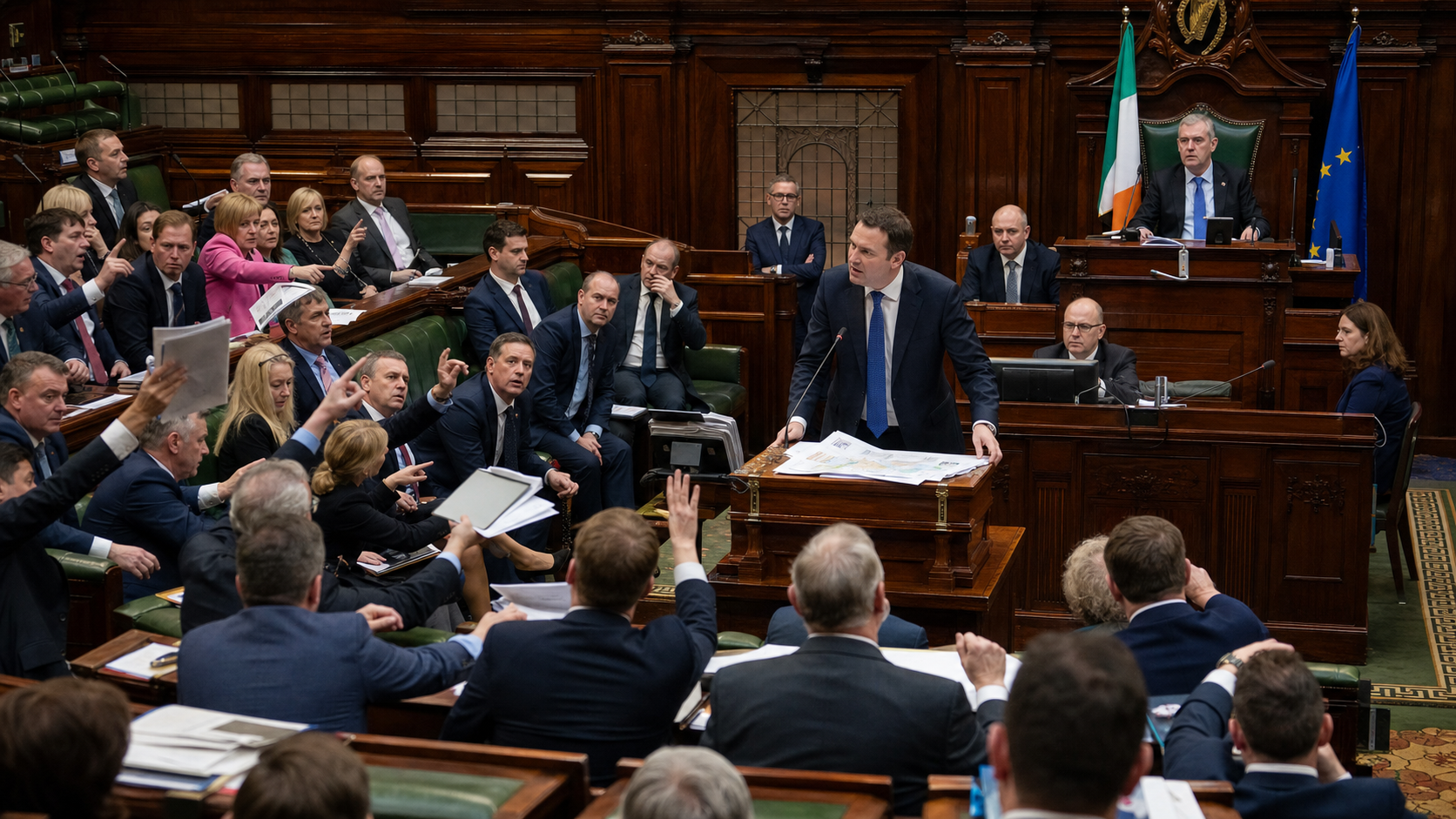
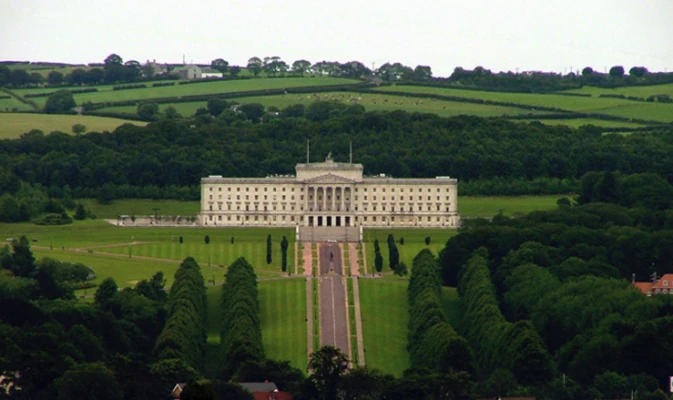
The SDLP has initiated a debate at the Northern Ireland Assembly arguing that a "new Ireland" within the European Union presents a compelling and viable alternative to a United Kingdom that could, in the future, be led by the Reform party under Nigel Farage. Opposition leader Matthew O'Toole put forward the motion, which drew sharp and sustained opposition from DUP and UUP MLAs who accused the SDLP of prioritising a "divisive border poll" over the immediate economic pressures facing families and businesses across Northern Ireland.
Background
The SDLP's decision to initiate a debate on Irish unity at Stormont reflects a broader strategic calculation within the party about how to position itself in a rapidly changing political landscape. The resignation of UK Prime Minister Keir Starmer and the prospect of a future UK government led by the Reform party — which has expressed scepticism about the Good Friday Agreement and the post-Brexit arrangements for Northern Ireland — has provided the SDLP with a new and potent argument for Irish unity: that the constitutional status quo carries its own risks, and that the stability and prosperity of a united Ireland within the EU may offer a more secure future for the people of Northern Ireland than continued membership of a UK that is moving in an increasingly nationalist and Eurosceptic direction.
The SDLP has been navigating a difficult political terrain in recent years. The party, which was once the dominant force in constitutional nationalism in Northern Ireland, has seen its electoral support eroded by Sinn Féin, which has successfully positioned itself as the primary vehicle for nationalist and republican ambitions on both sides of the border. The SDLP's decision to initiate a debate on Irish unity at Stormont can be read as an attempt to reassert its relevance on the constitutional question while differentiating itself from Sinn Féin's more maximalist approach.
The debate also reflects the broader intensification of the conversation about Irish unity that has been taking place across the island since the Brexit referendum of 2016. A series of opinion polls in Northern Ireland have shown a gradual increase in support for Irish unity, particularly among younger voters and those who do not identify strongly with either the unionist or nationalist tradition. The Citizens' Assembly on Irish Unity, which concluded its work in 2024, produced a report that outlined the practical steps that would need to be taken to prepare for a border poll and to plan for the governance of a united Ireland.
Key Developments
Matthew O'Toole's motion, debated in the Assembly on Tuesday, argued that the prospect of a UK government led by the Reform party — with its hostility to the EU, its scepticism about the Good Friday Agreement, and its populist nationalism — represents a genuine threat to the stability and prosperity of Northern Ireland. He argued that a new Ireland within the EU, with full access to the single market and the customs union, would offer Northern Ireland's businesses and citizens a more secure and prosperous future than continued membership of a UK that is increasingly at odds with its European neighbours.
The motion was strongly opposed by DUP leader Gavin Robinson, who described it as "a cynical attempt to exploit political uncertainty in London for constitutional ends." He argued that the SDLP's focus on a border poll was a distraction from the immediate challenges facing Northern Ireland — the budgetary crisis, the health waiting lists, the cost of living — and accused the party of prioritising its constitutional agenda over the practical needs of the people it represents. UUP leader Doug Beattie echoed this criticism, arguing that the debate was "divisive and unhelpful" at a time when the Assembly should be focused on delivering for its constituents.
Sinn Féin, while broadly supportive of the motion's constitutional direction, was careful to distance itself from what it characterised as the SDLP's overly defensive framing — arguing that the case for Irish unity should be made on its positive merits rather than primarily as a response to the threat of a Reform-led UK government.
Why It Matters
The SDLP's debate matters because it reflects a genuine shift in the political landscape of Northern Ireland. The constitutional question — which was, for much of the post-Good Friday Agreement period, treated as a settled matter that would not be revisited for a generation — is now firmly back on the political agenda. The combination of Brexit, the rise of the Reform party in England, and the gradual demographic changes in Northern Ireland has created a political environment in which the case for Irish unity is being made more openly and more seriously than at any point since the 1990s. The debate also highlights the extent to which the political parties in Northern Ireland are increasingly defined by their positions on the constitutional question, even as they are simultaneously required to govern together in a mandatory coalition. This tension — between the constitutional ambitions of nationalist parties and the constitutional commitments of unionist parties — is the fundamental dynamic of Northern Ireland politics, and it is not going away.
Local Impact
For communities across Northern Ireland, the debate about Irish unity is not merely an abstract constitutional question — it has direct implications for their daily lives, their economic prospects, and their sense of identity. In nationalist communities in west Belfast, Derry, and south Armagh, the debate has been welcomed as a sign that the constitutional question is being taken seriously at the highest levels of political discourse. In unionist communities in east Belfast, north Antrim, and the Ards Peninsula, the debate has been received with anxiety and, in some cases, anger — a reminder that the constitutional question remains deeply divisive and that any move towards a border poll would require careful and sensitive management to avoid inflaming community tensions.
What's Next
The SDLP's motion was defeated in the Assembly vote, as expected, given the opposition of the DUP and UUP. However, the party has indicated that it will continue to make the case for Irish unity through a series of public events and policy papers over the coming months. The Irish government's Shared Island Unit is expected to publish a new research paper on the economic implications of Irish unity in September, which will provide further material for the debate. The question of when and whether a border poll should be called remains a matter for the Secretary of State for Northern Ireland, who is required under the Good Friday Agreement to call a poll if it appears likely that a majority of people in Northern Ireland would vote in favour of Irish unity.