Dáil Erupts as Opposition Accuses Housing Minister of Dodging Scrutiny Over New Housing Plan
Housing Minister James Browne faced a bruising session in the Dáil on 24 June 2026 as opposition parties accused him of fleeing the country to avoid scrutiny of the government's new housing plan — a confrontation that laid bare the intense political pressure on the coalition to deliver tangible results on the issue that has dominated Irish politics for the better part of a decade.
Background
Housing has been the defining domestic political issue in Ireland since the mid-2010s, when a combination of rapid economic recovery, population growth, and chronic undersupply began to push rents and house prices to levels that placed homeownership and even private renting beyond the reach of large sections of the population. Successive governments have introduced a series of measures — from Help to Buy schemes to rent pressure zones to large-scale social housing programmes — with limited success in addressing the fundamental supply deficit.
James Browne was appointed Housing Minister in the coalition government formed after the 2025 general election, inheriting a brief that has proved politically toxic for his predecessors. The housing crisis has not abated — if anything, it has deepened, with average rents in Dublin now exceeding €2,500 per month for a two-bedroom apartment and house prices in many parts of the country beyond the reach of first-time buyers on average incomes.
The government's new housing plan, unveiled in June 2026, was intended to demonstrate the coalition's commitment to addressing the crisis with a fresh set of measures. However, the plan has been criticised by opposition parties, housing advocates, and industry representatives as insufficiently ambitious and lacking the specific, costed commitments necessary to make a meaningful difference to supply.
Key Developments
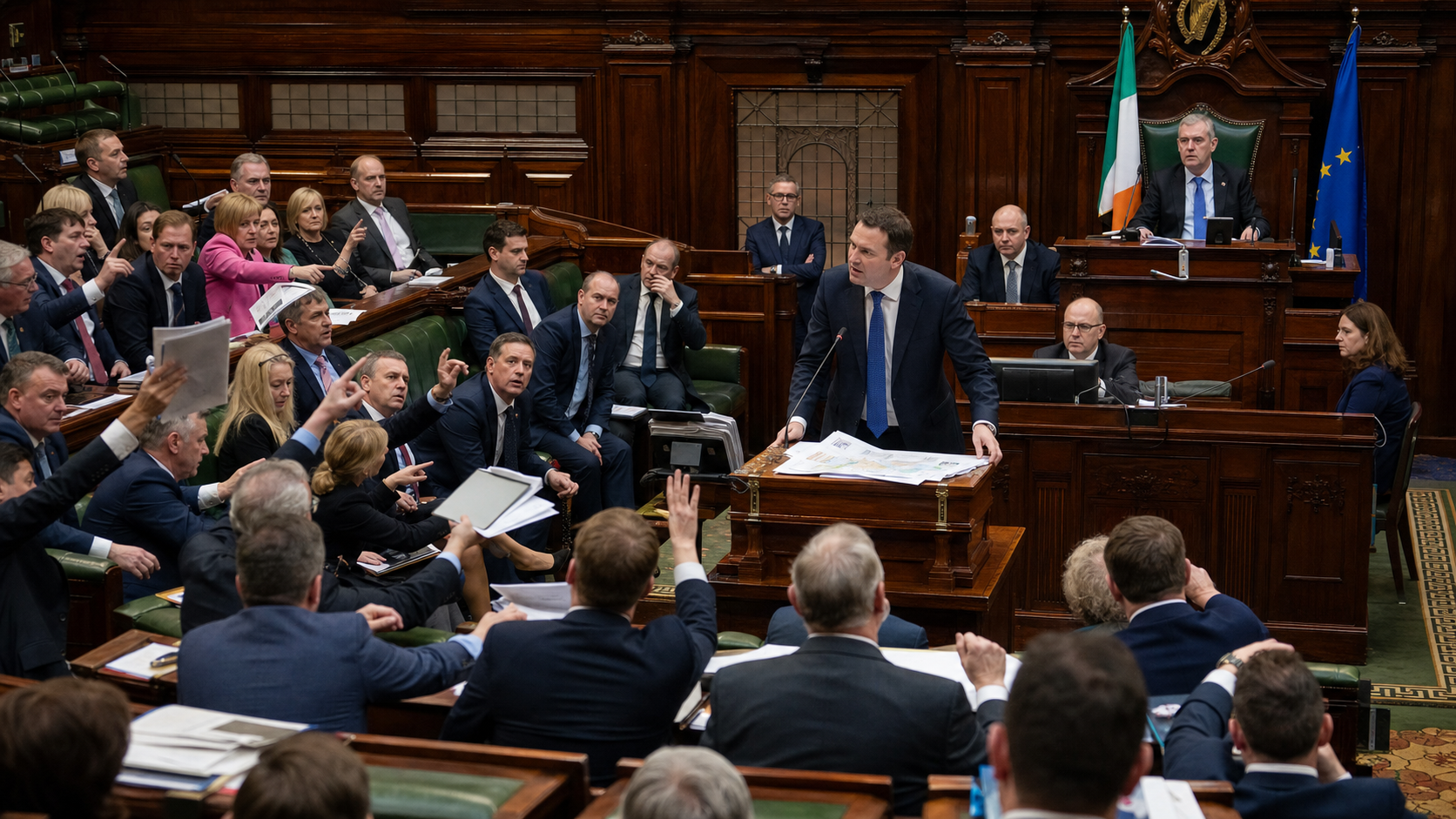
The Dáil debate on 24 June descended into acrimony when it emerged that Minister Browne was not present in the chamber to defend the government's housing plan. Opposition TDs — from Sinn Féin, Labour, the Social Democrats, and People Before Profit — seized on the minister's absence, with several accusing him of fleeing the country to avoid scrutiny.
The accusations were particularly pointed given the significance of the housing debate and the government's stated commitment to making housing its top priority. Opposition spokespersons argued that a minister who is not present to defend his own plan in the Dáil is not taking the issue seriously, and that the absence was symptomatic of a broader failure of political accountability on housing.
Government TDs defended the minister, arguing that ministerial travel is a normal part of the job and that the housing plan had been thoroughly debated in committee. However, the optics of the situation — a minister absent from a major Dáil debate on his own portfolio — proved difficult to manage, and the story dominated political coverage for much of the day.
Why It Matters
The Dáil confrontation over housing is significant not just as a political spectacle but as a reflection of the genuine frustration felt by large sections of the Irish public about the pace of progress on the housing crisis. For the hundreds of thousands of people on social housing waiting lists, the tens of thousands living in emergency accommodation, and the many more who are spending unsustainable proportions of their income on rent, the political debate in the Dáil can feel disconnected from the reality of their daily lives.
The opposition's tactics — focusing on the minister's absence rather than the substance of the housing plan — reflect a political calculation that accountability and competence are as important to voters as policy detail. In a political environment where trust in government on housing has been severely eroded by years of missed targets and broken promises, the symbolism of a minister not being present to defend his plan carries real weight.
The housing debate also reflects deeper questions about the government's political priorities and its capacity to deliver on its commitments. The coalition's programme for government made housing its central domestic priority, but the gap between that commitment and the reality of housing delivery has become a persistent source of political vulnerability.
Local Impact
The political debate in the Dáil has direct implications for communities across Ireland where housing pressure is most acute. In Dublin, where the crisis is most visible, constituencies in the city and suburbs are represented by TDs from across the political spectrum who are under intense pressure from constituents struggling with housing costs. In Cork, Galway, and Limerick, where housing markets have tightened significantly in recent years, the political pressure is similarly intense.
For local authorities across Ireland, the government's housing plan has implications for the resources and powers available to them to address local housing needs. County councils and city councils are on the front line of housing delivery, and their capacity to build social housing, approve planning applications, and manage housing waiting lists is directly affected by the policy and funding decisions made at national level.
What's Next
Minister Browne is expected to make a statement to the Dáil in the coming days addressing the controversy over his absence and setting out the government's response to the criticisms of the housing plan. The Oireachtas Housing Committee is scheduled to scrutinise the plan in detail in July 2026, with the minister expected to appear before the committee. Opposition parties have indicated they will use the committee hearings to press for specific, costed commitments on housing delivery targets, planning reform, and social housing investment.