Irish Government Pledges £197 Million to Transform Dublin-Belfast Rail Link in Landmark Shared Island Commitment
The Irish government has announced a funding commitment of £197 million — approximately €233 million — for cross-border rail services between Dublin and Belfast, drawing on the Shared Island Fund in what represents one of the most significant North-South infrastructure investments since the Good Friday Agreement and a tangible demonstration that all-island economic cooperation can deliver practical benefits for people on both sides of the border.
Background
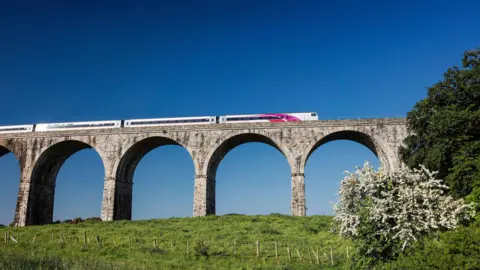
The Enterprise service — the cross-border rail link between Dublin Connolly and Belfast Grand Central — is the only direct rail connection between the two largest cities on the island of Ireland. The service, operated jointly by Irish Rail and Translink, carries approximately 1.5 million passengers annually and is a vital artery for business, tourism, and personal travel between the Republic and Northern Ireland.
Despite its importance, the Enterprise service has long been hampered by ageing infrastructure, slow journey times, and limited frequency. The current journey time between Dublin and Belfast is approximately two hours and ten minutes — a figure that compares unfavourably with the journey times achievable on comparable routes in other European countries. The service runs eight times daily in each direction, a frequency that is insufficient to meet demand at peak times and that limits the service's attractiveness as an alternative to road travel.
The Shared Island Fund, established by the Irish government in 2020 as part of its commitment to the Good Friday Agreement, has already invested in a range of cross-border projects, including road improvements, greenways, and community infrastructure. The commitment of £197 million to the Dublin-Belfast rail link represents the largest single allocation from the fund to date and signals a significant escalation in the government's ambition for all-island connectivity.
Key Developments
The announcement, reported on 24 June 2026, confirms that the Irish government will part-fund a major programme of infrastructure improvements on the Dublin-Belfast rail corridor. The investment will be used to upgrade track, signalling, and station infrastructure along the route, with the aim of reducing journey times, increasing service frequency, and improving reliability.
The funding commitment is being made in partnership with Translink and the Northern Ireland Department for Infrastructure, which is expected to contribute additional funding from its own capital budget. The combined investment will enable a programme of works that would not be achievable by either jurisdiction acting alone — a practical demonstration of the value of North-South cooperation in delivering infrastructure improvements that benefit people across the island.
The announcement has been welcomed by business groups, tourism bodies, and transport advocates on both sides of the border. The Dublin Chamber of Commerce and the Belfast Chamber of Commerce have both called for the investment to be accelerated, arguing that improved rail connectivity between the two cities would boost trade, tourism, and economic activity across the island.
Why It Matters
The significance of this investment extends well beyond the practical improvements it will deliver to the Enterprise service. It represents a statement of intent about the kind of all-island economic relationship that the Irish government wants to build — one in which physical connectivity is seen as a foundation for deeper economic and social integration.
The timing is also significant. The post-Brexit landscape has created new opportunities for North-South cooperation, particularly in areas where the Windsor Framework has created a degree of regulatory alignment between Northern Ireland and the Republic. Improved rail connectivity between Dublin and Belfast would make it easier for businesses to operate across the border, for workers to commute between the two cities, and for tourists to explore the island as a single destination.
For Northern Ireland, the investment is particularly welcome given the province's chronic infrastructure deficit. Northern Ireland has consistently received less per capita infrastructure investment than other parts of the United Kingdom, and the cross-border dimension of this project means that it can draw on funding sources — including the Shared Island Fund — that are not available for purely domestic NI projects.
Local Impact
The practical benefits of improved Dublin-Belfast rail services will be felt most directly by the communities along the route — including Drogheda, Dundalk, Newry, and Portadown — which currently have limited rail connectivity and would benefit significantly from increased service frequency and reduced journey times. For commuters in these towns who work in either Dublin or Belfast, improved rail services could transform their daily travel experience and open up new employment opportunities.
The investment will also have significant implications for tourism. The Dublin-Belfast corridor is one of the most historically and culturally rich routes in Ireland, passing through areas associated with the Battle of the Boyne, the Cooley Peninsula, and the Mourne Mountains. Improved rail services would make it easier for tourists to explore this corridor without a car, supporting local tourism economies in towns and villages along the route.
What's Next
The funding commitment will now be followed by a detailed planning and design process, with the first phase of infrastructure improvements expected to begin in 2027. A joint project board, including representatives from Irish Rail, Translink, and the relevant government departments in both jurisdictions, will oversee the programme. The target is to achieve a journey time of under two hours between Dublin and Belfast by 2030, with increased service frequency to follow as infrastructure improvements are completed. A public consultation on the detailed plans is expected in autumn 2026.