Ryanair's O'Leary Issues Unreserved Apology for 'High-Fare Rapists' Remarks After Political Pressure
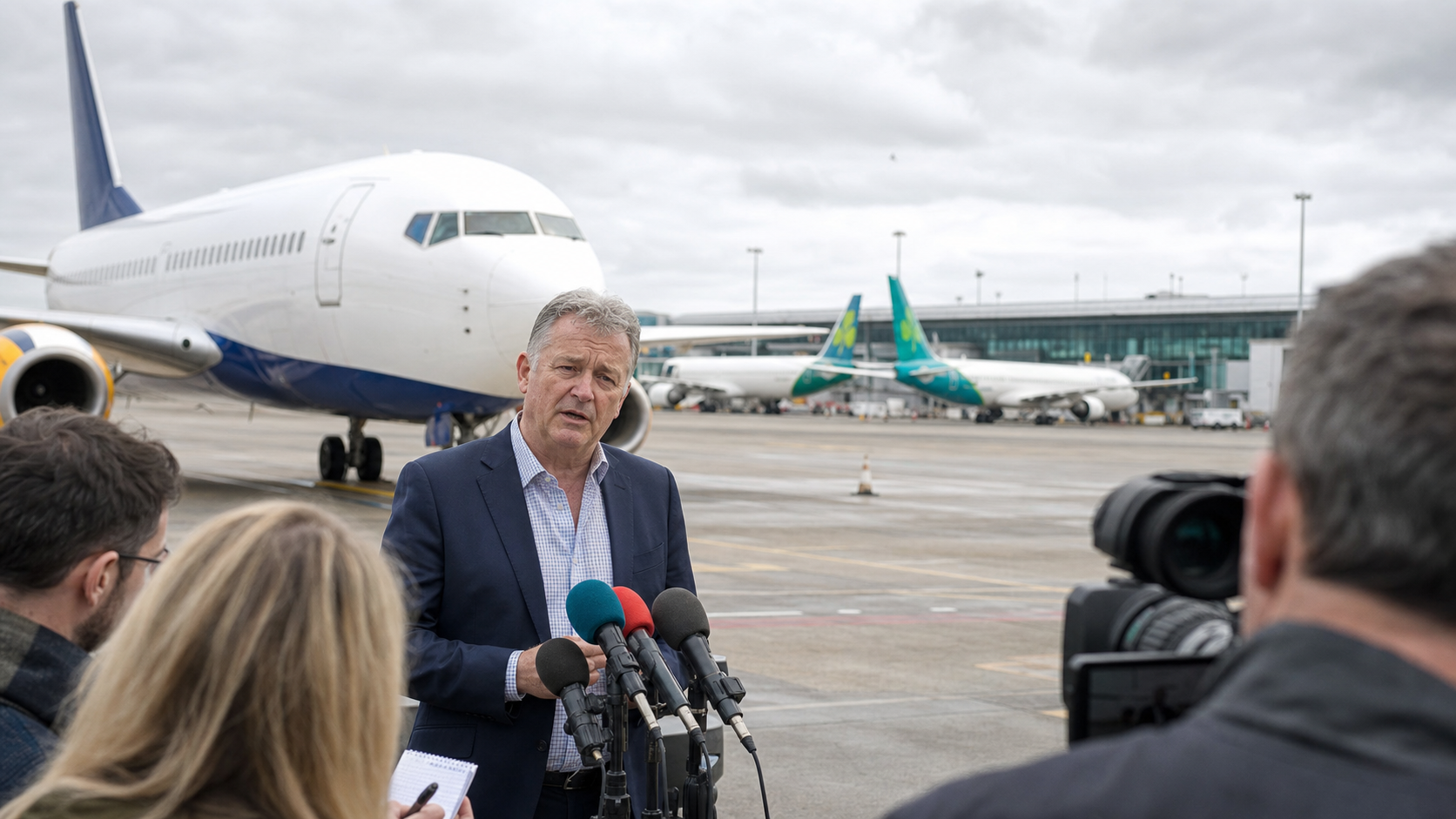
Ryanair chief executive Michael O'Leary issued an unreserved apology on Friday for describing rival airlines as "high-fare rapists," reversing his initial refusal to retract the comments after ten days of sustained pressure from Taoiseach Micheál Martin, senior government ministers, the Dublin Rape Crisis Centre, and UK transport officials — a climbdown that marks one of the most significant public retractions in the airline's history.
Background
The controversy began on September 10, 2026, when O'Leary made the remarks ahead of Ryanair's annual general meeting. Discussing the company's pricing strategy and the competitive landscape of the aviation industry, he characterised rivals including Aer Lingus, Lufthansa, and British Airways as "high-fare rapists" — a formulation he initially defended as appropriate for the context of airline pricing. When challenged by journalists, O'Leary doubled down, stating he would "happily offend" the carriers in question and explicitly refusing an offer of training on sexual violence from the Dublin Rape Crisis Centre.
The response was immediate and severe. Rachel Morrogh, chief executive of the Dublin Rape Crisis Centre, said the comments caused distress to survivors and urged O'Leary to acknowledge the impact of his language. Rape Crisis England and Wales issued a similar condemnation. Taoiseach Micheál Martin expressed disappointment, while Public Expenditure Minister Jack Chambers and Tánaiste Simon Harris both condemned the language as inappropriate and called for a retraction. UK Transport Secretary Heidi Alexander suggested the comments would alienate female passengers and those affected by sexual violence.
O'Leary's initial refusal to apologise was consistent with his long-established public persona as a provocateur who courts controversy as a form of free publicity. Over the course of his tenure at Ryanair, he has made numerous inflammatory statements about competitors, regulators, and passengers, and has generally emerged from such controversies with the airline's commercial position intact. This time, however, the political and social pressure proved more sustained than he had anticipated.
Key Developments
On Friday, O'Leary released a video statement in which he acknowledged that his choice of words had been "careless" and had caused "considerable upset and offence" to victims and survivors of sexual violence. He stated that he would learn from the mistake and committed to avoiding such language in the future. The Dublin Rape Crisis Centre welcomed the apology, emphasising the importance of responsible language regarding sexual violence.
The apology came approximately ten days after the original remarks, a delay that itself attracted criticism. Several commentators noted that O'Leary had waited until the commercial consequences of his position — including the possibility of boycotts and reputational damage — had become sufficiently clear before acting. Classic Hits Radio had dropped Sheeran from its playlist in a separate but related controversy, and the broader cultural moment around language and accountability had made O'Leary's position increasingly untenable.
Why It Matters
The episode is significant for several reasons. It demonstrates that even the most commercially powerful figures in Irish business are not immune to the consequences of language that trivialises sexual violence, and that the combination of political pressure, advocacy group condemnation, and media scrutiny can force a reversal even from someone as resistant to public opinion as O'Leary. It also raises questions about the culture within Ryanair, where such language was apparently considered acceptable in a senior executive's public communications. For the Dublin Rape Crisis Centre and similar organisations, the episode has been an opportunity to demonstrate the real-world impact of careless language on survivors, and the apology — however belated — represents a form of public acknowledgement of that impact.
Local Impact
Ryanair is Ireland's largest airline and one of the country's most significant employers, with its headquarters in Swords, County Dublin, and operations across the country. The controversy has been followed closely by the Irish business community, which has been divided between those who regard O'Leary's initial stance as indefensible and those who see the pressure for an apology as an example of excessive sensitivity. The apology is unlikely to have any lasting commercial impact on Ryanair, which continues to dominate European short-haul aviation.
What's Next
Ryanair's annual general meeting, which was the occasion for the original remarks, has concluded. The company's next major public event will be the announcement of its winter schedule and capacity plans, expected in October. O'Leary has indicated he will continue in his role as chief executive, and there is no suggestion that the board has considered his position in light of the controversy.