Queen's University Belfast Investigates Research Paper Co-Authored by Academic at Centre of Plagiarism Row
Queen's University Belfast has confirmed it is conducting an investigation into a research paper published on its platform and co-authored by Professor Jason Arday, the academic who resigned from the University of Cambridge in August 2026 amid serious allegations of plagiarism and the fabrication or exaggeration of his professional curriculum vitae — a controversy that has sent shockwaves through British and Irish academic institutions.
Background
Professor Jason Arday had, until recently, been regarded as one of the most prominent voices in British academia on questions of race, inclusion, and decolonisation in higher education. He held a position at the University of Cambridge and had published widely on the experiences of minority ethnic students and academics within university systems. His work attracted significant attention and institutional support, and he was frequently cited in policy discussions about diversity in higher education.
The allegations against Arday emerged in mid-2026 and centred on two distinct but related concerns: first, that certain published works attributed to him contained passages that closely resembled the work of other scholars without proper attribution; and second, that his professional biography contained claims about roles and affiliations at institutions that subsequently denied any record of his employment. Arday has acknowledged certain errors in his published work, attributing them to a lack of supervision early in his career and to his neurodivergence, while denying deliberate plagiarism. He resigned from Cambridge following the emergence of the allegations.
The controversy has prompted a wave of reviews at institutions across the UK and Ireland that had published or hosted Arday's work, as universities seek to assess the extent of any problems and to fulfil their obligations to academic integrity.
Key Developments
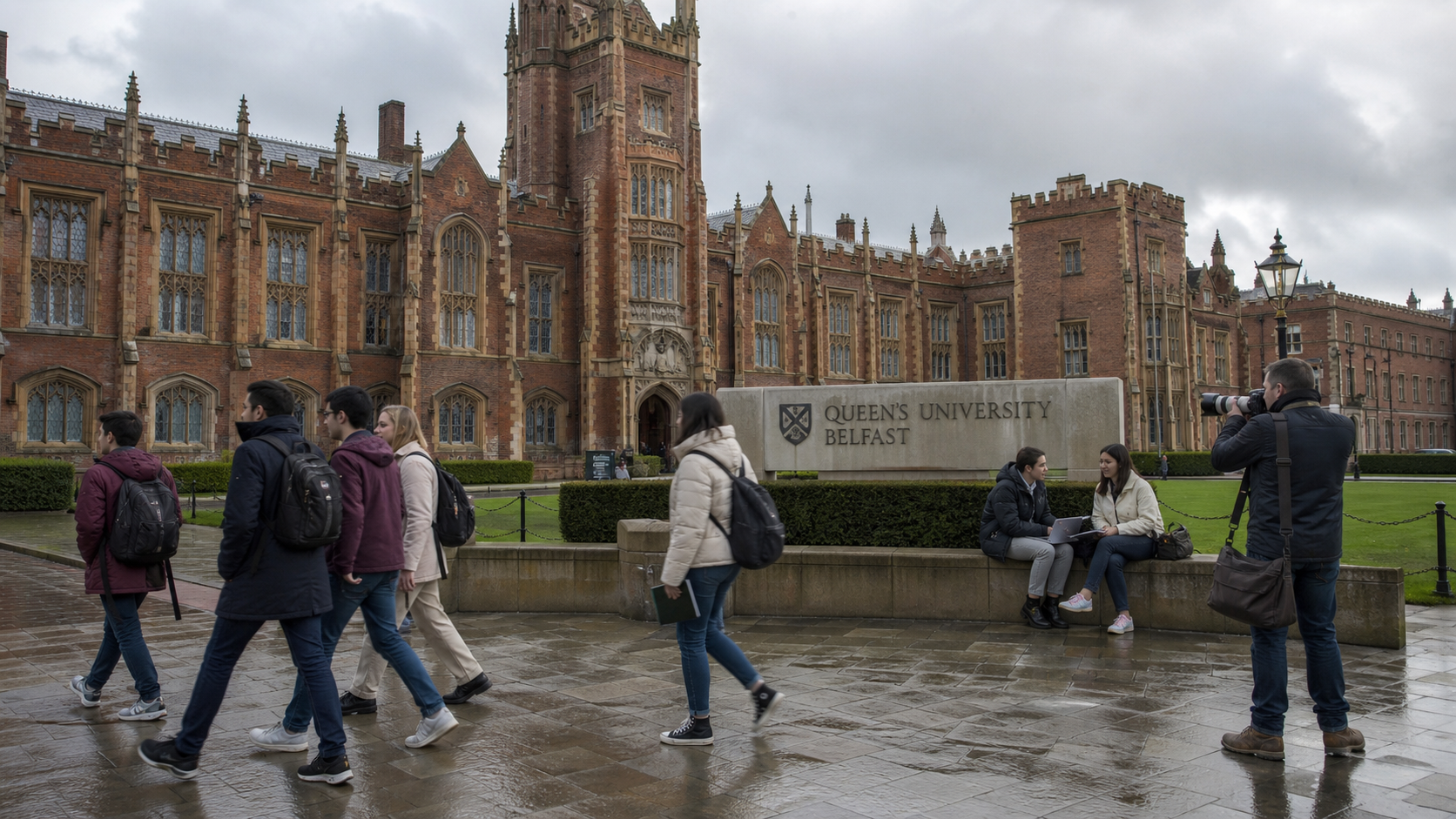
Queen's University Belfast confirmed this week that it is reviewing a specific paper co-authored by Arday and other QUB academics, published in 2021 under the title "Attempting to break the chain: Reimaging inclusive pedagogy and decolonising the curriculum within the academy." The paper examined the impact of university curricula on minority ethnic learners and academics, and was published through QUB's research platform. The university confirmed it is liaising with other UK institutions regarding the matter, suggesting a coordinated approach to the review process across multiple affected universities.
QUB has not yet indicated a timeline for the completion of its investigation, nor has it specified what action it would take if the review identifies problems with the paper. The university's academic offences regulations provide for a range of responses, from the correction of published work to formal disciplinary proceedings, depending on the nature and severity of any findings.
Why It Matters
The Arday case raises uncomfortable questions about the processes by which academic institutions verify the credentials and work of high-profile scholars. The speed with which Arday rose to prominence — and the degree to which his claims about his background went unchecked — suggests that the reputational benefits of association with a prominent diversity advocate may have led some institutions to apply less rigorous scrutiny than they would otherwise have done. This is not a comfortable conclusion, but it is one that several commentators have drawn. For QUB, which has invested significantly in its own diversity and inclusion agenda, the association with a paper that may require correction or retraction is reputationally sensitive, even if the university's own academics acted in good faith.
The case also highlights the importance of robust peer review and institutional oversight in academic publishing. The 2021 paper in question was published through a university platform rather than a peer-reviewed journal, which may have meant it received less rigorous external scrutiny than would otherwise have been the case.
Local Impact
For QUB's academic community, the investigation is a reminder of the importance of due diligence in collaborative research. The university's reputation as a research institution is a significant asset — QUB is consistently ranked among the top universities in the UK and Ireland, and its research output is a key driver of its international profile. Any finding that a published paper requires correction or retraction reflects on the institution as a whole, even when the primary responsibility lies with an external co-author. The university's School of Education, which is likely to have been involved in the 2021 paper given its subject matter, will be watching the outcome of the investigation closely. Staff and students in the school have been briefed on the situation, and the university has emphasised its commitment to transparency throughout the process.
What's Next
QUB has not set a public deadline for the completion of its investigation, but the university is expected to report its findings to the relevant academic bodies and to take whatever corrective action is deemed appropriate. If the paper is found to contain plagiarised material, the university will need to decide whether to issue a correction, retract the paper, or take further action. The broader review of Arday's published work across multiple institutions is expected to continue for several months, and further revelations cannot be ruled out. The case is likely to prompt a wider conversation within Irish and British higher education about the processes for verifying academic credentials and the oversight of collaborative research.