Northern Ireland's Universities Face Deepening Financial Crisis
Queen's University Belfast and Ulster University are facing a combined funding shortfall that could force the elimination of up to 2,700 student places, according to figures presented to the Stormont Executive this week. The crisis, which has been building for several years, threatens to significantly reduce access to higher education in Northern Ireland and undermine the region's ambitions for economic development and skills growth.
Queen's University Belfast, which has a student population of approximately 25,000, has warned that it faces a structural deficit of more than £30 million per year, driven by a combination of frozen tuition fees, rising staff costs, and reduced government grant funding. The university has already implemented a voluntary redundancy scheme and frozen recruitment in many departments, but says that further cuts are inevitable without additional government support.
The Scale of the Problem
Ulster University, which operates across four campuses in Belfast, Coleraine, Derry/Londonderry, and Magee, faces a similar predicament. The university has been particularly affected by the costs associated with its new Belfast campus, which opened in 2022 and was intended to transform the city's north side but has placed significant financial pressure on the institution.
Together, the two universities have warned that without a substantial increase in government funding or a rise in tuition fees, they will be forced to reduce student numbers by a combined total of 2,700 places over the next three years. This would represent a significant contraction in Northern Ireland's higher education capacity and would disproportionately affect students from disadvantaged backgrounds who rely on local universities to access degree-level education.
Tuition Fees and the Funding Gap
At the heart of the crisis is the question of tuition fees. In Northern Ireland, tuition fees for home students are capped at £4,750 per year — significantly lower than the £9,250 charged in England and Wales. While this has been welcomed by students and families, it has created a substantial funding gap for the universities, which argue that the current fee level does not cover the cost of providing a quality education.
Calls for a review of the tuition fee cap have been met with resistance from political parties across the spectrum, with both Sinn Féin and the DUP opposing any increase. However, university leaders argue that without either higher fees or substantially increased government grants, the current model is unsustainable.
Impact on Students and Communities
The potential reduction in student places would have significant consequences for young people in Northern Ireland. The region already has lower rates of participation in higher education than England and Scotland, and any further reduction in capacity would exacerbate existing inequalities. Students from rural areas and from lower-income backgrounds, who are less likely to be able to afford to study in Great Britain or the Republic of Ireland, would be particularly affected.
The universities also play a crucial role in the regional economy, contributing billions of pounds in economic activity and employing thousands of people directly and indirectly. Research conducted at Queen's and Ulster has attracted significant inward investment and helped to establish Northern Ireland as a centre of excellence in areas including cybersecurity, advanced manufacturing, and life sciences.
Government Response
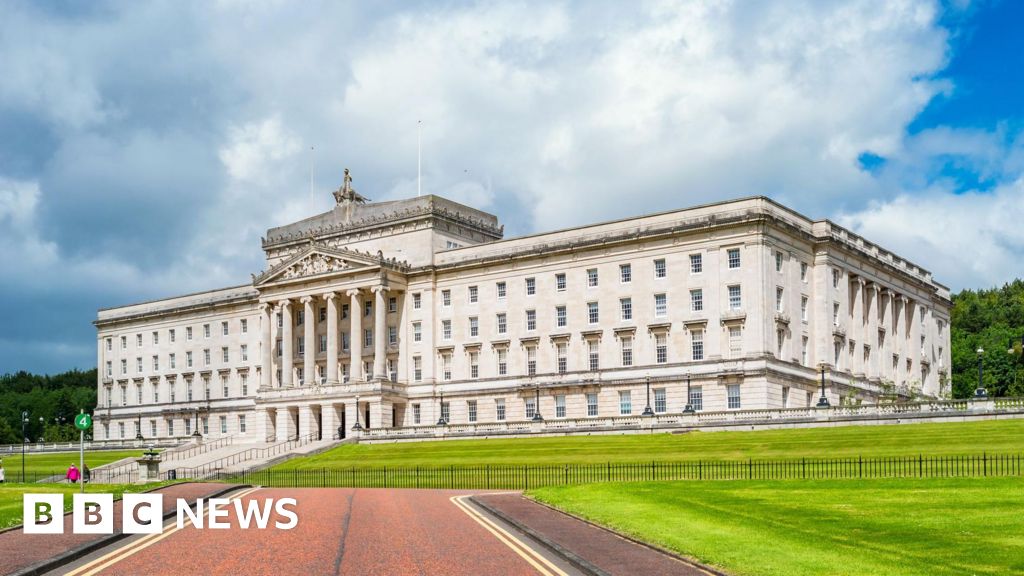
The Stormont Executive has acknowledged the seriousness of the situation but has so far stopped short of committing to the level of additional funding that the universities say they need. Economy Minister Caoimhe Archibald has indicated that a review of higher education funding is underway, but university leaders have warned that time is running out.
The crisis has also attracted attention at Westminster, where Northern Ireland's MPs have called on the UK government to provide additional support. However, with the UK's public finances under significant pressure, the prospects for a substantial injection of central government funding appear limited.
As Northern Ireland's universities face some of the most difficult decisions in their histories, the outcome of the funding crisis will have profound implications for the region's young people, its economy, and its ambitions for a prosperous and educated society.