Healthcare Workers Intimidated and Schools Closed as Belfast Unrest Disrupts Public Services
Beyond the dramatic images of burning vehicles and riot police, the civil disorder that gripped Belfast this week has inflicted a quieter but equally serious form of damage on the city's public services. Healthcare workers from ethnic minority backgrounds have reported being stopped, questioned, and intimidated by masked men while attempting to travel to work. Schools across the city closed early. Cultural events were cancelled. And a social media "hit list" of addresses occupied by minority ethnic families prompted a criminal investigation by the PSNI — a development that underscored the organised and targeted nature of the violence.
Background
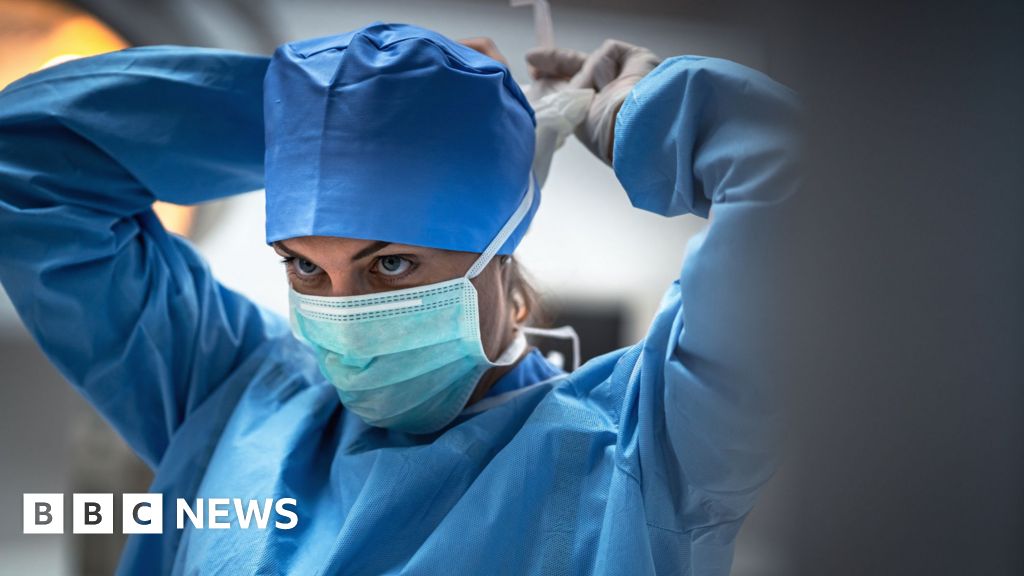
Northern Ireland's health service is, like its counterpart in England, heavily dependent on staff recruited from overseas. Across the five Health and Social Care trusts — Belfast, South Eastern, Southern, Western, and Northern — a significant proportion of nurses, doctors, allied health professionals, and support workers were born outside the United Kingdom and Ireland. This international workforce has been essential to maintaining services in a system that has struggled for years with recruitment and retention challenges.
The Belfast Trust alone employs thousands of staff from dozens of countries, many of whom have built their lives in the city over years or decades. They live in the same neighbourhoods, use the same public transport, and send their children to the same schools as their colleagues and patients. The events of this week have made many of them feel, for the first time, that their presence in Belfast is not simply unwelcome but actively dangerous.
The intimidation of healthcare workers is not without precedent in Northern Ireland's troubled history — during the Troubles, medical staff were sometimes targeted by paramilitaries — but the explicitly racist character of this week's incidents marks it as something distinct from the sectarian violence of the past. The targets were not chosen because of their religion or political affiliation, but because of their ethnicity or perceived immigration status.
Key Developments
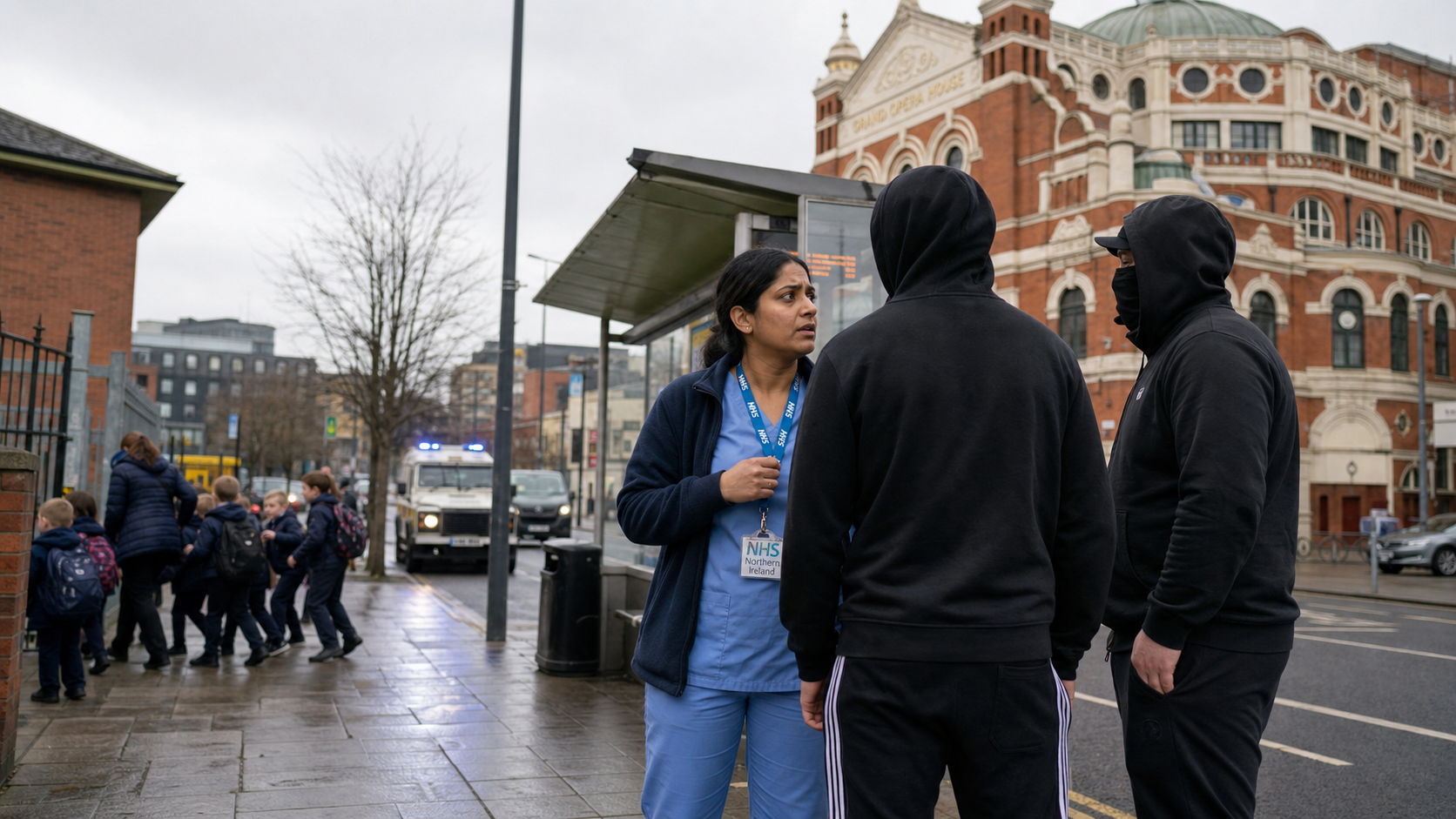
Reports emerged on June 11 of healthcare workers being stopped at makeshift checkpoints by masked individuals who demanded to see identification. Some workers described being questioned about their immigration status and told to leave the area. Others reported being followed or verbally abused on their way to shifts at hospitals including the Royal Victoria, the Mater, and the Belfast City Hospital. The incidents occurred primarily in the north and east of the city, in areas that had seen the most significant disorder in previous nights.
The Royal College of Nursing (RCN) issued a statement describing the fear experienced by its members as "unimaginable" and warning that the health service would struggle to function without its international colleagues. The RCN called on political leaders to make clear, in the strongest possible terms, that healthcare workers of all backgrounds are valued and protected members of Northern Irish society.
Several schools in Belfast closed early on June 11, with headteachers citing safety concerns and the anxiety of parents about collecting children in areas where disorder was anticipated. Translink suspended Glider services on affected routes, and the Grand Opera House cancelled its run of the Mean Girls musical, citing the safety of cast, crew, and audience members. The PSNI confirmed it is investigating the circulation of a "hit list" of addresses on social media, warning that sharing such content is a criminal offence.
Why It Matters
The disruption to public services caused by this week's disorder is not merely an inconvenience — it represents a direct threat to the wellbeing of the most vulnerable people in Belfast. Patients who needed to attend hospital appointments, children who needed to be in school, and families who depended on public transport have all been affected. The cancellation of cultural events has added to the economic damage suffered by a city centre that was already under pressure.
But the intimidation of healthcare workers carries a particular significance. Northern Ireland's health service is in a fragile state, with waiting lists among the longest in the United Kingdom and a workforce that is stretched to its limits. Any factor that makes it harder to recruit and retain international staff — and the events of this week will undoubtedly have that effect — makes an already difficult situation worse. The RCN's warning that the service would struggle to function without its international colleagues is not hyperbole; it is a statement of operational reality.
The "hit list" investigation is also deeply significant. If it is established that the targeting of minority ethnic families was coordinated — that individuals were identified, their addresses compiled, and that information distributed with the intention of facilitating attacks — then the disorder moves from the category of spontaneous mob violence into something more organised and more sinister. The PSNI's investigation will be closely watched.
Local Impact
The impact on Belfast's minority ethnic communities has been profound. Approximately 200 people — adults and children — have been displaced from their homes, many of them in the east of the city. Community organisations including the Anaka Women's Collective and the PPR human rights group have been working around the clock to provide emergency accommodation, food, and support. A fundraising campaign has raised over £160,000 to assist displaced families.
In the health service, the Belfast Trust has been working to ensure that staff who feel unsafe travelling to work are supported, including through the provision of transport and the adjustment of shift patterns where possible. The trust has also been in contact with staff welfare services to provide counselling and support to those who have been directly affected by the intimidation.
What's Next
The PSNI investigation into the "hit list" is ongoing, with officers working to identify those responsible for its creation and distribution. The Department of Health in Northern Ireland has indicated it will publish a full assessment of the impact of the disorder on health services once the immediate situation has stabilised. The RCN and other healthcare unions are seeking an urgent meeting with Health Minister Mike Nesbitt to discuss the protection of international staff. Schools that closed early are expected to return to normal operation on June 12, subject to the security situation remaining stable.