PSNI Treats Burning of Michelle O'Neill Effigies on Derry Bonfires as Sectarian Hate Crimes
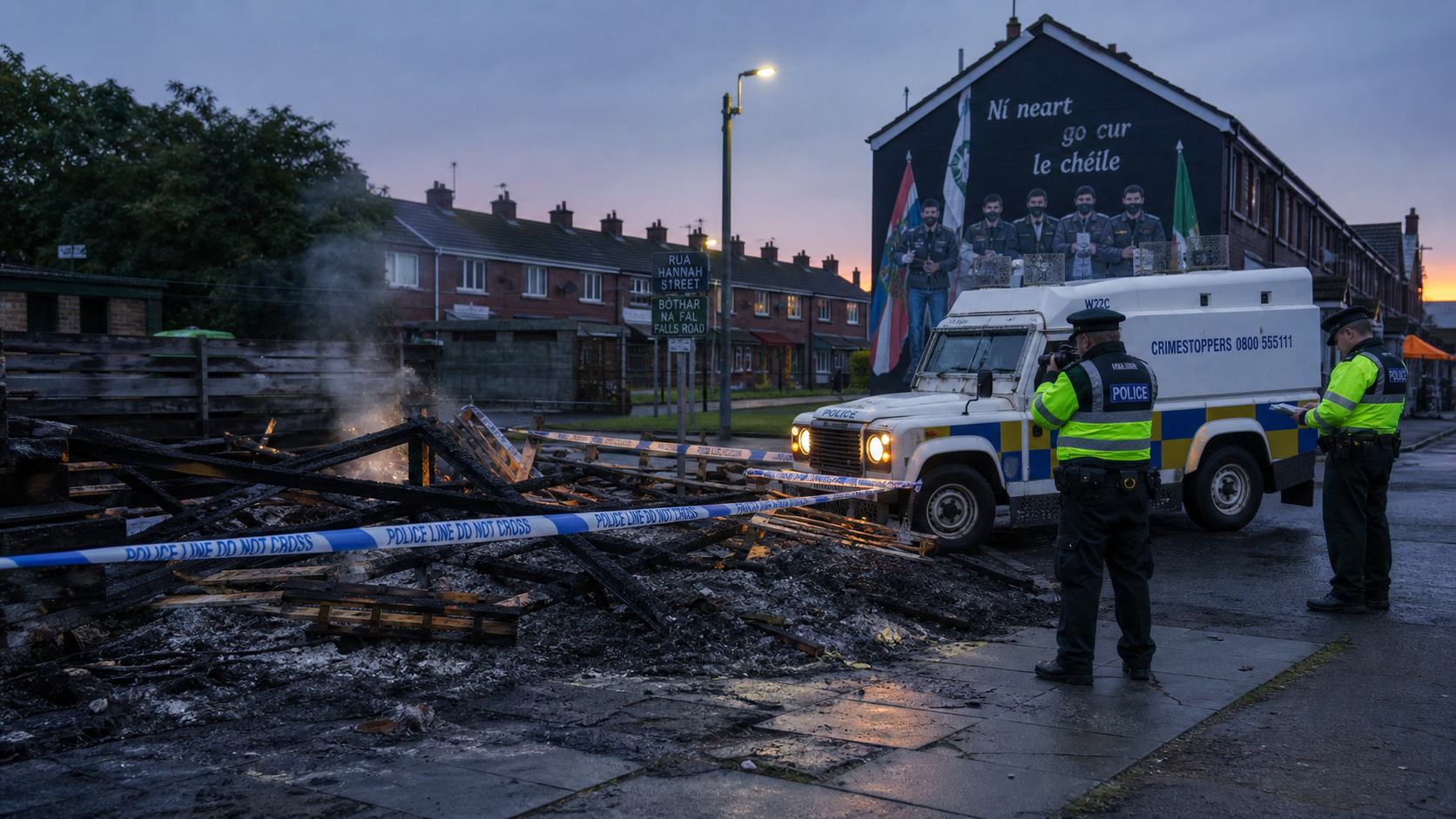
The PSNI has launched formal investigations into bonfires lit across Derry on the night of 15 August, after photographs and effigies of First Minister Michelle O'Neill were burned alongside British flags, poppy wreaths, and other materials — with police treating the placement of these items as sectarian-motivated hate crimes.
Background
The 15th of August holds particular significance in the republican calendar in Derry and across Northern Ireland. It marks the Feast of the Assumption, a Catholic holy day, but it also coincides with the anniversary of the introduction of internment without trial in 1971 — a deeply traumatic event in the history of the nationalist community that resulted in the detention of hundreds of people without charge and contributed directly to the escalation of the Troubles. Bonfires have been lit in republican areas of Derry on this date for decades, and the tradition, while controversial, has been a consistent feature of the city's August calendar.
In recent years, the materials placed on these bonfires have become an increasingly contentious issue. The burning of flags, symbols, and images associated with unionism, loyalism, and the British state has been a recurring feature, and the PSNI has previously investigated specific incidents where the materials placed on fires were deemed to constitute hate crimes. The 2026 bonfires, however, attracted particular attention because of the inclusion of photographs and effigies of the First Minister — the most senior elected official in Northern Ireland.
Prior to the bonfires being lit, the Department for Infrastructure, supported by the PSNI, conducted an operation on 13 August to remove materials — including pallets and poppy wreaths — from beneath the Lecky Road flyover in the Bogside, citing fire safety concerns related to gas mains in the area. Despite this intervention, the bonfire was rebuilt and ignited on the night of 15 August.
Key Developments
Bonfires were lit at several locations across Derry on the night of 15 August, including Bligh's Lane in the Creggan area, Lecky Road in the Bogside, and Corrody Road in the Waterside. Among the materials identified on the pyres were photographs of First Minister Michelle O'Neill, British flags, Israeli flags, poppy wreaths, sashes, and various banners and football shirts.
Chief Superintendent Gillian Kearney of the PSNI confirmed that police are treating the inclusion of specific items on the bonfires as sectarian-motivated hate crimes and that inquiries into the ownership and placement of these items are ongoing. The PSNI has appealed for witnesses and for anyone with information to come forward.
First Minister Michelle O'Neill responded with a statement in which she said she would not be "deterred, distracted or intimidated" by the burning of her image. Sinn Féin MP John Finucane described the burning as "anti-democratic" and "hate-filled sectarianism," characterising it as the "antithesis of Irish republicanism." DUP MP Gregory Campbell and Alliance MLA Peter McReynolds also condemned the displays, with McReynolds emphasising the need to prevent the manipulation of young people into participating in such activities.
Why It Matters
The burning of effigies of the First Minister is not merely a provocative act — it is a direct challenge to the legitimacy of the political institutions that the Good Friday Agreement created and that the people of Northern Ireland voted to support. Michelle O'Neill is the first nationalist First Minister in the history of Northern Ireland, a milestone that carries enormous symbolic weight. The targeting of her image on a bonfire is, in that context, an attack not just on an individual but on the principle of power-sharing itself.
It is also worth noting that the condemnation of these acts has come from across the political spectrum, including from within republicanism. The fact that Sinn Féin's own representatives have described the burning as contrary to the values of Irish republicanism is significant — it reflects an understanding within the party that such displays are politically damaging and morally indefensible, regardless of the tradition in which they occur. The PSNI's decision to treat the incidents as hate crimes rather than simply as a matter of public order sends a clear signal that the burning of effigies of elected officials will not be treated as an acceptable expression of political opinion.
Local Impact
In Derry, the reaction to the bonfires has been mixed. In the Creggan and Bogside areas where the fires were lit, some residents have defended the tradition while distancing themselves from the specific materials placed on the pyres. Community workers in the area have expressed concern that the controversy overshadows the legitimate cultural and historical significance of the 15 August commemoration for many families. In the broader city, the incidents have reignited debate about how Derry manages its bonfire tradition and whether the current approach — which relies heavily on community engagement and negotiation — is adequate to prevent the kind of escalation that occurred this year. The Foyle Women's Information Network and other community organisations have called for a structured dialogue process to be established before next August.
What's Next
The PSNI investigation is expected to take several weeks, with officers reviewing CCTV footage and witness accounts to identify those responsible for placing specific items on the bonfires. The Director of Public Prosecutions will ultimately decide whether any charges are brought. At a political level, the Stormont Executive is expected to discuss the incidents at its next meeting, with Alliance and the SDLP likely to press for a review of how bonfire-related hate crimes are prosecuted. The Department for Infrastructure has indicated it will review its approach to pre-bonfire material removal operations following this year's experience.