PSNI Seizes 23 Scramblers and E-Bikes in Lurgan Crackdown as Three Arrested
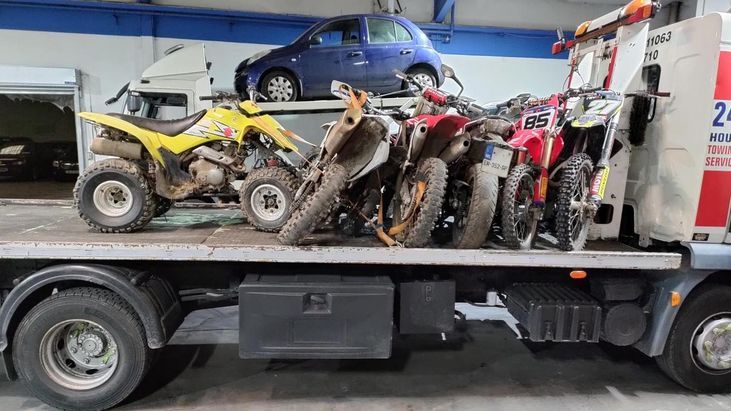
The PSNI has seized 23 e-bikes and scramblers during a targeted two-day operation in Lurgan, County Armagh, aimed at curbing the illegal and antisocial use of two-wheeled vehicles that has become a persistent public safety concern across Northern Ireland. Three people were arrested and two others cautioned during the operation, which ran from Friday 31 July to Saturday 1 August.
Background
The illegal use of scramblers and e-bikes on public roads and in residential areas has been a growing problem across Northern Ireland for several years, with communities in Lurgan, Craigavon, and other urban centres in County Armagh among those most affected. The vehicles are frequently used in an antisocial manner — riding on footpaths, in parks, and through housing estates — creating significant risks for pedestrians, cyclists, and other road users.
Under current legislation, e-scooters and e-bikes are classified as motor vehicles, meaning that riders are required to hold a valid driving licence and the vehicles must be taxed, insured, and equipped with lights and number plates. In practice, the vast majority of scramblers and e-bikes used in antisocial incidents are unregistered, uninsured, and ridden by individuals who do not hold the appropriate licence. This creates a legal grey area that has complicated enforcement efforts, though the PSNI has been increasingly proactive in using existing powers to seize vehicles.
The Lurgan area has been a particular focus of concern, with local residents and community representatives having raised the issue repeatedly with both the PSNI and Armagh City, Banbridge and Craigavon Borough Council. The two-day operation was a direct response to those concerns and to intelligence gathered about the patterns of antisocial vehicle use in the area.
Key Developments
The operation, designated a "Two Wheel Vehicle Operation," involved a combination of uniform and plain-clothes officers from the local policing team, supported by the District Support Team and the Air Support Unit, which deployed a drone to monitor the area from above. The use of aerial surveillance proved particularly effective in tracking vehicles that attempted to evade officers on the ground.
Among those arrested was a 17-year-old male who was observed riding an e-bike on the wrong side of the road. When officers stopped him, it emerged that the vehicle had been stolen. He was arrested on suspicion of driving offences and possession of a Class B controlled drug. One child was also arrested and subsequently referred to a Youth Diversion Officer, reflecting the PSNI's approach of using diversionary measures where appropriate for younger offenders.
Sergeant Adam Patterson, who led the operation, said that the measures were necessary because of the serious public safety risks posed by the inappropriate use of these vehicles. He noted that people had already sustained serious injuries as a result of scrambler and e-bike incidents in the area, and that the PSNI was committed to taking robust action to protect the community. The 23 seized vehicles will be disposed of within 14 days unless their owners request a review by the magistrates' court at their own expense.
Why It Matters
The Lurgan operation is part of a broader pattern of enforcement activity across Northern Ireland that reflects growing frustration — among both the public and the police — with the antisocial use of two-wheeled vehicles. The problem is not unique to Northern Ireland; similar issues have been reported in Dublin, Cork, and cities across Britain. But the specific dynamics of communities in County Armagh, where the vehicles are often used in areas with limited recreational facilities for young people, give the issue a particular local character.
The use of drone surveillance in the operation is notable. It represents a relatively new tool in the PSNI's enforcement arsenal, and its effectiveness in tracking vehicles that would otherwise evade ground-based officers suggests it is likely to become a more regular feature of such operations. The technology raises questions about privacy and proportionality that are worth monitoring, but in the context of a targeted operation against a specific antisocial behaviour, its use appears justified.
Unlike the Republic, where the Road Safety Authority has been developing a regulatory framework for e-scooters and e-bikes, Northern Ireland operates under UK legislation that has been slower to adapt to the proliferation of these vehicles. The gap between the legal framework and the reality on the ground is one that the PSNI has had to navigate with the tools currently available to it.
Local Impact
For residents of Lurgan's housing estates and public spaces, the operation provided a measure of reassurance that the PSNI is taking their concerns seriously. Community representatives in the Kilwilke and Mourneview areas, which have been among those most affected by scrambler activity, welcomed the seizures and called for the enforcement effort to be sustained rather than treated as a one-off intervention. The Armagh City, Banbridge and Craigavon Borough Council has been in discussions with the PSNI about longer-term strategies for addressing the problem, including the potential development of designated off-road areas where young people can use scramblers legally and safely.
What's Next
The PSNI has indicated that further operations targeting the illegal use of scramblers and e-bikes will take place across Northern Ireland in the coming weeks, with the Lurgan operation serving as a template for similar actions in other areas. Sergeant Patterson confirmed that intelligence gathered during the two-day operation will be used to inform future enforcement activity. The PSNI is also working with local councils and community organisations to develop longer-term preventative approaches that address the underlying factors driving antisocial vehicle use among young people.