Planning System Shifts to 'Culture of Facilitation' as Government Overhauls Development Rules
The Irish government has announced a fundamental overhaul of the planning system, describing the changes as a shift towards a "culture of facilitation rather than restriction" designed to accelerate housing and infrastructure development, as ministers acknowledge that the existing system has been a significant contributor to the country's housing crisis.
Background
Ireland's planning system has been the subject of sustained criticism for more than a decade, with developers, housing advocates, and economists arguing that excessive delays, inconsistent decision-making, and a culture of objection have significantly constrained the supply of new homes and infrastructure. The average time from planning application to construction commencement for a large residential development in Ireland is among the longest in Europe, and the judicial review process — which allows third parties to challenge planning decisions in the courts — has been used to delay or block projects that have already received planning permission.
The Planning and Development Act 2024 represented the most significant reform of the planning system in a generation, but its implementation has been slow and its impact on housing supply has been limited. The government has faced pressure from opposition parties, housing advocacy groups, and the construction industry to go further and faster in removing the barriers to development. The announcement of a further shift towards a "culture of facilitation" reflects that pressure and represents a significant rhetorical and policy commitment from the coalition.
The changes are being driven by the Department of Housing, Local Government and Heritage, led by Minister James Browne, who has identified planning reform as his top priority since taking office. The reforms are also informed by the recommendations of the Housing Commission, which published its report in 2024 and identified planning delays as one of the three principal causes of Ireland's housing crisis.
Key Developments
The government's announcement this week outlined a series of measures designed to accelerate planning decisions and reduce the scope for delay. These include mandatory timelines for An Coimisiún Pleanála to determine strategic housing development applications, a reduction in the grounds on which judicial reviews of planning decisions can be sought, and new guidance to local authorities on the presumption in favour of development in areas zoned for housing.
The changes also include measures to streamline the environmental impact assessment process for large infrastructure projects, including the MetroLink rail project in Dublin, whose cost has more than doubled to up to €17.5 billion following a government decision to approve the move to tender stage. Ministers have argued that the planning reforms will help to prevent similar cost escalations on future projects by reducing the time between approval and construction commencement.
Opposition parties have broadly welcomed the direction of the reforms while questioning whether they go far enough. Sinn Féin's housing spokesperson has argued that the changes do not address the fundamental issue of land hoarding by developers, while the Social Democrats have called for stronger protections for communities affected by large-scale development.
Why It Matters
The shift towards a "culture of facilitation" in planning is significant because it represents a political acknowledgement that the existing system has failed. For years, successive governments defended the planning system as a necessary protection for communities and the environment, even as housing supply collapsed and rents and house prices reached record levels. The current government's willingness to describe the system as a barrier to development — and to commit to changing it — is a meaningful departure from that position.
The practical impact of the reforms will depend on their implementation. Planning reform in Ireland has a long history of ambitious announcements followed by slow and incomplete delivery. The mandatory timelines for An Coimisiún Pleanála are a positive step, but the commission has faced significant resource constraints in recent years, and additional funding will be needed to ensure it can meet the new deadlines. The reduction in judicial review grounds is more controversial and is likely to face legal challenge.
Local Impact
The planning reforms will affect development across all 26 counties of the Republic, but their impact will be felt most acutely in the areas of greatest housing need — Dublin, Cork, Galway, Limerick, and Waterford. In Dublin, where the housing crisis is most severe, the reforms are expected to accelerate the delivery of apartment developments in the city centre and along public transport corridors. In Cork, the reforms will support the delivery of the Cork Metropolitan Area Transport Strategy, which includes new bus rapid transit routes and a commuter rail expansion. Local authorities across the country have been asked to review their development plans in light of the new guidance on the presumption in favour of development.
What's Next
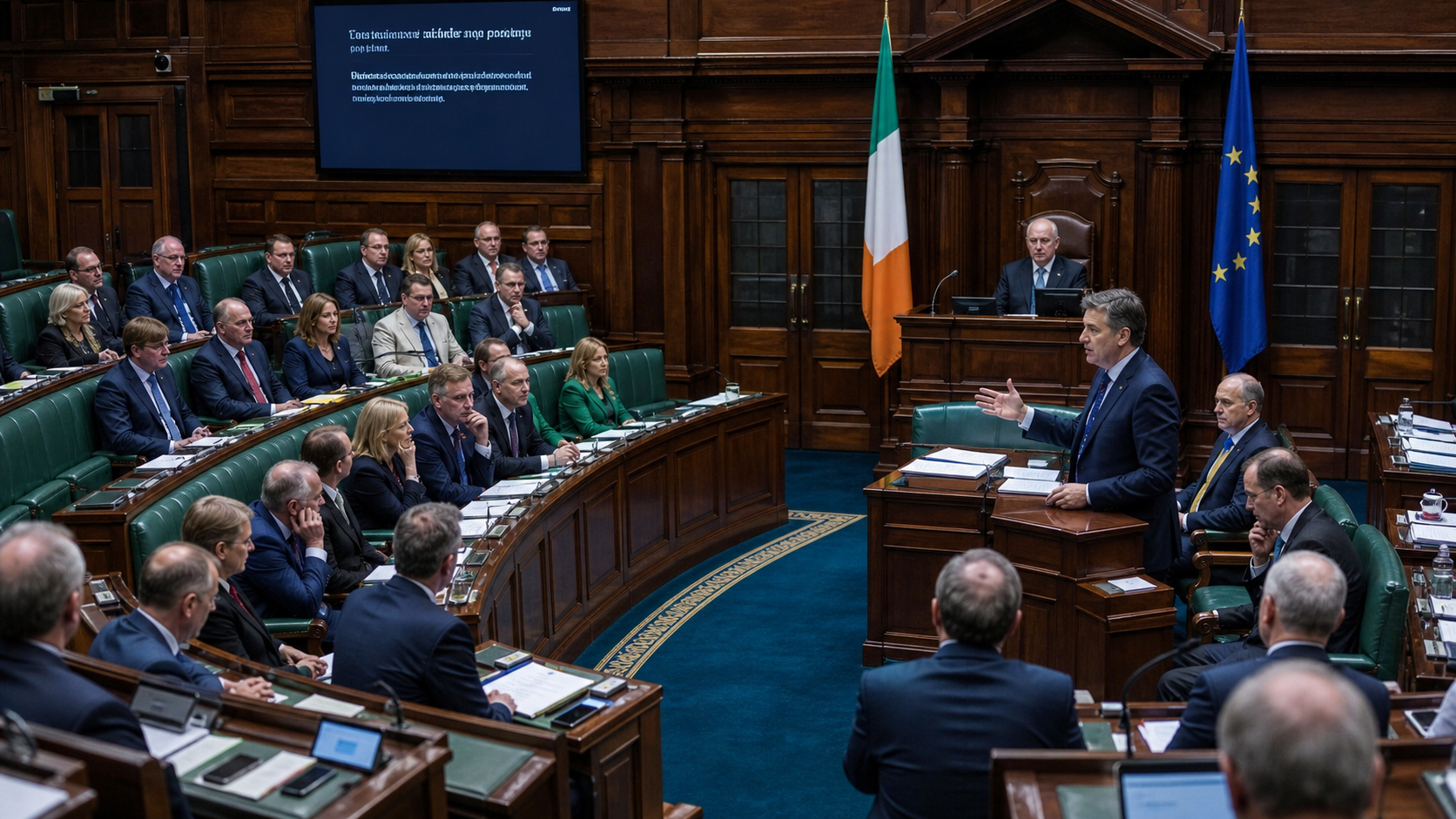
The government will publish a detailed implementation plan for the planning reforms before the end of October. An Coimisiún Pleanála has been asked to provide a report on its current capacity and resource requirements within six weeks. The Dáil will debate the planning reform measures as part of the Finance Bill process following Budget 2027. The Law Society of Ireland has indicated it will review the proposed changes to judicial review grounds and may make a submission to the Oireachtas committee examining the legislation.