O'Neill and McDonald at Garvaghy Road as Drumcree Decision Triggers Political Shockwaves Across Northern Ireland
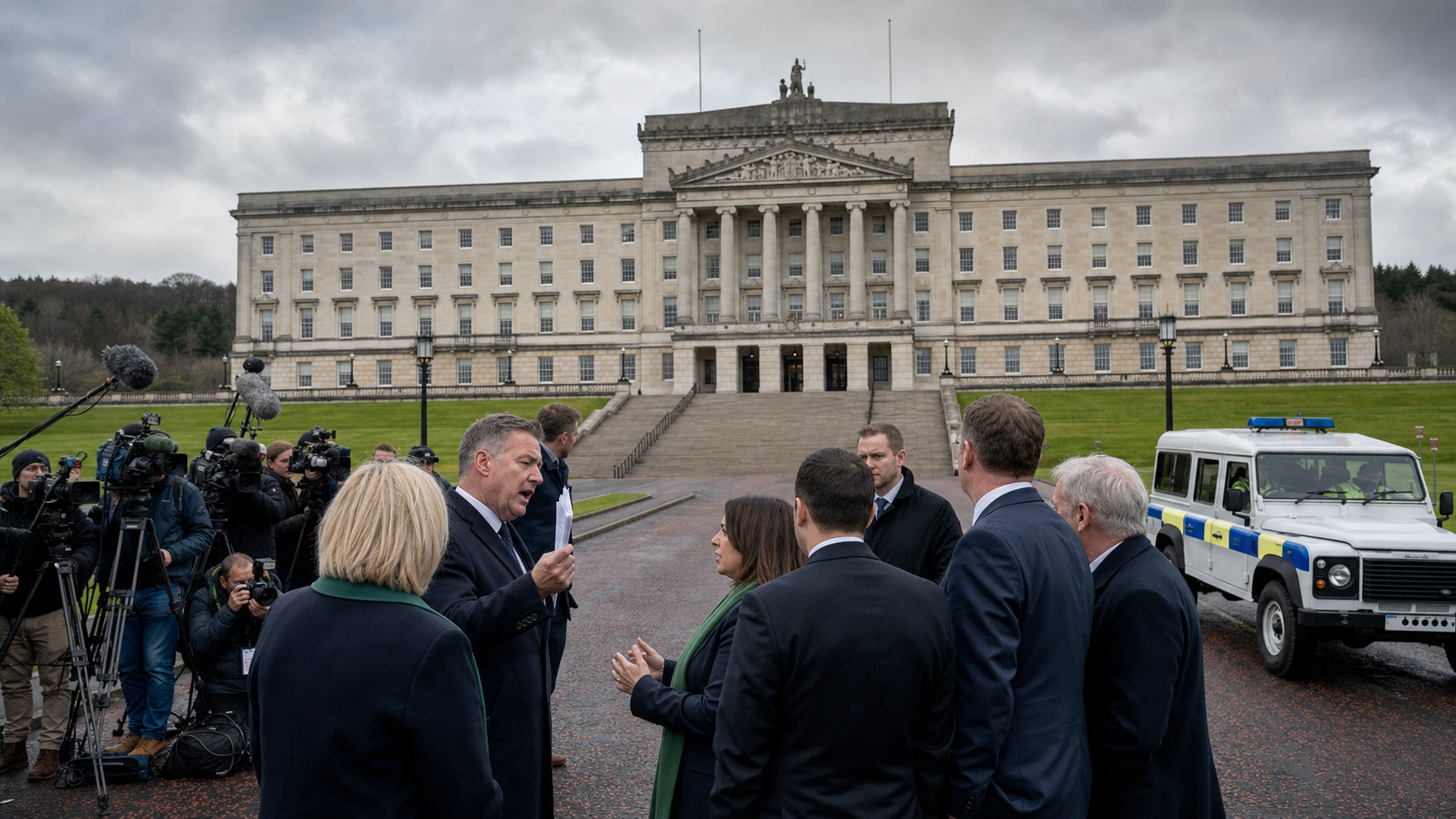
First Minister Michelle O'Neill and Sinn Féin leader Mary Lou McDonald travelled to the Garvaghy Road in Portadown on Sunday morning to address approximately 1,000 protesters as the Drumcree Orange Order parade proceeded for the first time in 29 years, triggering significant political shockwaves across Northern Ireland and prompting calls from nationalist and republican parties for an urgent review of the Parades Commission's processes and the legal framework governing contested parades.
Background
The Drumcree dispute has been a defining issue in Northern Ireland politics since the mid-1990s, when the standoff between the Orange Order and the Garvaghy Road Residents' Coalition became a flashpoint for broader tensions about identity, territory, and the pace of political change. The establishment of the Parades Commission in 1998 was intended to provide a structured, independent mechanism for resolving such disputes, and its consistent restriction of the Drumcree parade since that year had been widely regarded as a settled matter — one of the quiet achievements of the peace process that had allowed community relations in Portadown to begin, slowly, to improve.
The events of the past week have shattered that assumption. The procedural error that led to the quashing of the previous Parades Commission determination, and the subsequent decision by the reconstituted commission to allow a scaled-back march, have demonstrated that the legal framework governing contested parades is more fragile than many had believed. The overnight court proceedings — involving a High Court injunction, a Court of Appeal reversal, and a final High Court hearing in the early hours of Sunday morning — have exposed the extent to which the resolution of such disputes depends not on community consent but on the outcome of legal proceedings that can be reversed at any point in the process.
For nationalist and republican politicians, the events of Sunday represent a fundamental challenge to the principle that the Garvaghy Road community has the right to determine what happens in its own area. For unionist politicians, the parade's proceeding — under strict conditions and without disorder — represents a vindication of the Orange Order's right to march on its traditional routes. The political divide on the issue is as sharp as it has ever been.
Key Developments
First Minister Michelle O'Neill and Sinn Féin leader Mary Lou McDonald arrived at the Garvaghy Road in the early hours of Sunday morning, joining the approximately 1,000 protesters who had gathered to oppose the parade. O'Neill addressed the crowd, describing the decision to allow the parade as deeply wrong and urging protesters to remain strong and united. "The Garvaghy Road community has been let down today," she said. "This decision is wrong, and we will continue to fight for the rights of this community." McDonald echoed the First Minister's sentiments, describing the overnight legal proceedings as a travesty and calling for an immediate review of the Parades Commission's processes.
The SDLP and Alliance Party also condemned the decision, though in more measured terms. SDLP leader Colum Eastwood described the outcome as deeply damaging to community relations and called for an urgent meeting of the Northern Ireland Executive to discuss the implications. Alliance leader Naomi Long expressed concern about the precedent set by the overnight legal proceedings and called for a comprehensive review of the legal framework governing contested parades. The DUP and UUP, by contrast, welcomed the parade's proceeding, with DUP leader Gavin Robinson describing it as a vindication of the Orange Order's right to march on its traditional routes.
Why It Matters
The political fallout from the Drumcree decision will be felt for months and possibly years. The First Minister's presence at the Garvaghy Road — standing alongside protesters opposing a parade that had been authorised by an independent commission and upheld by the courts — raises complex questions about the relationship between political leadership and the rule of law. O'Neill's decision to attend was clearly motivated by solidarity with the Garvaghy Road community, but it also places her in the position of publicly opposing a decision that has been upheld through the legal process. For the Northern Ireland Executive, which depends on cross-community cooperation to function, the Drumcree decision is a significant test of the institutions' resilience. The fact that the First Minister and Deputy First Minister are on opposite sides of the dispute — O'Neill condemning the parade, Little-Pengelly's DUP welcoming it — illustrates the depth of the political divide.
Local Impact
In Portadown itself, the events of Sunday have left deep wounds. Community relations organisations working in the town have warned that the aftermath of the parade will require sustained and sensitive engagement to prevent a deterioration in relations between the nationalist and unionist communities. The Garvaghy Road Residents' Coalition has indicated that it will pursue further legal action, and the prospect of a repeat application by the Orange Order for a full parade in 2027 — with bands and supporters — is already generating anxiety in the nationalist community. The PSNI's deployment of 200 officers, including mutual aid from Scotland, reflects the scale of the security operation required and the genuine risk of disorder that existed throughout the night. Community leaders have called for investment in dialogue and mediation processes to prevent the dispute from escalating further.
What's Next
The Northern Ireland Executive is expected to discuss the Drumcree decision at its next meeting, with First Minister O'Neill and Deputy First Minister Emma Little-Pengelly likely to face questions about the government's response. The Parades Commission is expected to conduct a review of its decision-making processes in light of the legal challenges, and the Department of Justice is expected to commission an independent review of the legal framework governing contested parades. The Garvaghy Road Residents' Coalition has indicated that it will pursue a judicial review of the Parades Commission's decision, and the case is expected to return to the courts in the coming weeks. The Orange Order has indicated that it will apply for a full parade in 2027, setting the stage for a further confrontation.