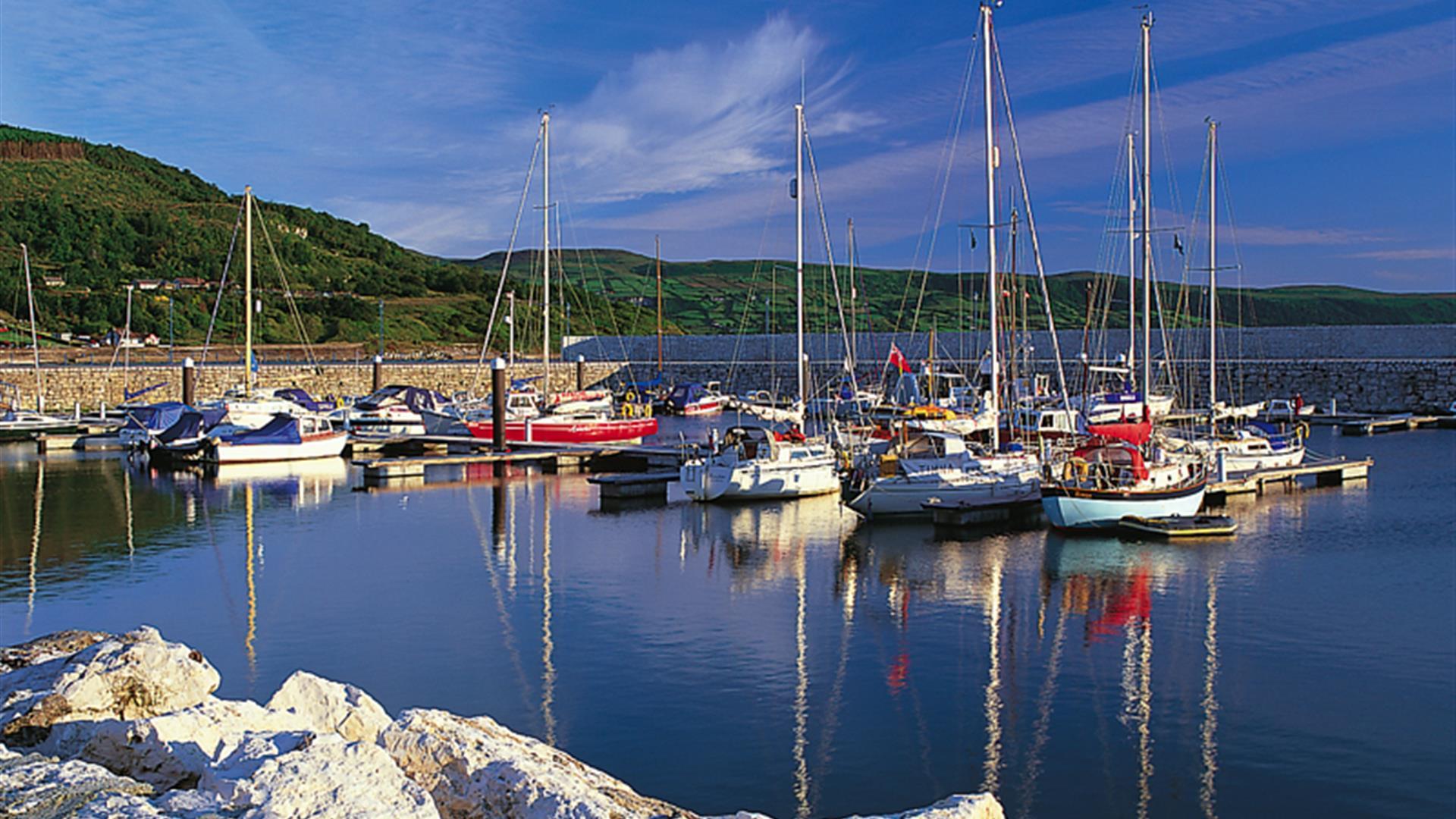
Northern Ireland's First Floating Oyster Reef Launched at Glenarm Marina in Landmark Conservation Milestone
Ulster Wildlife has launched Northern Ireland's first floating oyster reef at Glenarm Marina in County Antrim, housing approximately 10,000 juvenile native European flat oysters in a custom-built structure that represents the most ambitious marine conservation initiative in the region's recent history — with early survival rates exceeding 80% and an underwater camera system already recording thousands of wildlife interactions in the reef's first months of operation.
Background
The native European flat oyster — Ostrea edulis — was once abundant in the coastal waters of Northern Ireland, forming extensive reef systems that filtered vast quantities of seawater, provided habitat for dozens of marine species, and supported thriving fishing communities along the Antrim and Down coastlines. Over the course of the 19th and 20th centuries, that abundance was systematically destroyed. Overharvesting, disease, pollution, and habitat loss reduced the native oyster population to a fraction of its historical levels, and the reef systems that once characterised the seabed of Belfast Lough and the North Channel have largely disappeared.
The consequences of that loss extend far beyond the oyster itself. Native oyster reefs are what ecologists call "ecosystem engineers" — organisms whose physical presence creates habitat and conditions that support a wide range of other species. A single adult oyster can filter up to 200 litres of water per day, removing suspended particles, excess nutrients, and pollutants. The loss of oyster reefs has therefore contributed to the broader degradation of coastal water quality in Northern Ireland, with knock-on effects for fish populations, seagrass meadows, and the communities that depend on healthy marine ecosystems.
Ulster Wildlife has been working to address this decline through a long-term native oyster restoration programme, which has included nursery work at Glenarm Marina and the deployment of native oysters onto the seabed in Belfast Lough earlier in 2026. The floating reef represents the next phase of that programme.
Key Developments
The floating reef at Glenarm Marina is a custom-built structure designed to provide a sheltered, stable environment for native oysters to grow and reproduce. It currently hosts around 10,000 juvenile oysters — known as spat — settled on scallop shells, alongside approximately 200 adult oysters housed in biodegradable bags. The project was developed in partnership with Mid and East Antrim Borough Council and funded by the Department of Agriculture, Environment and Rural Affairs through the carrier bag levy.
An "Eco-Detect" camera system has been installed to monitor the reef around the clock. Within its first three months of operation, the system recorded over 7,000 wildlife detections, including black guillemots, gobies, and a range of invertebrate species that have colonised the structure. Oyster survival rates have been reported at over 80%, a figure that researchers describe as highly encouraging for a species that is notoriously sensitive to water quality and temperature fluctuations.
Future ambitions for the project include developing methods to collect naturally washed-up seagrass on the floating reef, which will then be grown and replanted to strengthen local seagrass meadows in Glenarm — a habitat that stores significant quantities of carbon and provides nursery grounds for commercially important fish species.
Why It Matters
The Glenarm floating reef is significant not only as a conservation achievement but as a model for how marine restoration can be delivered in Northern Ireland. The project demonstrates that meaningful ecological recovery is possible even in heavily modified coastal environments, provided the right combination of scientific expertise, community partnership, and sustained funding is in place. For Northern Ireland's marine environment, which has received far less conservation attention than terrestrial habitats, the reef represents a genuine step forward. The Department of Agriculture, Environment and Rural Affairs has committed to expanding the native oyster restoration programme over the coming years, with additional sites in Belfast Lough and Strangford Lough under consideration. If the Glenarm model proves replicable, it could form the basis of a much larger restoration effort across the region's coastal waters.
Local Impact
Glenarm, a small village on the Antrim coast with a strong fishing heritage, has embraced the project as a source of local pride and a potential driver of marine tourism. The marina, which already attracts visitors for its scenic setting and proximity to the Glens of Antrim, now offers an additional attraction in the form of the floating reef and its associated wildlife monitoring programme. Mid and East Antrim Borough Council has indicated that it sees the project as part of a broader strategy to develop sustainable blue economy activities along the Antrim coast. Local fishermen, who have a direct interest in the health of coastal fish stocks, have been broadly supportive of the restoration effort, recognising that healthy oyster reefs benefit the wider marine ecosystem on which their livelihoods depend.
What's Next
Ulster Wildlife will publish a full monitoring report on the reef's first year of operation in spring 2027, providing detailed data on oyster survival rates, biodiversity metrics, and water quality improvements. The charity is also exploring the possibility of establishing a community science programme that would allow local volunteers to contribute to monitoring efforts, building public engagement with marine conservation in the process. Discussions with DAERA about funding for additional floating reef structures at other sites along the Antrim coast are ongoing, with a decision expected before the end of the year. The seagrass restoration component of the project is expected to begin in earnest in 2027, subject to the successful development of collection and cultivation methods.