NI Economy Shows Strength as Disposable Income Leads UK and Farm Profits Break Records
Two significant economic datasets published this week have provided a broadly positive picture of Northern Ireland's economic performance, even as analysts urge caution about the sustainability of recent gains. Office for National Statistics figures released on Tuesday show that Northern Ireland recorded the highest growth in real household disposable income of any of the twelve UK regions in 2024, rising by 4.1 per cent in real terms. Separately, the Department of Agriculture, Environment and Rural Affairs has confirmed that total income from farming in Northern Ireland exceeded £1 billion in 2025 for the first time — a 40.5 per cent nominal increase on the previous year, driven primarily by record beef prices and strong dairy output.
Background
Northern Ireland's economic position within the United Kingdom has historically been characterised by a persistent gap between its performance and that of the more prosperous regions of England. Gross disposable household income per head in Northern Ireland stood at £22,258 in 2024, placing it at 85.7 per cent of the UK average of £25,965 — above the North East of England, which recorded the lowest regional figure at £20,562, but significantly below London's £36,487. The region's economy has long been characterised by a higher-than-average reliance on public sector employment and social transfers, with approximately 30 per cent of disposable income derived from social benefits in 2023, compared to 24 per cent in the Republic of Ireland.
The agricultural sector has been a cornerstone of the Northern Ireland economy for generations, with the agri-food industry accounting for a disproportionately large share of manufacturing output and export earnings compared to other UK regions. The sector's performance is closely tied to commodity prices, input costs, and the regulatory environment — all of which have been subject to significant volatility in recent years as a consequence of Brexit, the Covid-19 pandemic, and global supply chain disruptions.
The 2025 farming figures represent a remarkable turnaround from the difficult conditions of 2023 and early 2024, when high input costs and subdued commodity prices squeezed margins across the sector. The recovery has been driven primarily by the beef sector, where output value increased by 37 per cent to £898 million, fuelled by record price levels despite a slight decline in total meat volumes. Dairy, the largest contributor to total gross output at £1.2 billion, grew by 11 per cent, while egg production increased by 17 per cent.
Key Developments
The ONS data confirms that Northern Ireland's total gross disposable household income grew by 8.1 per cent in 2024 — the highest rate of any UK constituent country. When adjusted for inflation, the 4.1 per cent real-terms growth in income per head placed Northern Ireland ahead of all twelve ITL1 regions, a result that reflects both the strength of the labour market and the impact of above-inflation increases in public sector pay settlements.
Agriculture Minister Andrew Muir welcomed the farming figures but struck a cautionary note about the outlook for 2026. "The 2025 performance was exceptional, driven by a confluence of favourable market conditions that are unlikely to be sustained," he said. "Market prices for key commodities have fallen considerably in 2026, while input costs have risen. Farmers should plan accordingly." DAERA projects that average farm business income will increase by 19 per cent in the 2025/26 accounting period, rising from £56,390 to £66,840, largely reflecting the carry-through of the favourable beef prices experienced during that period.
The figures also highlight the continued importance of public subsidies to the sector's viability. In 2025, subsidies accounted for just under 30 per cent of total farming profit — a figure noted as low by historical standards, reflecting the strength of market returns. In leaner years, subsidies have accounted for the majority of sector income, underscoring the structural vulnerability of farming to market fluctuations.
Why It Matters
The disposable income data is significant because it challenges a persistent narrative about Northern Ireland as an economic laggard within the UK. While the region's per-head income remains below the UK average, the rate of growth suggests that the gap is narrowing — a trend that, if sustained, would have meaningful implications for living standards, consumer spending, and the broader economic case for investment in the region. The dual-market access provided by the Windsor Framework, which allows Northern Ireland to trade freely with both Great Britain and the European Union, is increasingly cited by economists as a structural advantage that is beginning to translate into measurable outcomes.
For the farming sector, the £1 billion milestone carries symbolic as well as economic weight. It demonstrates the sector's capacity for recovery and adaptation, and provides a platform from which to address the structural challenges — including succession planning, environmental compliance, and the transition to more sustainable farming practices — that will define its long-term viability.
Local Impact
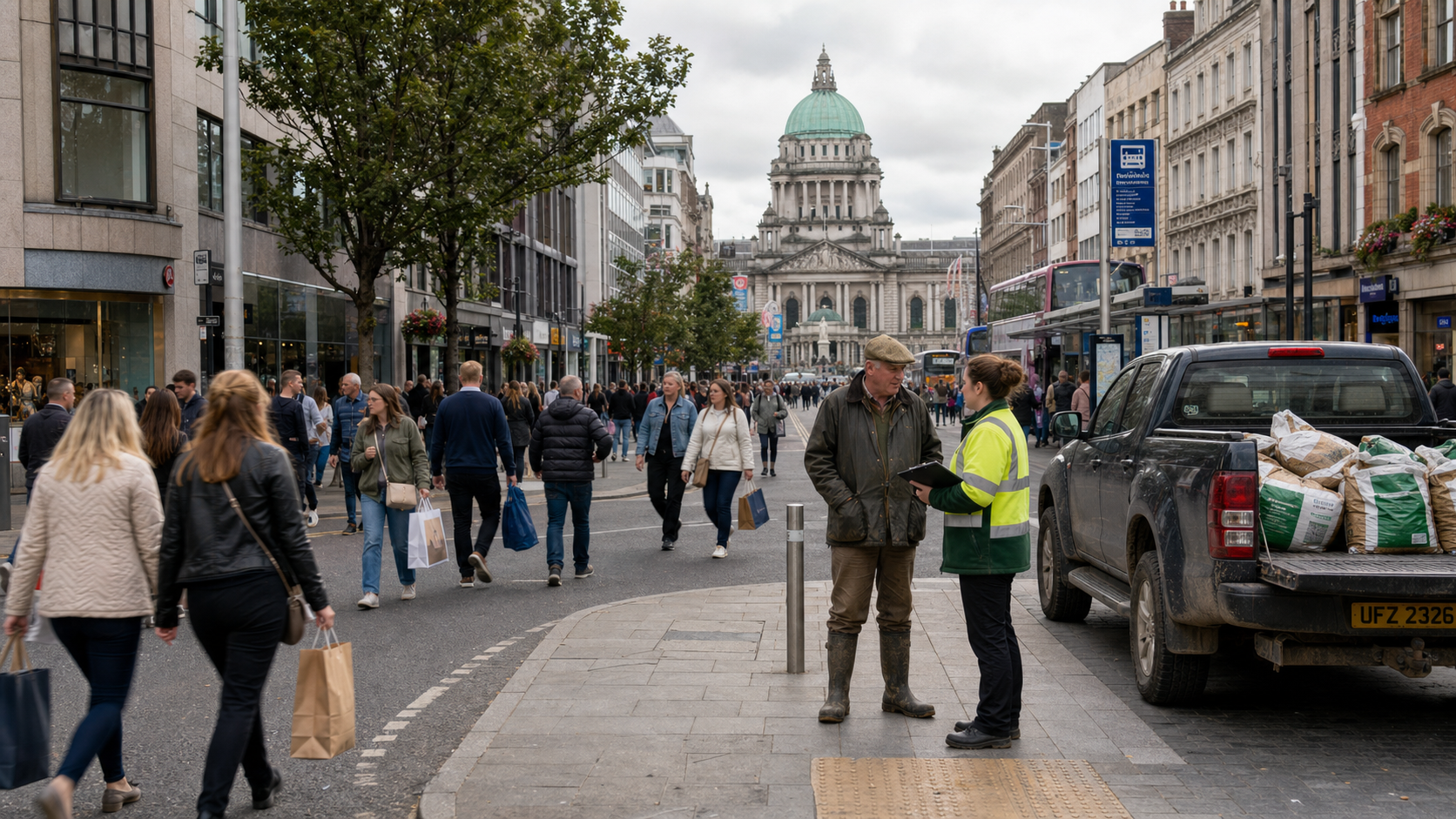
Across Northern Ireland's farming communities — from the beef and dairy heartlands of Tyrone and Fermanagh to the intensive poultry and egg production areas of Antrim and Down — the 2025 figures have provided a welcome boost to confidence. In rural areas where farming remains the primary economic activity, the health of the sector has direct implications for local businesses, services, and community life. The Ulster Farmers' Union has welcomed the data while reiterating its call for continued investment in rural infrastructure and broadband connectivity.
What's Next
DAERA will publish its preliminary estimates for 2026 farming income in early 2027, providing the first indication of whether the sector has been able to maintain its momentum in a more challenging market environment. The ONS will release updated regional disposable income data for 2025 in August 2027. In the interim, the Northern Ireland Statistics and Research Agency will publish quarterly economic indicators that will provide a more granular picture of how the region's economy is performing relative to the rest of the UK.