Northern Ireland New Home Registrations Fall 22% as Developers Slow Building Activity Amid Cost Pressures
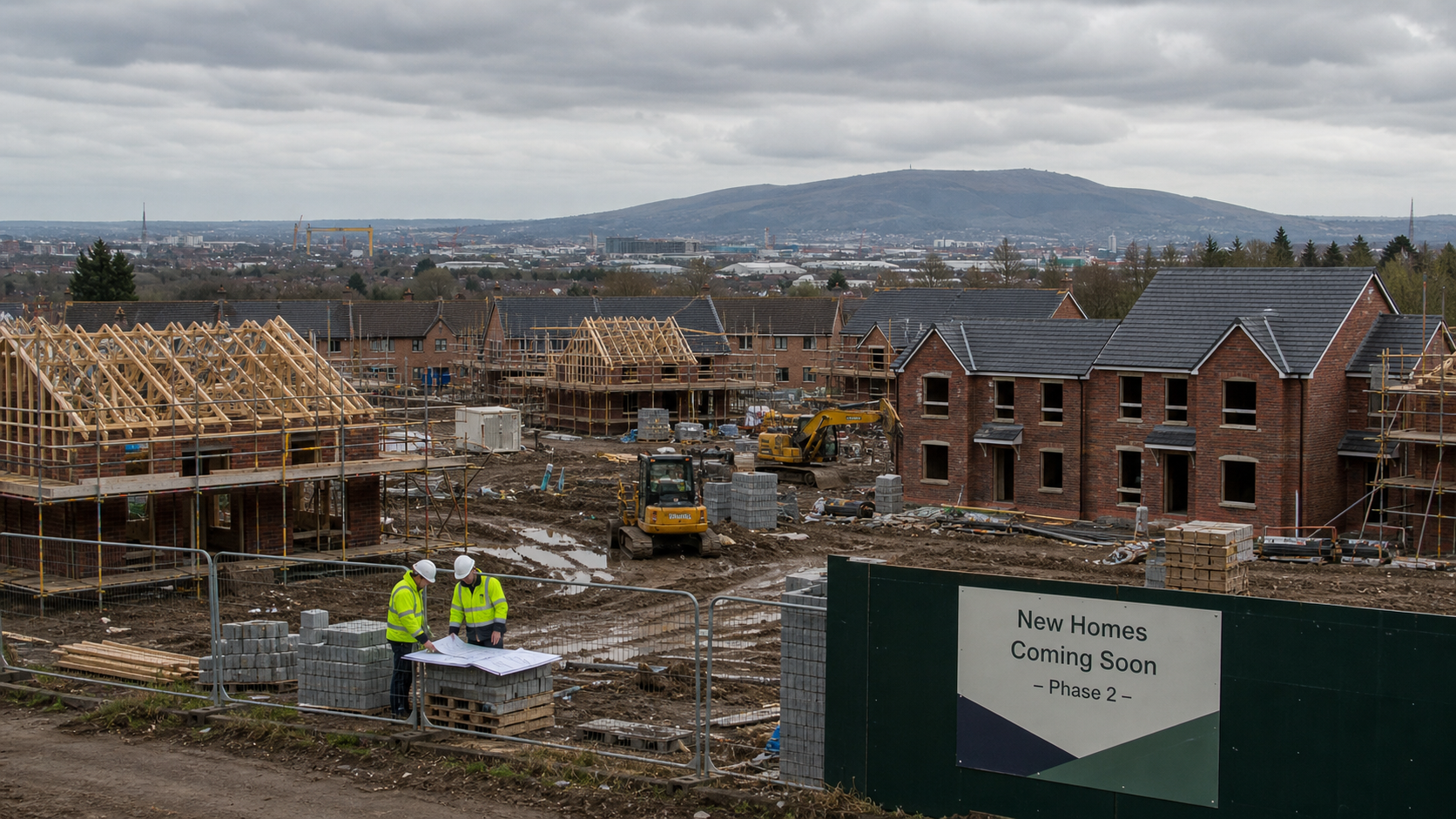
New home registrations in Northern Ireland fell by 22% in the second quarter of 2026 compared to the same period last year, with just 598 homes registered for construction between April and June, according to data published by the National House Building Council. The figures represent the latest instalment in a deeply troubling trend for the region's housing sector, following a 44% collapse in registrations in the first quarter — the lowest level recorded in 13 years — and raise serious questions about Northern Ireland's capacity to meet its housing needs in the years ahead.
Background
Northern Ireland's housing market has been under sustained pressure for several years, with demand consistently outstripping supply and affordability deteriorating for first-time buyers and renters alike. The region's planning system has been criticised for its slowness and complexity, and the construction sector has faced a series of cost shocks — rising materials prices, labour shortages, and increased regulatory requirements — that have squeezed developer margins and made some projects unviable.
The NHBC data, which tracks new home registrations as a leading indicator of future housing supply, has been showing warning signs for several quarters. The 44% drop in Q1 2026 — which brought registrations to their lowest level since 2013 — was alarming enough, but the Q2 figures suggest that the slowdown is not a temporary blip but a structural problem that will take sustained policy intervention to address.
Northern Ireland's housing crisis has distinct characteristics compared to the Republic of Ireland. The region has a higher proportion of social housing than the Republic, but the social housing waiting list has grown significantly in recent years, and the private rental sector has seen sharp rent increases in Belfast and other urban centres. The combination of falling new supply and rising demand is a recipe for a deepening affordability crisis.
Key Developments
The NHBC data shows that 598 new homes were registered for construction in Northern Ireland in Q2 2026, down from 768 in the same quarter of 2025 — a decline of 22%. Across the full UK, new home registrations totalled 29,162 in Q2, a 4% decline from the previous year, meaning Northern Ireland's performance was significantly worse than the national average.
Northern Ireland was among six of the 12 UK regions to see a decline in registrations during the quarter. While the region's 22% drop was severe, it was less extreme than the South West (-42%), East Midlands (-36%), and Wales (-34%), suggesting that some of the pressures affecting the sector are UK-wide rather than specific to Northern Ireland.
Industry experts, including Daniel Pearce of the NHBC, have attributed the decline to a 'perfect storm' of economic and geopolitical factors. Elevated interest rates have suppressed consumer demand for new homes, while rising construction costs — driven by materials price inflation and wage pressures — have eroded developer margins. Geopolitical uncertainty, including the ongoing conflict in the Middle East and its impact on energy prices, has added a further layer of unpredictability that is making developers reluctant to commit to new projects.
Why It Matters
The fall in new home registrations is a leading indicator of future housing supply, and the current trajectory suggests that Northern Ireland will face a significant shortfall in new homes over the next two to three years. This is particularly concerning given the region's already stretched housing waiting list and the pressure on the private rental sector.
Unlike the Republic of Ireland, which has introduced a range of demand-side supports for first-time buyers and is investing heavily in social housing, Northern Ireland's housing policy has been constrained by the Stormont budget crisis and the limited fiscal powers available to the Executive. The region cannot introduce the kind of Help to Buy or shared equity schemes that have been used in Great Britain and the Republic to stimulate demand, and its capacity to fund social housing construction is limited by the overall budget envelope.
The self-build sector has shown relative resilience compared to developer-led activity, but self-build cannot substitute for the volume of homes that Northern Ireland needs. The industry has called for accelerated planning reforms and the easing of regulatory burdens, but these changes take time to implement and their effects on supply will not be felt for several years.
Local Impact
The impact of falling housing supply is felt most acutely in Belfast, where demand from young professionals, students, and families is highest and where the rental market has seen the sharpest price increases. Areas including the Titanic Quarter, south Belfast, and the Lisburn Road corridor have seen significant rent inflation, and the prospect of further supply constraints will only intensify that pressure. In rural areas of Tyrone, Fermanagh, and Armagh, the self-build sector provides some buffer, but access to affordable mortgages remains a challenge for many young people.
What's Next
The NHBC will publish Q3 2026 data in October, which will provide a clearer picture of whether the current slowdown is stabilising or deepening. The Northern Ireland Executive is expected to publish a housing strategy update later this year, and there is growing pressure on the Department for Communities to bring forward measures to stimulate supply. Planning reform legislation is also expected to progress through the Assembly in the autumn session.