Northern Ireland Likely Has Worst Cancer Waiting Times in Western Europe
A Stormont Health Committee chairman has warned that Northern Ireland "probably" has the worst cancer waiting times in all of western Europe, as a new Cancer Research UK report revealed that approximately 10,700 people are diagnosed with cancer in the region every year — around 29 new cases every single day — and that only 31% of patients receive their first definitive treatment within the 62-day target following an urgent GP referral.
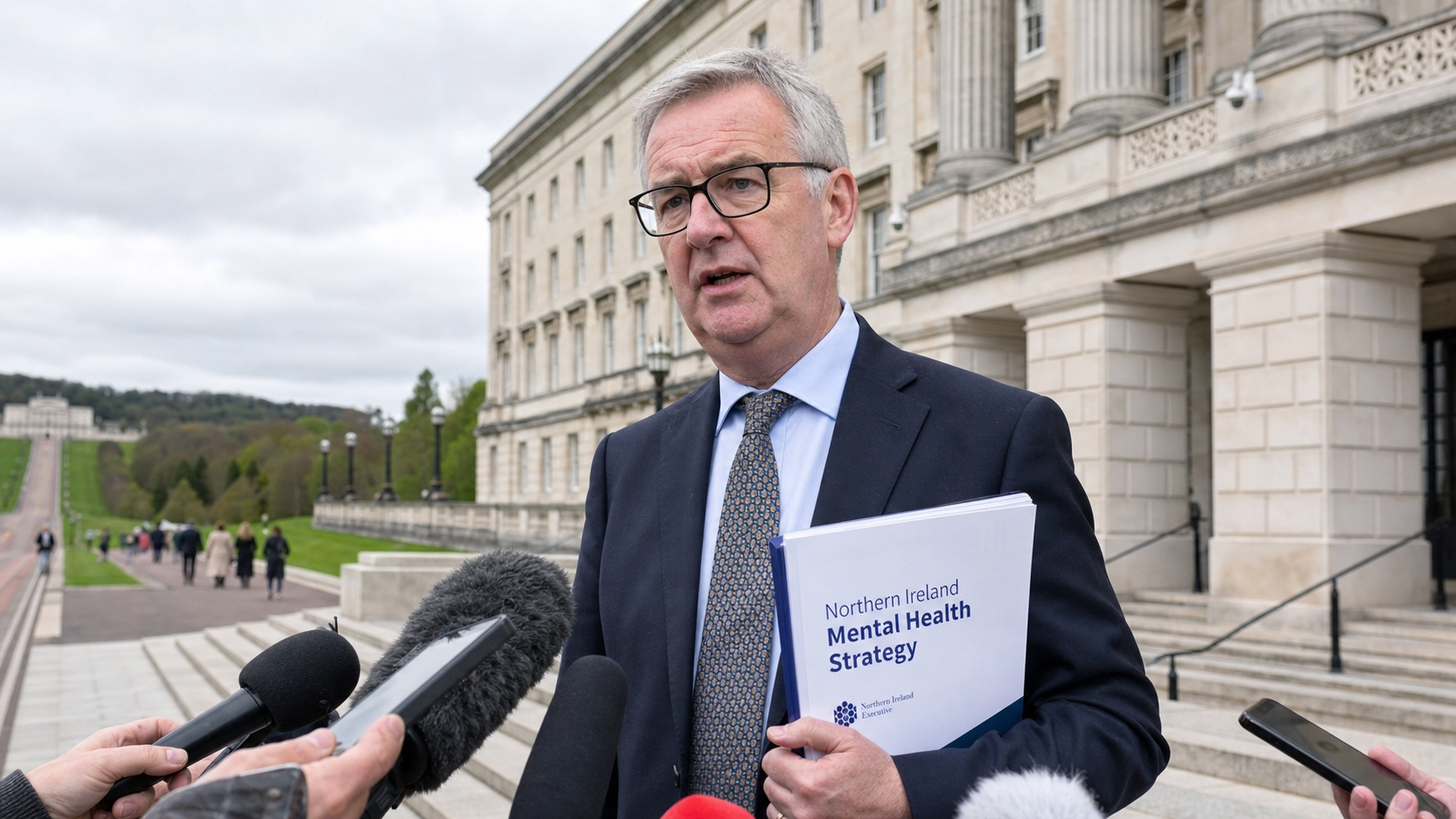
Philip McGuigan, chairman of Stormont's Health Committee, made the stark assessment as the scale of Northern Ireland's cancer care crisis came into sharp focus. The figures represent a damning indictment of a health system that has been chronically underfunded and understaffed for years, and have prompted renewed calls for urgent action from politicians, health service leaders, and patient groups across the region.
Background
Cancer is now the leading cause of death in Northern Ireland, accounting for 26% of all fatalities. The most common forms — breast, prostate, lung, and bowel cancer — account for 54% of all diagnoses. While cancer mortality rates have decreased by 18% since the mid-1970s, the absolute number of deaths has risen to around 4,600 per year, driven by a growing and ageing population. The combination of rising case numbers and deteriorating waiting times has created a crisis that clinicians and patient advocates have been warning about for years.
The 62-day target — from urgent GP referral to first definitive treatment — is the key benchmark for cancer care performance across the UK. In England, Scotland, and Wales, performance against this target, while imperfect, significantly outstrips Northern Ireland's 31% achievement rate. The comparison with other western European countries is even more stark, with many continental health systems achieving 70-80% compliance with equivalent targets.
Professor Mark Taylor, Northern Ireland's first clinical director for elective care, has characterised the issue as an "access problem, not a treatment problem." He has praised the quality of clinical care once patients enter the system, but acknowledged that significant delays in diagnosis are undermining patient outcomes — and that earlier intervention would save both lives and money.
Key Developments
A particularly troubling aspect of Northern Ireland's cancer care system is its bowel cancer screening programme. In Northern Ireland, screening begins at age 60 — a notable outlier compared to England, Scotland, and Wales, where it starts at 50, and the Republic of Ireland, where it begins at 57. McGuigan criticised this disparity sharply, arguing that earlier screening leads to less complex treatments and is more cost-effective. Professor Taylor conceded that in this regard, Northern Ireland is "absolutely no doubt we are behind our colleagues in the United Kingdom."
The Health Committee chairman's comments came as Cancer Research UK published new data highlighting the scale of the challenge. The charity's report underlined that the combination of rising case numbers, inadequate screening provision, and chronic waiting time failures is creating a perfect storm for cancer patients in Northern Ireland — one that is costing lives that could be saved with earlier diagnosis and treatment.
Patient groups have responded with a mixture of anger and despair, with many calling for an emergency investment programme to address the backlog and bring Northern Ireland's cancer services up to the standard of the rest of the UK. The Stormont Health Committee has indicated it will pursue the matter with the Department of Health as a matter of urgency.
Why It Matters
The consequences of Northern Ireland's cancer waiting times crisis are not abstract — they are measured in lives lost and suffering prolonged. For every patient who waits beyond the 62-day target for treatment, the risk of their cancer progressing to a more advanced and harder-to-treat stage increases. The evidence is clear: earlier diagnosis and treatment saves lives, and Northern Ireland's failure to meet basic waiting time targets is having a direct and measurable impact on patient outcomes.
The crisis also has significant economic implications. Treating advanced-stage cancers is far more expensive than treating early-stage disease, meaning that the failure to invest in timely diagnosis and screening is not only costing lives but also placing a greater long-term burden on the health service. Professor Taylor's argument that prioritising earlier diagnostics would save money as well as lives deserves serious consideration from policymakers.
Local Impact
For patients and families across Belfast and Northern Ireland, the cancer waiting times crisis is a daily reality. The knowledge that a diagnosis may be delayed by months — and that the region's screening programmes start later than elsewhere in the UK — adds an additional layer of anxiety to an already frightening experience. Patient groups, GPs, and oncologists across the region have been raising the alarm for years, and the Stormont Health Committee chairman's intervention represents a significant escalation in the political pressure on the Department of Health to act.
The disparity between Northern Ireland's cancer care performance and that of the rest of the UK is not inevitable — it is the product of political choices about funding and priorities. Addressing it will require sustained investment and political will, but the human cost of inaction is simply too high to ignore.
What's Next
The Stormont Health Committee is expected to pursue the matter with the Department of Health, with calls for an emergency investment programme and an urgent review of the bowel cancer screening age. Further information is available from Belfast Live and ITV News UTV.