NHS Waiting Lists Remain at 7.25 Million as Health Service Faces Persistent Pressures
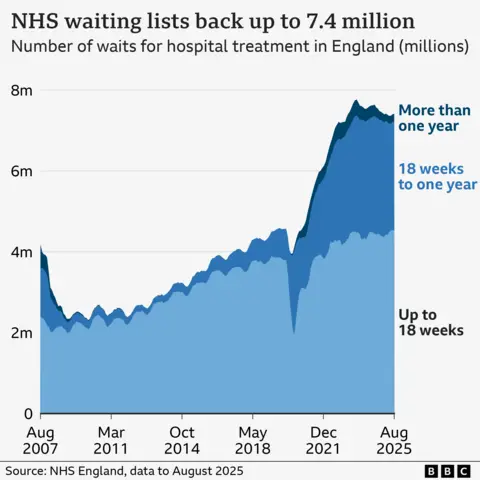
The National Health Service continues to face immense operational challenges in 2026, with the elective care waiting list in England standing at 7.25 million and key performance targets across emergency care, cancer treatment, and ambulance response times remaining stubbornly out of reach.
A comprehensive assessment of the state of UK health in 2026 paints a picture of a system under sustained pressure, despite significant increases in the clinical workforce and ongoing government investment.
Background
The NHS has been grappling with a backlog of care that built up during the Covid-19 pandemic and has proved extremely difficult to clear. The government has made reducing waiting lists a central priority, but progress has been slow, hampered by staff shortages, rising demand, and the ongoing impact of industrial action in previous years.
Key Developments
As of April 2026, the elective care waiting list in England stands at 7.25 million, and despite some progress, the NHS is far from its target of treating 68% of patients within 18 weeks of referral. In urgent and emergency care, over 38% of patients attending A&E are waiting longer than four hours to be seen, well short of the 95% target. Cancer care targets are also being missed, with only 72.5% of patients starting treatment within the 62-day standard from an urgent GP referral in March, against a goal of 85%. The government's 10-Year Health Plan, published earlier this year, aims to shift the NHS's focus from hospital-based treatment to community-led prevention, with new Neighbourhood Health Centres intended to be open at least 12 hours a day, six days a week. However, the plan has faced criticism for its funding model, which includes a real-terms spending increase of 2.8% annually — below the long-term historical average for NHS funding. For the full picture, see the State of UK Health 2026 report.
Why It Matters
The NHS's performance directly affects the lives of millions of people across the UK, from those waiting for elective procedures to those in need of urgent cancer treatment. The persistent failure to meet key targets has significant human costs, with patients experiencing pain, anxiety, and in some cases, deteriorating health while they wait for care.
What's Next
The government is expected to publish updated waiting list data in the coming weeks, which will provide a clearer picture of whether recent initiatives are having an impact. Ministers will face continued pressure from opposition parties and patient groups to accelerate progress on reducing waiting times and improving the quality of care across all NHS services.