Northern Ireland Cancer Cases Rise Nearly 9% as New 30-Year Registry Data Reveals Stark Inequalities
The Northern Ireland Cancer Registry has published a landmark 30-year analysis of cancer diagnoses across the six counties, revealing that the average annual number of cases rose by 8.8% between the 2019-2023 period and the preceding five years, with men experiencing a sharper increase of 11.9% and the most deprived communities carrying a disproportionate burden of the disease.
Background
The Northern Ireland Cancer Registry, based at Queen's University Belfast, has been collecting and analysing cancer incidence data since 1993, making it one of the most comprehensive regional cancer databases in the United Kingdom. The registry's 30-year analysis, published in August 2026, provides the most detailed picture yet of how cancer patterns have evolved across the six counties over three decades, tracking changes in incidence, survival rates, and the distribution of disease across different population groups.
Cancer is the leading cause of premature death in Northern Ireland, and the health system's capacity to diagnose and treat the disease has been a persistent source of concern for politicians, clinicians, and patient advocates. Northern Ireland's waiting lists for cancer diagnosis and treatment are among the longest in the United Kingdom, a problem that has been exacerbated by the chronic underfunding of the health service and the difficulty of recruiting and retaining specialist oncology staff. The registry's data provides the epidemiological context within which these service pressures must be understood.
The 30-year timeframe of the analysis allows for the identification of long-term trends that shorter-term data cannot reveal. The period from 1993 to 2023 encompasses significant changes in Northern Ireland's population, its lifestyle patterns, its screening programmes, and its diagnostic capabilities, all of which influence the cancer incidence figures in complex and sometimes counterintuitive ways.
Key Developments
Between 2019 and 2023, an average of 10,549 people were diagnosed with cancer annually in Northern Ireland, excluding non-melanoma skin cancer. When non-melanoma skin cancer is included, the annual total increases by approximately 4,000 cases. The 8.8% increase in the most recent five-year period compared to the 2014-2018 period is driven by a combination of factors, including an ageing population, improved diagnostic capabilities that detect cancers that would previously have gone unrecorded, and genuine increases in the incidence of certain cancer types.
The gender disparity in the increase — 11.9% for men compared to 5.6% for women — reflects particularly sharp rises in cancers that disproportionately affect men. Prostate cancer remains the most common diagnosis for men, while breast cancer is the most frequent for women. Thyroid cancer has seen the most dramatic increases, rising by more than 48% in men and 51% in women over the period, a trend that is partly attributed to improved detection through incidental imaging. Liver cancer, malignant melanoma, and prostate cancer have also seen significant increases.
The socio-economic data in the registry report is particularly striking. After adjusting for age and population size, cancer incidence rates in Belfast were 8.4% higher than the Northern Ireland average. The most deprived areas recorded incidence rates 13.5% higher than the average, while the least deprived areas saw rates 6% lower — a gap of nearly 20 percentage points between the most and least deprived communities. Despite the rising incidence, survival rates have shown improvement, with five-year survival rising from 55.9% for diagnoses between 2009 and 2013 to 58.1% for the 2014-2018 cohort.
Why It Matters
The registry data provides essential context for the ongoing debate about cancer services in Northern Ireland. The combination of rising incidence and persistent socio-economic inequality in cancer outcomes is a public health challenge of the first order, and one that cannot be addressed by clinical services alone. The 13.5% higher incidence in the most deprived areas reflects the well-documented links between poverty, lifestyle factors such as smoking and obesity, and cancer risk. Addressing these inequalities requires action across multiple government departments — not just health, but also housing, education, and economic development. The data also underlines the urgency of reducing waiting times for cancer diagnosis and treatment, since delays in diagnosis disproportionately affect patients in deprived areas who are less likely to have access to private healthcare.
Local Impact
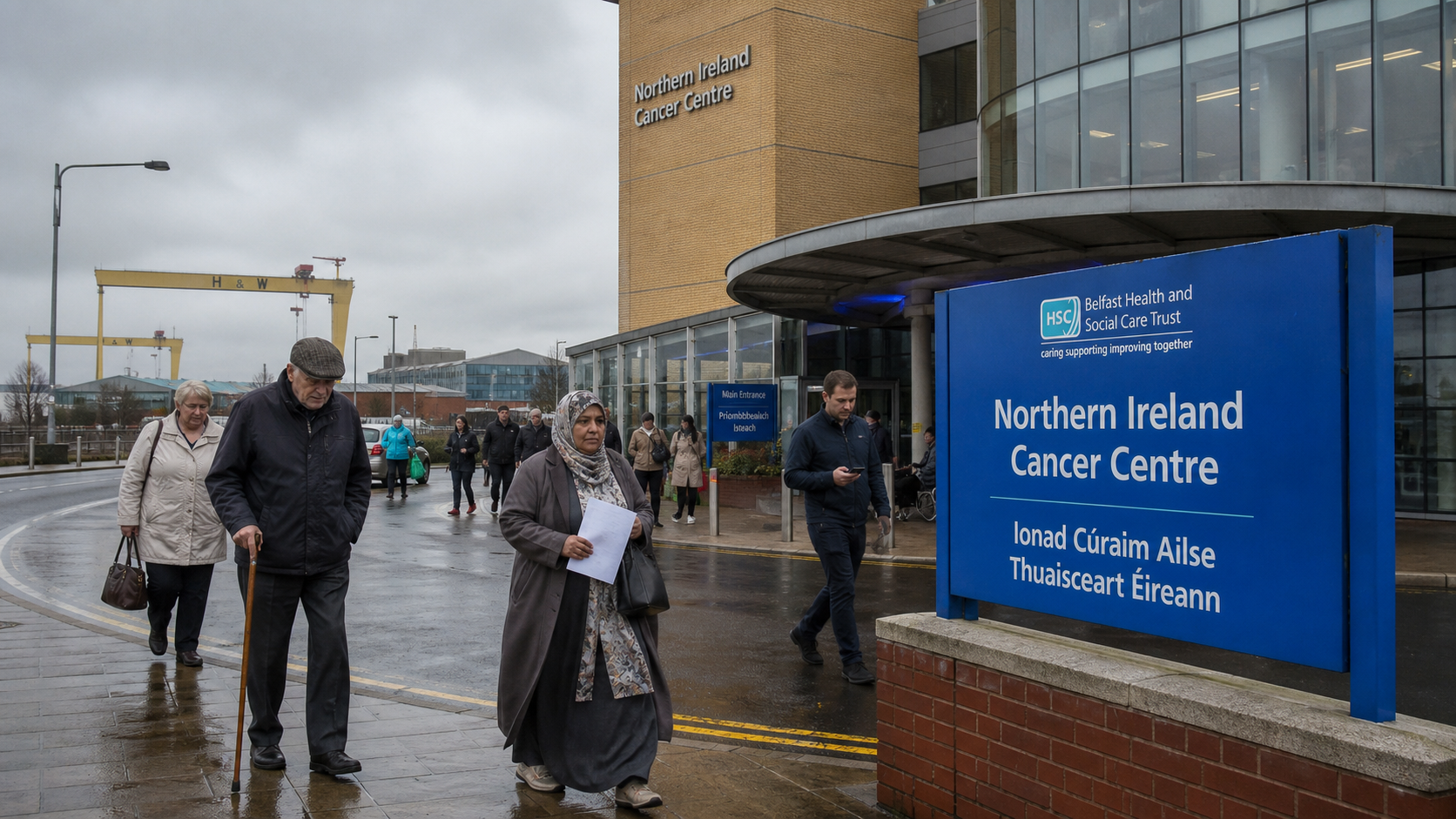
The geographic distribution of cancer incidence within Northern Ireland has direct implications for the planning of health services. Belfast's higher-than-average incidence rate means that the Belfast Health and Social Care Trust faces a particularly heavy burden of cancer cases, while the Western Trust, which serves Derry, Tyrone, and Fermanagh, faces challenges related to the rural geography of its catchment area and the difficulty of providing specialist oncology services to dispersed populations. The Southern Trust, covering Armagh, Down, and Newry, has been particularly affected by waiting list pressures in recent years. The registry data will inform the Department of Health's cancer strategy, which is currently under review, and is expected to support the case for additional investment in cancer services across all five trusts.
What's Next
The Department of Health is expected to respond to the registry's 30-year analysis with a statement on cancer strategy in the autumn of 2026. Health Minister Mike Nesbitt has previously committed to publishing a new cancer strategy before the end of the current Assembly mandate, and the registry data will provide the evidential foundation for that document. The Northern Ireland Cancer Network, which coordinates cancer services across the five trusts, is also expected to use the data to inform its planning for specialist oncology capacity over the next decade. Patient advocacy organisations, including Cancer Focus Northern Ireland, have called for the data to be used to drive a step-change in investment in cancer prevention, early detection, and treatment services.