NI Secretary Orders Judge-Led Review of Parades Commission After High Court Exposes Procedural Failures in Drumcree Ruling
Northern Ireland Secretary Sir Chris Bryant has ordered an independent judge-led review of the Parades Commission's decision-making procedures after a High Court ruling found that the Commission had engaged in "sloppy procedures" and "short cuts" in its determination on the Drumcree parade — a finding that has prompted calls for commissioner resignations, triggered a new parade application from the Orange Order, and raised fundamental questions about the governance of one of Northern Ireland's most sensitive regulatory bodies.
Background
The Parades Commission for Northern Ireland was established under the Public Processions (Northern Ireland) Act 1998 as an independent body responsible for adjudicating disputes about contentious parades and protests. Its role is to balance the right to peaceful assembly against the rights of residents not to be subjected to intimidation or harassment, a task that requires it to make difficult judgements in situations where community tensions are high and the stakes — for public order, for community relations, and for the peace process — are significant.
The Commission's authority depends on the confidence of both communities in its impartiality and competence. When that confidence is undermined — whether by perceptions of bias, by procedural failures, or by legal challenges that expose weaknesses in its decision-making — the consequences extend well beyond the individual case. A Commission that cannot demonstrate procedural rigour is vulnerable to legal challenge, and legal challenges to parade determinations create exactly the kind of uncertainty that allows disputes to escalate.
The Drumcree case has been a recurring test of the Commission's authority since the late 1990s. The Orange Order's annual application to march along the Garvaghy Road in Portadown has been refused by the Commission every year since 1998, and the Order has periodically sought to challenge those determinations through legal and political channels. The current challenge, which resulted in the High Court quashing the Commission's 2026 determination, is the most significant legal setback the Commission has faced in recent years.
Key Developments
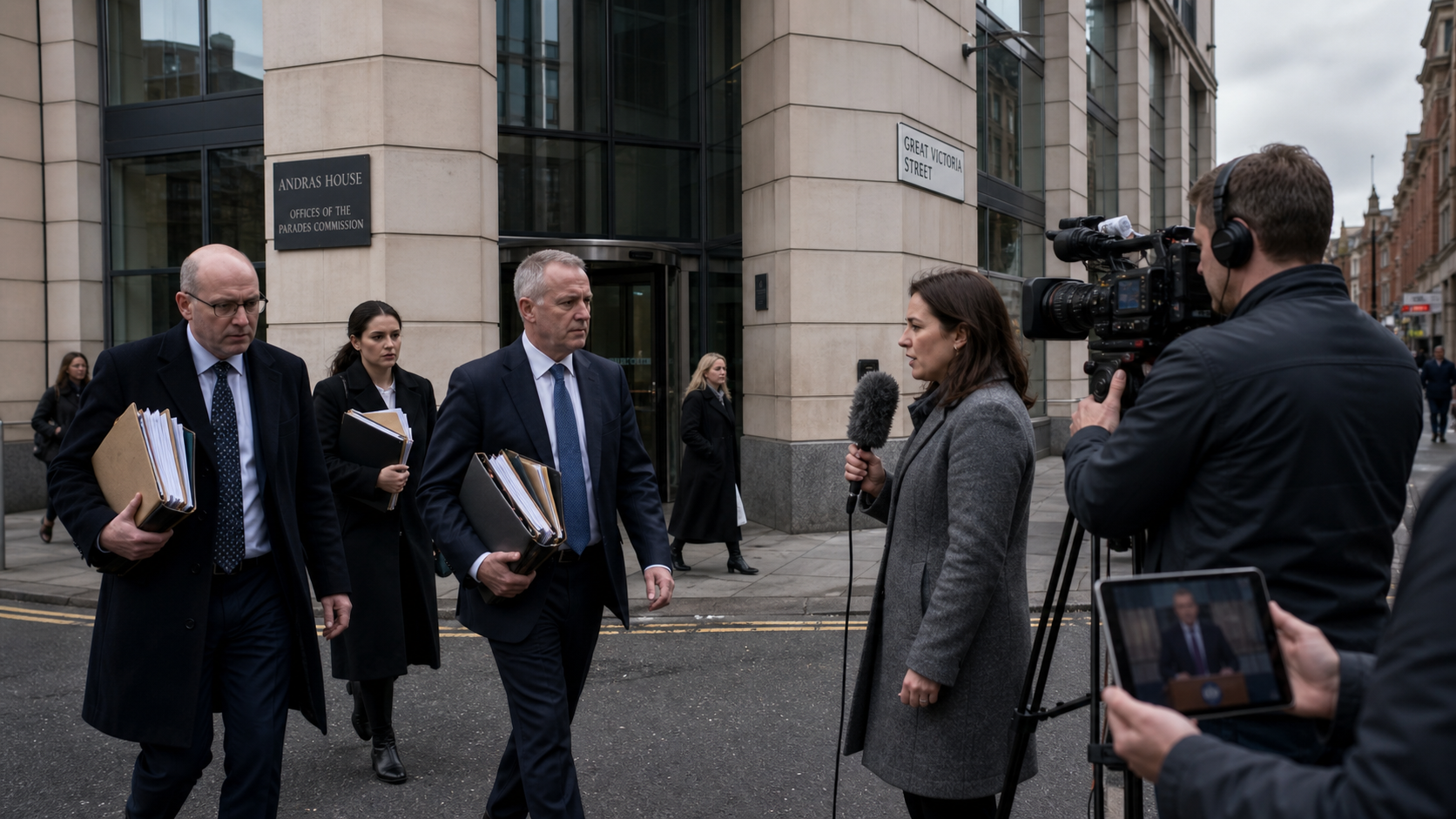
The High Court found that the Commission had engaged in "sloppy procedures" and "short cuts" in reaching its 2026 Drumcree determination, specifically noting that not all six commissioners had signed off on the decision — a procedural defect that rendered it legally invalid. The ruling prompted immediate calls from Orange Order representatives and unionist politicians for the resignation of the Commission's chair and remaining members, on the grounds that the procedural failures had fatally undermined the Commission's credibility.
Commissioner Billy Gamble resigned in the aftermath of the ruling. However, chair Professor Evelyn Collins and the remaining commissioners have opted to remain in their positions, arguing that their departure would create a governance vacuum at a critical moment and that the independent review ordered by the Secretary of State provides the appropriate mechanism for addressing the procedural concerns identified by the court.
Sir Chris Bryant announced the independent judge-led review in a statement to the House of Commons, describing it as a necessary response to the court's findings and indicating that it would examine the procedural safeguards around determinations, the governance arrangements of the Commission, and the adequacy of the training and support provided to commissioners. The review is expected to conclude by the end of November 2026, with recommendations to be implemented before the Commission's next round of determinations in the spring of 2027.
Why It Matters
The Parades Commission's credibility is not merely an institutional concern — it is a practical necessity for the management of community tensions in Northern Ireland. The Commission adjudicates hundreds of parade notifications each year, the vast majority of which are resolved without controversy. Its ability to do so depends on the acceptance by both communities that its decisions, even when unwelcome, are reached through a fair and rigorous process. The High Court's finding of "sloppy procedures" undermines that acceptance in a way that will take time and sustained effort to repair.
The timing of the review is also significant. The Commission will be required to make a determination on the Orange Order's new Drumcree application before 27 September — a tight timeline that leaves little room for the kind of procedural improvements that the review is intended to recommend. The Secretary of State's decision to proceed with the review in parallel with the Commission's ongoing work reflects the urgency of the situation, but it also creates a risk that the review's recommendations will arrive too late to influence the most immediate and sensitive determination the Commission faces.
Local Impact
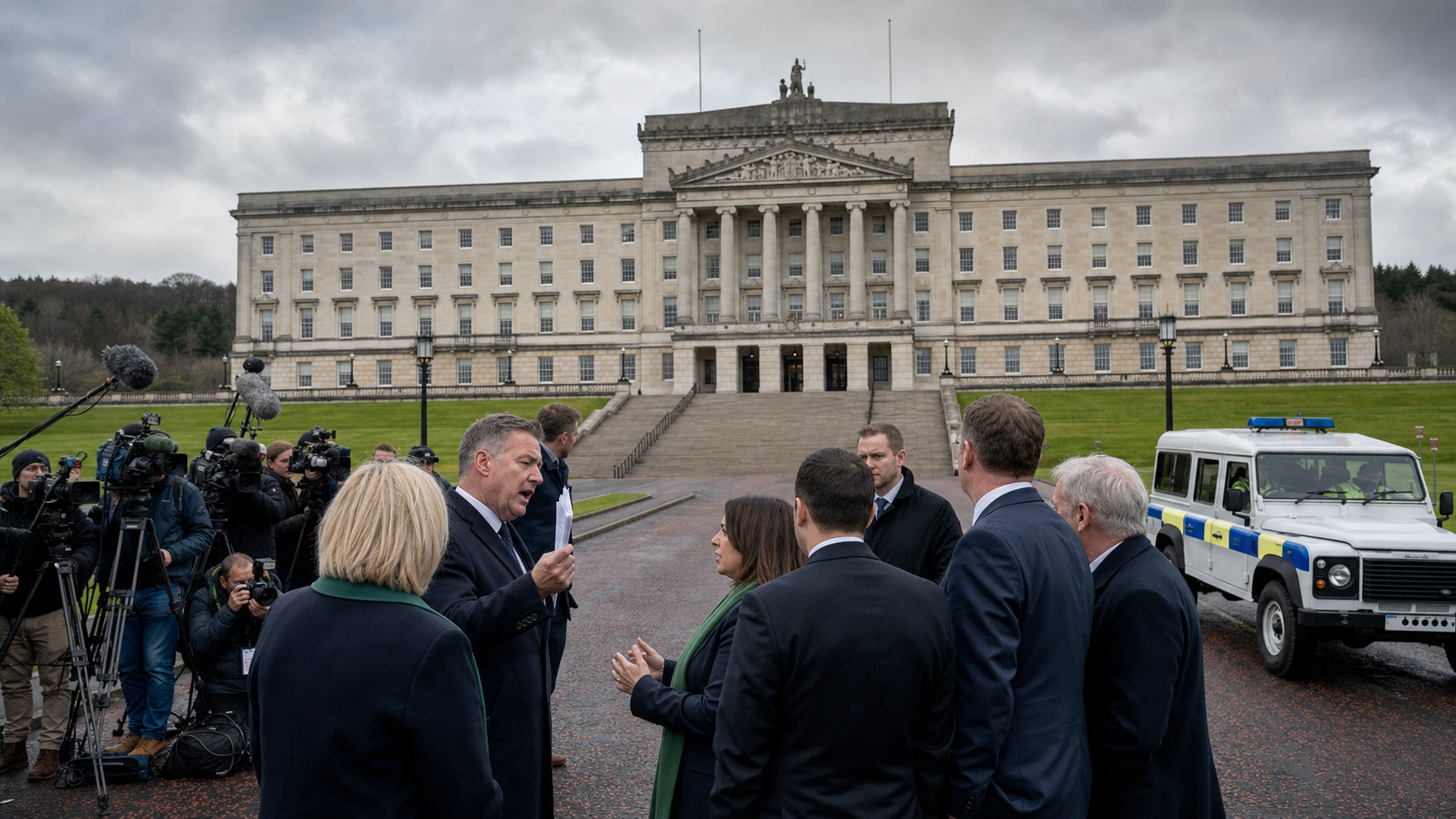
In Portadown, the procedural controversy surrounding the Parades Commission has added a further layer of uncertainty to an already tense situation. The Garvaghy Road Residents' Coalition has expressed concern that the High Court ruling and the subsequent review process could be used to delay or undermine the Commission's ability to make a robust determination on the new parade application. The PSNI's Armagh, Banbridge and Craigavon district command has been in contact with community representatives on both sides and has indicated that it is prepared for a range of scenarios around the 27 September date. In Belfast, the political parties at Stormont have been careful in their public statements, with most calling for the review process to be allowed to proceed without political interference.
What's Next
The independent review will be conducted by a senior judge, whose identity has not yet been announced. The review is expected to take evidence from the Commission, from legal experts, and from community representatives before producing its report by the end of November. The Parades Commission will make its determination on the Drumcree application by 25 September, four days before the planned parade. The Secretary of State has indicated that he will make a further statement to the House of Commons once the review's terms of reference have been finalised.