NI Health Minister Visits Belfast Trust as Hospital Statistics Reveal Scale of Waiting List Crisis
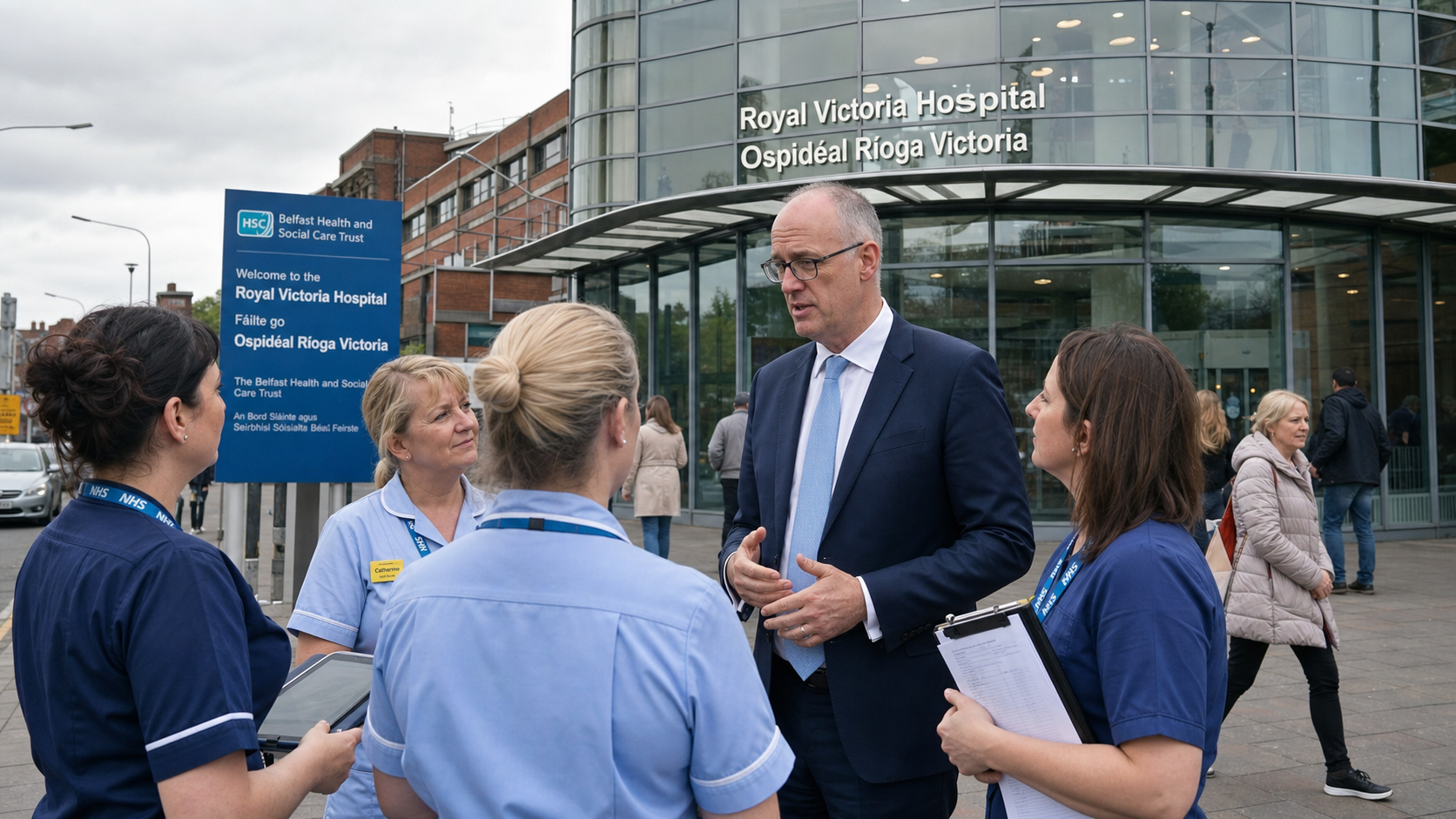
Health Minister Mike Nesbitt visited the Belfast Health and Social Care Trust on Wednesday to acknowledge the efforts of its Validation Team in managing Northern Ireland's chronic waiting list backlog, as the Department of Health published new inpatient, day case, and outpatient hospital statistics that lay bare the continuing scale of a crisis that has left hundreds of thousands of patients waiting for care.
Background
Northern Ireland's health service has been grappling with one of the most severe waiting list crises in the United Kingdom for well over a decade. The problem predates the Covid-19 pandemic, which exacerbated an already difficult situation by forcing the suspension of elective procedures for extended periods. The subsequent recovery has been painfully slow, hampered by chronic underfunding, staff shortages, and the structural challenges of running five separate health and social care trusts — Belfast, South Eastern, Southern, Western, and Northern — across a relatively small population.
The introduction of the Encompass electronic patient record system across the trusts has added a further layer of complexity to the data picture, with the Department of Health noting that figures derived from the new system should not be directly compared with legacy data collected before its implementation. Despite this caveat, the broad trajectory is clear: waiting lists remain at historically high levels, and the pace of reduction is insufficient to meet the scale of the challenge.
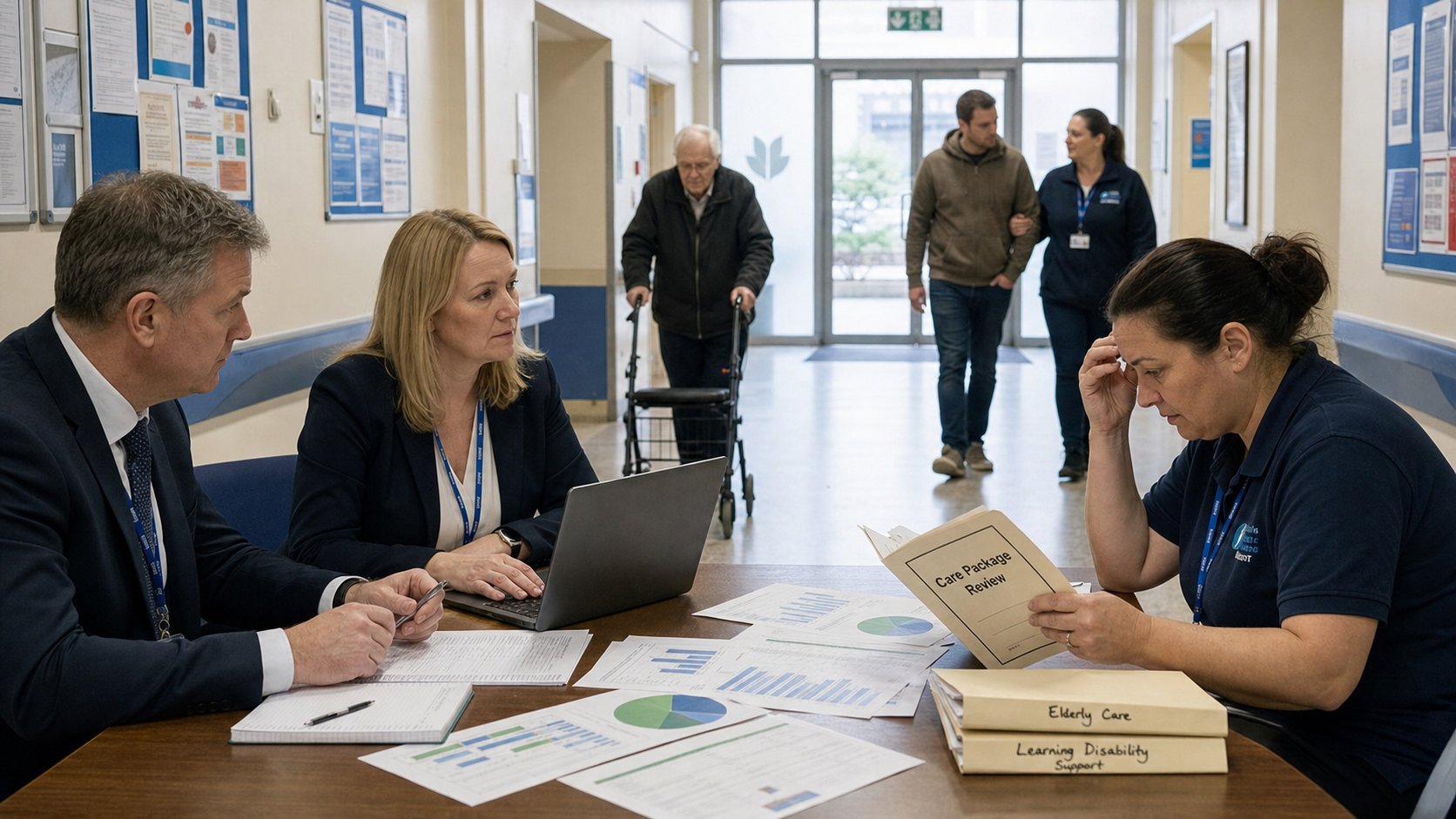
The Validation Teams within each trust play a crucial but often overlooked role in managing the waiting list crisis. Their work involves systematically reviewing waiting lists to identify patients who no longer require treatment, have moved away, or have been seen by another provider — a process that can significantly reduce headline waiting list figures without requiring additional clinical capacity.
Key Developments
The statistics published by the Department of Health on Wednesday cover inpatient, day case, and outpatient hospital activity for 2025/26. The figures confirm that as of the most recent reporting period, over 542,000 patients were waiting for a first consultant-led outpatient appointment, with more than 55% of those — approximately 301,000 people — having waited longer than 52 weeks. For inpatient and day case admissions, 91,645 patients were on waiting lists, with over 41% waiting more than a year.
Minister Nesbitt, speaking after his visit to the Belfast Trust, praised the dedication of the Validation Team and acknowledged the scale of the challenge facing the health service. "The work being done by these teams is essential, and it is often invisible to the public," he said. "Every patient removed from a waiting list because their circumstances have changed is a patient who no longer has to wait, and that matters."
The minister also referenced the "Making Life Better" key indicators progress update published earlier this week, which tracks progress against Northern Ireland's public health strategy. The update showed mixed results, with improvements in some areas — including smoking rates and childhood obesity — offset by continued challenges in mental health, cancer waiting times, and access to primary care.
Why It Matters
The publication of these statistics is a reminder that Northern Ireland's waiting list crisis is not merely a political talking point but a lived reality for hundreds of thousands of people across the region. A patient waiting more than 52 weeks for a first consultant appointment is a patient whose condition may be deteriorating, whose quality of life is being diminished, and whose ability to work and participate in family life may be compromised. The scale of the problem — over half a million people on outpatient waiting lists alone — is without parallel in any other part of the United Kingdom. England, Scotland, and Wales all face significant waiting list challenges, but none approaches the severity of Northern Ireland's position on a per-capita basis. The structural reasons for this are well understood: decades of underfunding, a fragmented trust structure, and the political instability that has periodically left the Executive without a functioning health minister. What is less clear is how the current Executive intends to address the problem at the pace and scale required.
Local Impact
The impact of the waiting list crisis is felt differently across Northern Ireland's five trusts. The Belfast Health and Social Care Trust, which serves the greater Belfast area including north, south, east, and west Belfast, carries the largest absolute waiting list burden. The Western Trust, covering Derry/Londonderry, Omagh, and the wider west, has consistently reported some of the longest waits for certain specialties, including orthopaedics and ophthalmology. The Southern Trust, covering Armagh, Newry, and Banbridge, has faced particular pressures in mental health services. For patients in rural areas served by the Northern Trust — covering Antrim, Ballymena, Coleraine, and Magherafelt — the combination of long waits and significant travel distances to specialist centres creates additional hardship.
What's Next
The Department of Health is expected to publish its next quarterly waiting times statistics in October 2026. Minister Nesbitt has committed to presenting a waiting list reduction plan to the Stormont Health Committee before the end of the year. The committee has indicated that it will scrutinise the plan closely, with particular attention to the funding commitments required to deliver meaningful reductions within a realistic timeframe. The Public Health Agency's "Living Well" pharmacy-based campaign, currently focused on managing anxiety, will continue throughout August as part of a broader effort to reduce pressure on secondary care services.