NI GCSE Results 2026: Nearly a Third of Entries Achieve Top Grades as Gender Gap Narrows
Northern Ireland's GCSE class of 2026 has received its results, with 31.7% of all entries achieving A* or A grades — a marginal increase on the 31.6% recorded in 2025 — while the gender gap in performance has narrowed to its lowest point since 2000, with girls continuing to outperform boys but by a smaller margin than in any year this century.
Background
GCSE results in Northern Ireland are administered primarily through the Council for the Curriculum, Examinations and Assessment (CCEA), which uses the traditional A* to G grading scale. This differs from England and Wales, where a numerical 9-1 system has been in use since 2017, though some Northern Ireland students taking exams through English or Welsh boards receive numerical grades. The distinction matters because it makes direct comparisons between Northern Ireland and England's results more complex than they might appear at first glance.
Northern Ireland's proportion of top grades has historically been higher than the equivalent top-grade performance in England and Wales, a pattern that reflects a combination of factors including the structure of the curriculum, the role of grammar schools in the selective education system, and cultural attitudes towards academic achievement. The 2026 results continue this pattern, with Northern Ireland's A*/A rate of 31.7% significantly exceeding the equivalent top-grade performance in England.
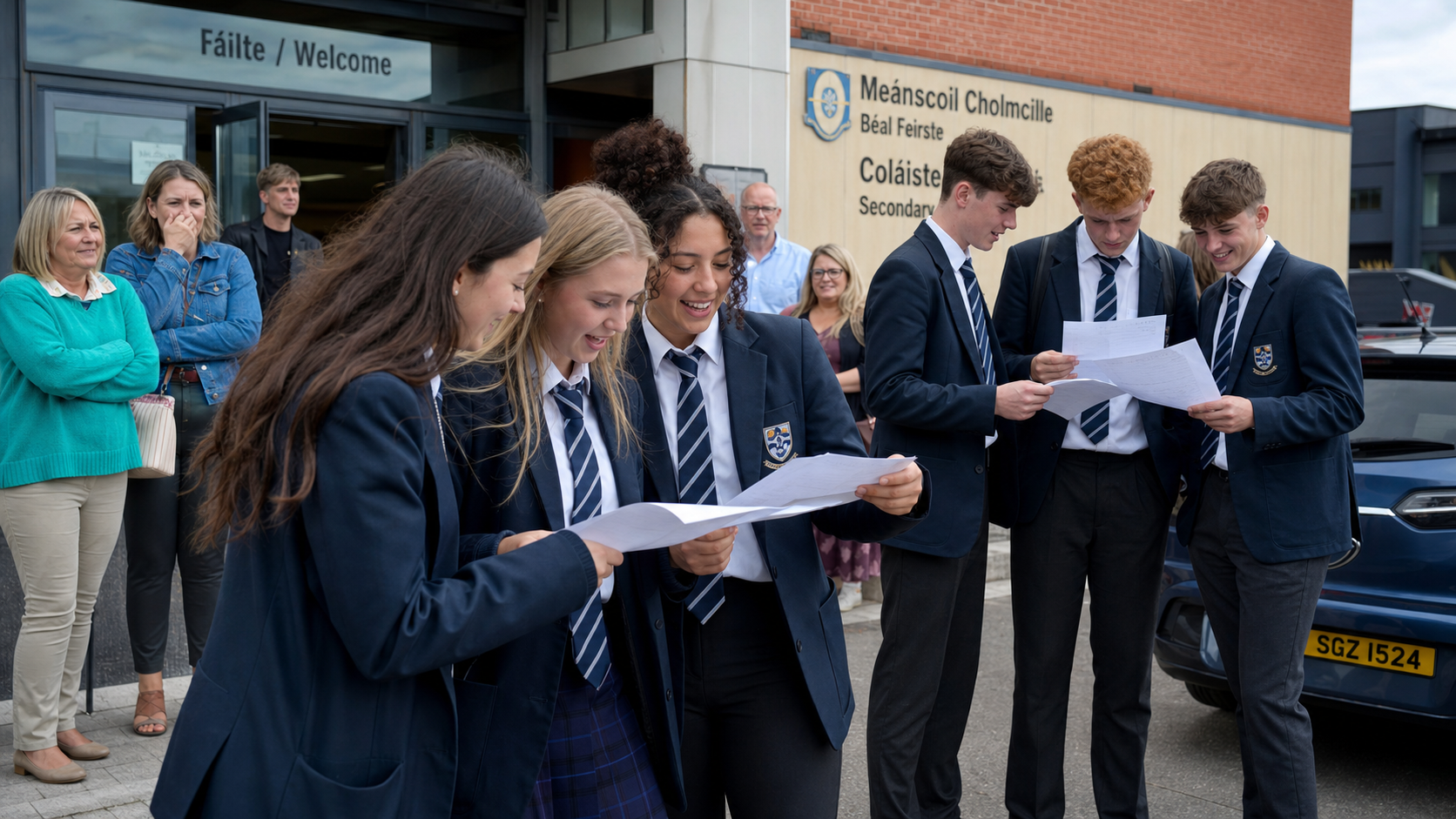
Results day in Northern Ireland has traditionally been an in-person event, with students collecting their results at their schools rather than accessing them online. This year, in contrast to England where a government pilot scheme allowed some students to access results via a digital app, Northern Ireland maintained the traditional approach. Schools and students expressed a strong preference for the in-person experience, citing the importance of the support network provided by teachers and the opportunity to celebrate with peers — a sentiment that reflects the deeply communal nature of results day in Northern Irish school culture.
Key Developments
The 2026 results were released on Thursday, 20 August, with students across Northern Ireland gathering at their schools from early morning to collect their grade slips. Scenes of celebration were reported at schools from Derry/Londonderry to Newry, from Antrim to Enniskillen, with teachers and parents sharing in the joy of students who had worked hard through a challenging academic year.
In the compulsory subjects of English Language and Mathematics, over 25% of entries achieved an A or A* grade — a strong performance that reflects the emphasis placed on core literacy and numeracy skills in Northern Ireland's curriculum. The CCEA operated a dedicated results helpline for students until 26 August, and the Department for the Economy provided a careers advice service to assist students in determining their next steps, whether that be A-levels, vocational qualifications, apprenticeships, or employment.
The narrowing of the gender gap — from 6.2 percentage points in 2025 to 5.8 percentage points in 2026 — was noted by education analysts as a significant development. While girls continue to outperform boys across most subjects, the trend towards convergence has been consistent over several years and reflects both improvements in boys' performance and a broader shift in how schools approach gender-specific learning needs.
Why It Matters
GCSE results are a critical gateway for young people in Northern Ireland, determining access to A-level courses, vocational programmes, and ultimately to higher education and employment. The strong performance of the 2026 cohort is encouraging, but education analysts caution against complacency. Northern Ireland continues to have one of the highest rates of educational underachievement in the UK, with a significant proportion of young people — particularly boys from disadvantaged backgrounds — leaving school without the qualifications needed to access further education or skilled employment.
The Department of Education has been considering significant reforms to the examination system in Northern Ireland, including potential modifications to subject content and exam structures to reduce the number of exams per course. A public consultation on these reforms concluded in late 2025, and the outcomes are expected to shape the curriculum for future cohorts. The 2026 results provide a useful baseline against which the impact of any reforms can be measured.
Local Impact
Across Northern Ireland's five Education Authority areas — Belfast, South Eastern, Southern, Western, and North Eastern — schools reported broadly positive results, with individual schools celebrating standout performances by students who had overcome significant personal challenges to achieve their grades. In Belfast, schools in both the grammar and non-selective sectors reported strong results, while in the Western Education Authority area, which covers Derry/Londonderry, Strabane, Omagh, and the surrounding rural areas, teachers highlighted the particular achievement of students from disadvantaged backgrounds who had excelled despite facing significant socioeconomic barriers.
What's Next
Students who are disappointed with their results have until 26 August to contact the CCEA helpline for guidance on appeals and re-marks. The Department for the Economy's careers advice service will continue to operate through the results period to help students navigate their options. A-level results day follows in the coming weeks, and the UCAS clearing process will be in full swing as students finalise their university choices. The Department of Education is expected to publish a formal analysis of the 2026 results in the autumn, alongside an update on the progress of the curriculum reform consultation.