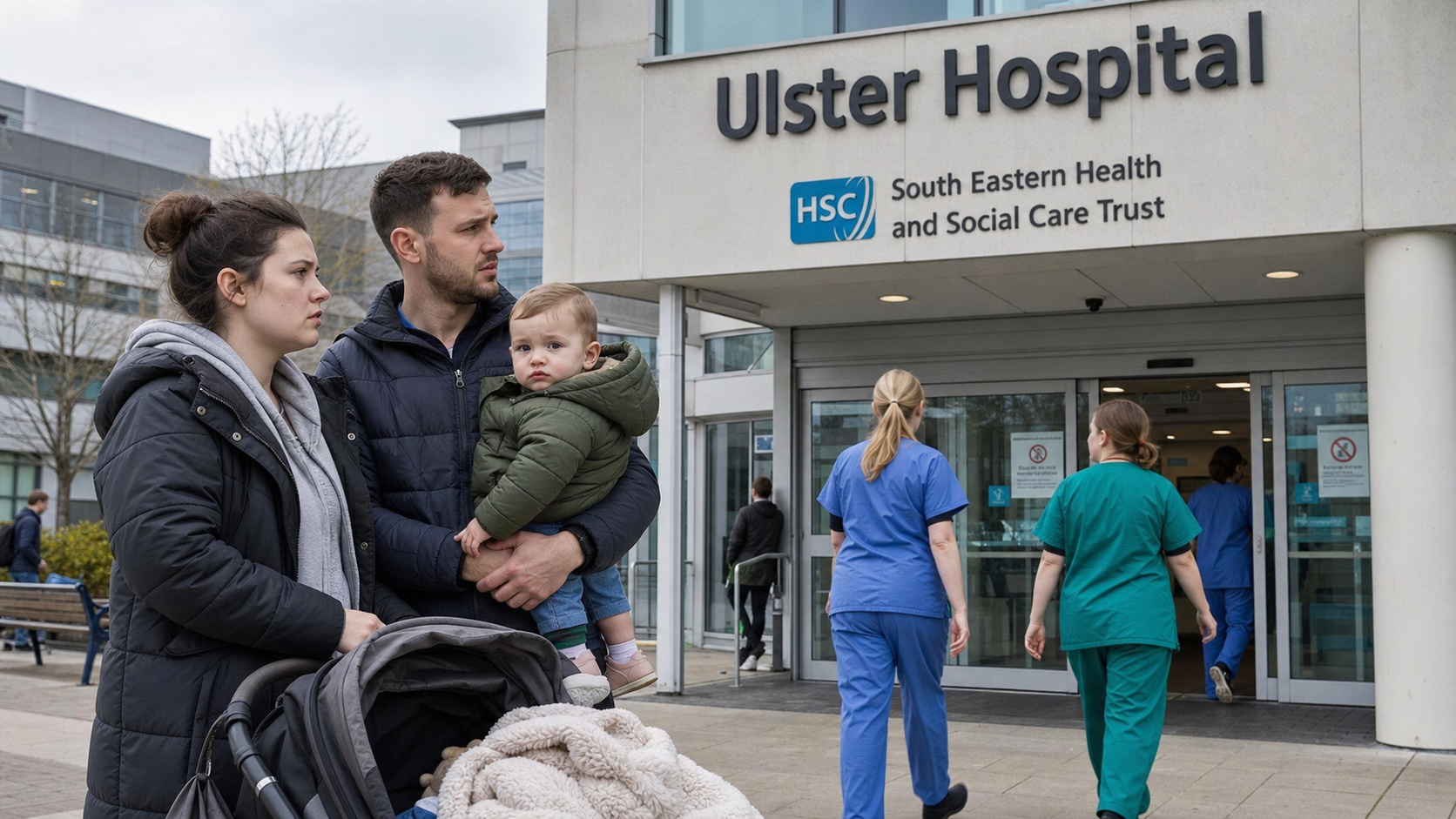
NI Cleft Surgery Crisis: Families Face Uncertainty After Region's Only Specialist Surgeon Resigns
Northern Ireland's cleft lip and palate surgical service is in crisis after the region's sole consultant plastic surgeon specialising in the procedure resigned on 19 June 2026, leaving 24 children on a waiting list and their families in a state of acute anxiety about when and where their operations will take place. The South Eastern Trust, which manages the service in partnership with the Belfast Trust, has engaged a locum surgeon and is in advanced discussions with specialist centres across the United Kingdom to ensure continuity of care.
Background
Cleft lip and palate is one of the most common birth defects in the United Kingdom and Ireland, affecting approximately one in every 700 babies born. The condition requires a series of surgical interventions at specific developmental stages — typically in the first year of life — to repair the lip and palate and to support the child's speech, language, and feeding development. The timing of these operations is critical: delays can have lasting consequences for a child's ability to speak, eat, and develop normally.
In Northern Ireland, the cleft service has historically been provided by a single consultant plastic surgeon, a staffing model that has long been recognised as fragile. The departure of the region's only specialist leaves the service entirely dependent on locum cover and cross-border arrangements — a situation that is both clinically risky and deeply unsettling for the families involved. The South Eastern Trust, which manages the service from the Royal Victoria Hospital in Belfast in partnership with the Belfast Trust, has acknowledged the seriousness of the situation.
The broader context is a Northern Ireland health service that is under severe strain. Waiting lists across all specialties are among the longest in the United Kingdom, and the recruitment and retention of specialist medical staff has been a persistent challenge. The cleft service is an extreme example of a wider problem: when a service depends on a single individual, the departure of that individual creates an immediate crisis that the system is ill-equipped to manage.
Key Developments
The vacancy arose on 19 June 2026, when the consultant plastic surgeon resigned. The South Eastern Trust advertised the position but received no applications by the closing date — a reflection of the difficulty of recruiting specialist surgeons to Northern Ireland, where pay and conditions have historically lagged behind those available in England and Scotland. To address the immediate service gap, the Trust engaged a former cleft surgeon to provide locum sessions during the summer months.
The Trust is currently in advanced discussions with specialist cleft centres across the United Kingdom to establish arrangements for the medium term. These discussions include the possibility of specialist surgeons travelling to Northern Ireland to conduct outpatient assessments, surgical procedures, and follow-up care. The Department of Health has acknowledged the concerns of affected families and has stated that it is working with the Trusts to identify both short-term and long-term solutions.
Families of children on the waiting list have spoken publicly about their anxiety. One family, whose son requires a palate repair before he reaches 13 months of age — a critical developmental window — described the situation as "heartbreaking" and said they felt they were "begging for help" at the most difficult time of their lives. The BBC reported that the family had been told their son's operation might need to take place in England, requiring them to travel with a young child at a time of significant stress.
Why It Matters
The cleft surgery crisis is a stark illustration of the consequences of running a specialist health service on the thinnest possible staffing margins. A service that depends on a single consultant is not a service — it is a single point of failure. When that individual leaves, for whatever reason, the service collapses. The families of the 24 children currently on the waiting list are paying the price for a structural vulnerability that has been known about for years and never adequately addressed.
The difficulty of recruiting a replacement surgeon also reflects a deeper problem with Northern Ireland's health service: the inability to compete with England and Scotland on pay and conditions for specialist medical staff. This is not a new problem, but it is one that the Executive has consistently failed to address with the urgency it demands. Until Northern Ireland can offer competitive terms to specialist surgeons, it will continue to struggle to fill vacancies in critical services.
The situation also raises questions about the appropriateness of providing a service as important as cleft surgery through a single-surgeon model. In England, cleft services are provided through a network of specialist centres, each with multiple surgeons, that can absorb the departure of an individual without the service collapsing. Northern Ireland's population is smaller, but the principle — that critical services should not depend on a single individual — applies regardless of scale.
Local Impact
For the 24 families currently on the waiting list, the immediate impact is uncertainty and anxiety. Some of those children have time-sensitive surgical needs, and any delay in their operations could have lasting consequences for their development. The prospect of having to travel to England for surgery — with all the logistical and financial challenges that entails for families with young children — adds another layer of stress to an already difficult situation. The South Eastern Trust has committed to keeping families informed and to prioritising the most time-sensitive cases, but the reality is that the service is operating in crisis mode, and families are bearing the consequences.
What's Next
The South Eastern Trust expects to finalise arrangements with a specialist centre in England or Scotland within the coming weeks, which should provide a more stable basis for the service in the medium term. The recruitment process for a permanent consultant plastic surgeon will continue, with the Trust exploring whether changes to the terms and conditions on offer might attract applicants. The Department of Health has indicated that it will review the staffing model for the cleft service as part of a broader review of specialist surgical services in Northern Ireland. That review is expected to report before the end of 2026.