NHS England to Be Abolished Under King's Speech Plans as Government Promises Biggest Health Shake-Up in Decades
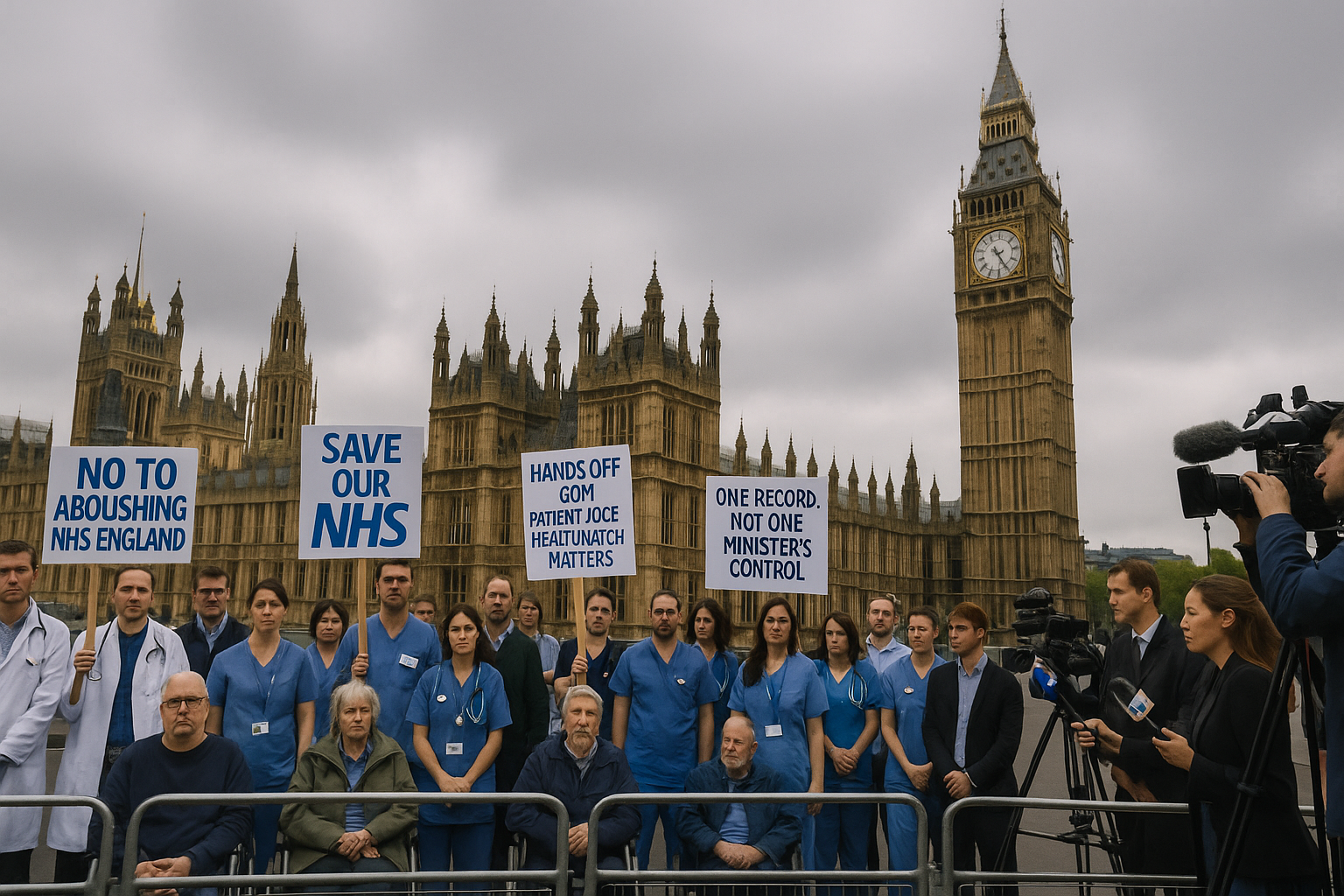
The government is preparing to abolish NHS England — the arm's-length body that has overseen the commissioning of health services in England since 2013 — as part of a sweeping legislative programme to be announced in the King's Speech on 13 May 2026, in what health experts are describing as the most radical restructuring of the National Health Service since its foundation, with profound implications for patients, staff, and the future of public healthcare in the United Kingdom.Background
NHS England was created by the Health and Social Care Act 2012, which came into force in 2013 under the coalition government of David Cameron. The body was designed to operate at arm's length from ministers, insulating clinical commissioning decisions from day-to-day political interference. In practice, the relationship between NHS England and the Department of Health and Social Care has always been complex, with ministers frequently intervening on high-profile issues while maintaining the fiction of operational independence.
The body has overseen a period of significant change in the NHS, including the introduction of clinical commissioning groups (later replaced by integrated care boards), the development of NHS England's long-term plan, and the management of the COVID-19 pandemic response. It has also been the subject of persistent criticism: for its size and cost, for the complexity of the commissioning architecture it has created, and for its perceived distance from frontline clinical reality.
Health Secretary Wes Streeting has been explicit since taking office that he regards the current NHS architecture as a barrier to reform. His 10-year health plan, published earlier in 2026, set out a vision for a health service that is closer to patients, more digitally enabled, and more focused on prevention. The abolition of NHS England is the structural expression of that vision — a decision to bring commissioning back under direct democratic control and to flatten the management hierarchy between ministers and frontline services.
Key Developments
According to parliamentary research published by the House of Lords Library on 6 May 2026, the King's Speech legislation will formally abolish NHS England and transfer its functions to the Department of Health and Social Care. The change will require primary legislation and is expected to take at least two years to implement fully, given the complexity of transferring NHS England's responsibilities — which include overseeing a budget of over £160 billion and managing relationships with 42 integrated care systems across England.
New research published on 7 May 2026, led by Professor Donna Rowen in Health Economics, is set to change the way NHS treatments are evaluated for cost-effectiveness. The work updates the UK's EQ-5D-5L "value set" — a crucial tool used by NICE (the National Institute for Health and Care Excellence) to decide which new medicines and treatments should be made available on the NHS. This update will ensure that decisions are based on the most current understanding of how different health states impact quality of life, potentially opening the door to treatments that were previously deemed too expensive under the old methodology.
The patient safety reforms are equally significant. Healthwatch England and its 150-plus local bodies are to be abolished, with their functions absorbed into other regulatory structures. The Health Services Safety Investigations Body will be merged into the Care Quality Commission, and the Patient Safety Commissioner's functions will transfer to the Medicines and Healthcare products Regulatory Agency.
Why It Matters
The abolition of NHS England is a high-stakes gamble. The argument for it is straightforward: the current architecture is too complex, too expensive, and too remote from patients. The argument against it is equally straightforward: restructuring a health service that employs 1.5 million people, at a time when it is already under severe strain from record waiting lists and a workforce crisis, risks creating years of organisational disruption that will ultimately harm patients. The NHS has been restructured repeatedly since its foundation — the 2012 Act alone cost an estimated £3 billion to implement — and each restructuring has consumed management time and energy that could have been directed at improving care.
The abolition of Healthwatch is particularly concerning to patient advocates. The organisation has been an imperfect but important independent voice for patients, collecting feedback on NHS services and reporting it to commissioners and regulators. Its abolition, without a clear replacement mechanism, risks creating a gap in patient advocacy that could take years to fill. For context, Wales and Scotland have maintained more integrated patient feedback mechanisms without the same proliferation of bodies — and their patient satisfaction data, while not uniformly better, suggests that the architecture matters less than the culture within it.
Local Impact
For patients and NHS staff in Northern Ireland, these reforms are primarily an England-specific matter — health is devolved, and the Northern Ireland Executive controls its own health service. However, the reforms will set a precedent and create pressure on Stormont to consider equivalent changes. The Belfast Health and Social Care Trust, which serves the largest population of any trust in Northern Ireland, has been watching the England reforms closely. Any successful implementation of a single patient record in England will accelerate pressure on the Northern Ireland Executive to develop a compatible system — particularly given the significant number of patients who receive care on both sides of the border.
What's Next
The King's Speech takes place on 13 May 2026. The NHS England abolition legislation is expected to be introduced in the House of Commons within weeks of the speech. A public consultation on the implementation plan is expected to follow. Readers should watch for: the government's response to concerns from NHS staff unions about the impact of restructuring on jobs and terms and conditions; any legal challenges to the abolition from NHS England itself or from patient groups; and the timeline for the single patient record implementation, which will be the most visible and tangible element of the reform programme for patients.
Sources: House of Lords Library — King's Speech 2026: Health; Medical Xpress — NHS treatment evaluation research