McEntee Warns World Faces Biggest Security Challenges Since 1970s as Ireland Accelerates Defence Modernisation
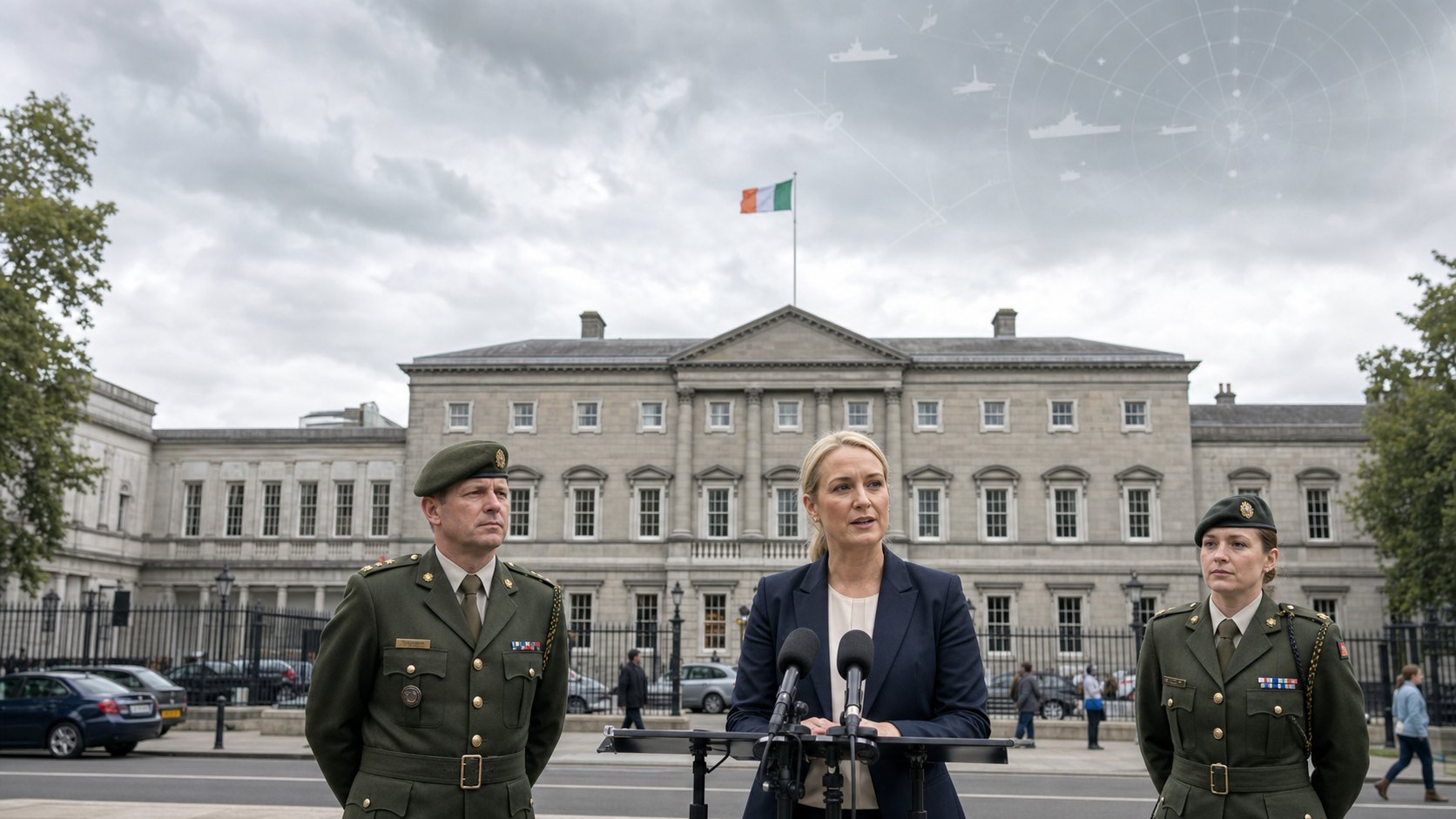
Minister for Defence Helen McEntee has warned that the world is facing its biggest security challenges since the 1970s, as the Irish government accelerates a defence modernisation programme that includes a multi-element military radar system, enhanced maritime security measures, and proposed legislative reform of the 'triple lock' mechanism that currently governs the overseas deployment of Irish troops — a mechanism the Minister has described as 'untenable' in the current security environment.
Background
Ireland's defence and security policy has been the subject of intense debate since the Russian invasion of Ukraine in 2022, which fundamentally altered the security landscape in Europe and prompted a reassessment of Ireland's traditional military neutrality. The country has maintained a policy of non-participation in military alliances since independence, and this neutrality has broad public support. However, the changing security environment has raised questions about whether the current policy framework is adequate to protect Ireland's interests and to fulfil its obligations as a member of the European Union.
The "triple lock" mechanism, which requires the approval of the Government, the Dáil, and a United Nations mandate for the deployment of more than 12 Defence Forces personnel abroad, has been a particular focus of debate. The mechanism was designed to ensure democratic oversight of overseas deployments and to anchor Irish peacekeeping within the UN framework. However, critics have argued that it gives the UN Security Council — where Russia and China hold vetoes — an effective veto over Irish peacekeeping decisions, a situation that has become increasingly problematic as geopolitical tensions have made UN consensus harder to achieve.
Minister McEntee was appointed to the Defence portfolio in 2025 and has moved quickly to advance a modernisation agenda that had been developing slowly for several years. Defence spending has increased by 43% over the past two years, and the government has committed to further increases to bring Ireland's capabilities closer to those of comparable small Western European nations.
Key Developments
Speaking at the British Irish Association conference on 4 September 2026, Minister McEntee delivered a wide-ranging assessment of the current security environment, describing it as the most challenging since the 1970s. She emphasised that while Ireland remains committed to military neutrality — defined as non-participation in military alliances — this does not mean standing apart from international partners in addressing shared security challenges.
The Minister outlined the key elements of Ireland's defence modernisation programme. The military radar programme — which includes land-based long-range primary radar, ground-based air defence, and maritime radar — is targeted for full delivery by 2028 and will give Ireland, for the first time, a meaningful capacity to detect and track aircraft in its airspace. The programme addresses a long-standing gap in Ireland's defence capabilities that has been a source of embarrassment in international security discussions.
On maritime security, the Minister confirmed that Ireland is exploring the development of a national maritime security centre and is participating in the UK-led Joint Expeditionary Force on an ad-hoc basis to enhance maritime domain awareness and counter threats to undersea cables — a growing concern following the sabotage of the Nord Stream pipelines and other incidents affecting critical undersea infrastructure in European waters.
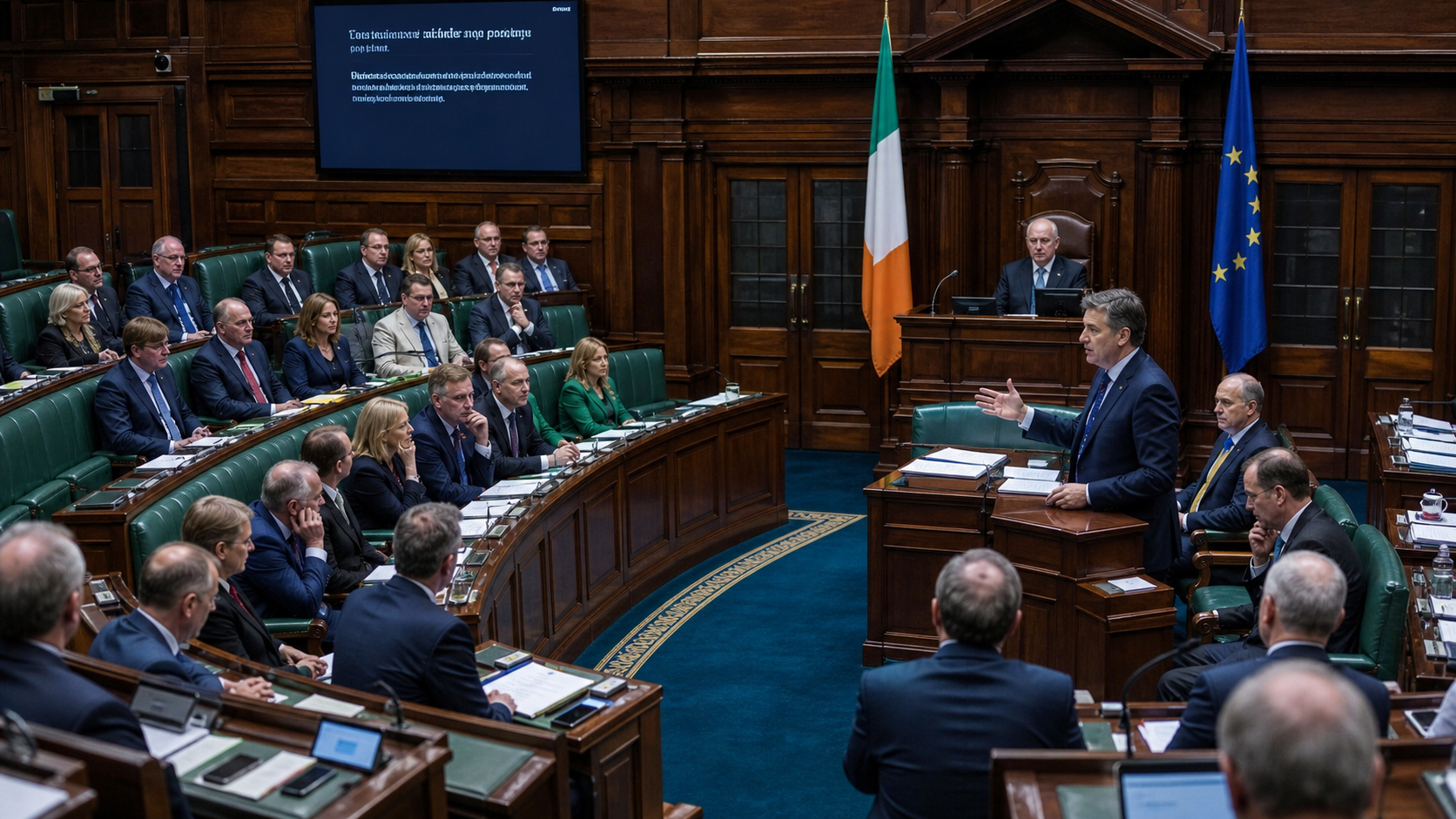
The proposed reform of the triple lock mechanism is expected to be the most politically contentious element of the modernisation agenda. The Minister has described the current arrangement as "untenable" and has indicated that legislation to remove the UN mandate requirement will be brought forward in the coming months. Sinn Féin and some independent TDs have indicated opposition to the reform, arguing that it represents a step away from Ireland's traditional neutrality.
Why It Matters
The debate about Ireland's defence and security policy is one of the most significant political conversations the country has had in decades. The traditional consensus around military neutrality has been a stable feature of Irish political life since the Second World War, and any departure from it — even a partial or qualified one — is politically sensitive. The government's approach has been to argue that it is not abandoning neutrality but rather updating the practical arrangements through which neutrality is expressed, to reflect the realities of the current security environment.
The reform of the triple lock is particularly significant because it would remove a constraint that has been in place since the 1990s and that has been seen as a guarantor of Ireland's independence in foreign policy. Critics argue that removing the UN mandate requirement would make it easier for future governments to deploy Irish troops in ways that are inconsistent with the country's traditional peacekeeping role. Supporters argue that the current arrangement is anachronistic and that Ireland needs the flexibility to respond to security challenges that the UN Security Council may be unable to address due to great power vetoes.
For context, Ireland's EU presidency in 2026 has brought the country's security policy under particular scrutiny, as the EU has been developing its own defence and security capabilities and Ireland's traditional opt-outs from EU defence structures have become increasingly difficult to maintain in practice.
Local Impact
The defence modernisation programme has direct implications for the Defence Forces, which are headquartered at Cathal Brugha Barracks in Dublin but have installations across the country including Finner Camp in Donegal, Custume Barracks in Athlone, Collins Barracks in Cork, and Sarsfield Barracks in Limerick. The radar programme will require new installations at locations to be determined, and the maritime security enhancements will affect the Naval Service base at Haulbowline in Cork Harbour.
The broader security debate also has implications for Ireland's relationship with Northern Ireland and with the United Kingdom. The British Irish Association conference at which Minister McEntee spoke is one of the key forums for north-south and east-west dialogue, and her remarks were delivered in a context where the security implications of the Irish border and the island's critical infrastructure are of shared concern to both governments.
What's Next
Legislation to reform the triple lock mechanism is expected to be published before the end of 2026. The Oireachtas Committee on Foreign Affairs and Defence is likely to hold extensive hearings on the proposed reform before it is brought to a vote. The military radar programme is on track for full delivery by 2028, and the government is expected to make further announcements on maritime security in the coming months. The Commission on the Defence Forces, which reported in 2022, recommended a significant increase in defence spending and capabilities, and the government's progress against those recommendations will be assessed in a review expected in early 2027.