Learner Drivers Face 12-Week Waits as DVA Reports Record Demand Ahead of New Licensing Rules
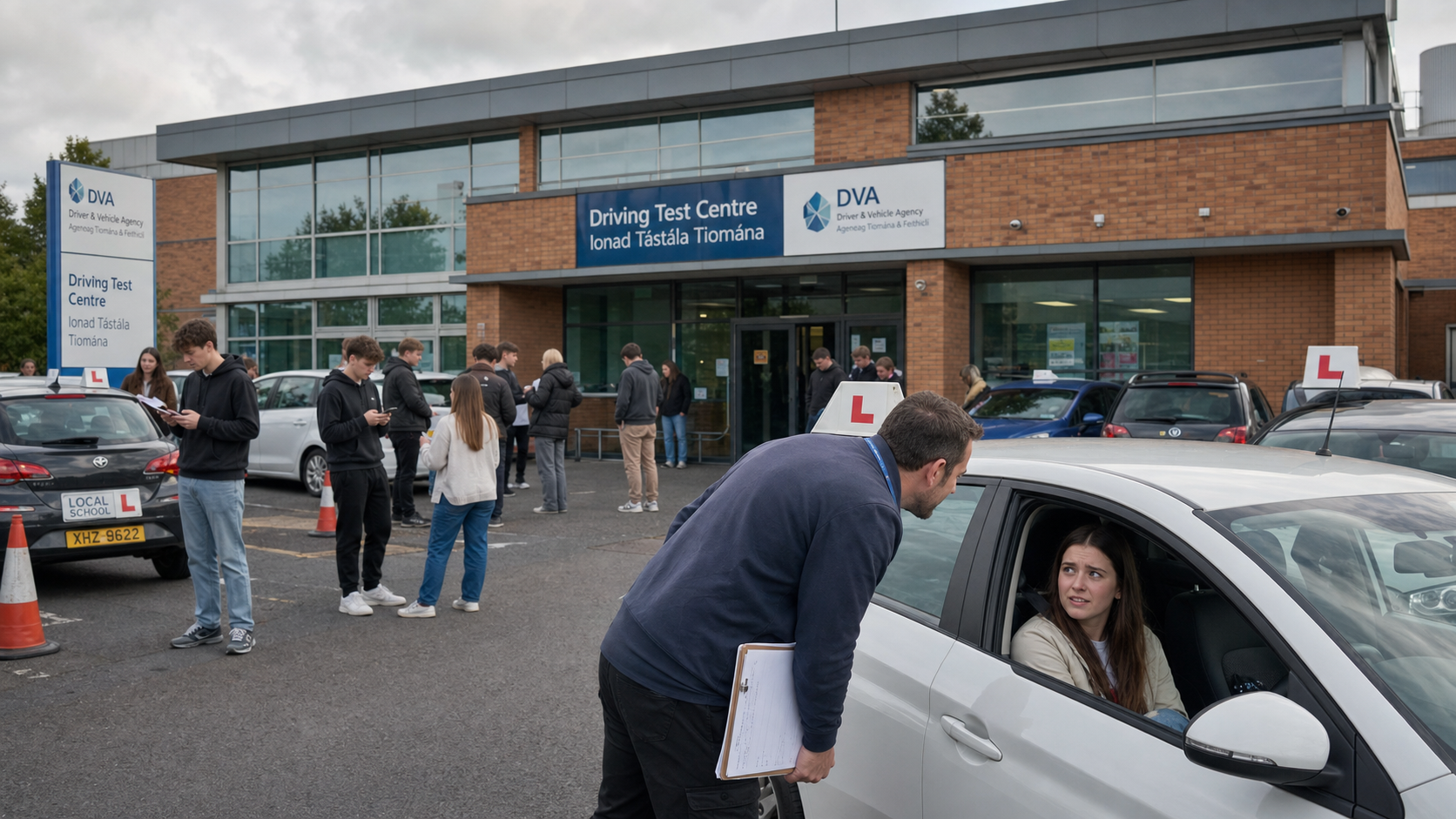
Learner drivers across Northern Ireland are facing waiting times of up to 12 weeks for practical driving tests as the Driver and Vehicle Agency reports a 13% surge in applications compared to the same period last year, with the agency pointing to a combination of seasonal demand, post-pandemic catch-up, and a rush to test before new Graduated Driver Licensing rules come into force on October 1.
Background
The Driver and Vehicle Agency is the Northern Ireland executive agency responsible for driver licensing, vehicle testing, and road safety. Unlike the Driver and Vehicle Licensing Agency in Great Britain, the DVA operates as a distinct body under the Department for Infrastructure, reflecting Northern Ireland's devolved administrative arrangements. The agency manages a network of driving test centres across the province, from Belfast and Derry to Enniskillen, Newry, and Ballymena.
Driving test waiting times have been a persistent issue across the United Kingdom and Ireland since the Covid-19 pandemic, when test centres were closed for extended periods and a significant backlog of candidates accumulated. While the DVA made substantial progress in clearing that backlog in 2023 and 2024, demand has continued to grow as Northern Ireland's population increases and more young people reach driving age.
The introduction of Graduated Driver Licensing represents the most significant change to the Northern Ireland licensing system in many years. From October 1, 2026, most new drivers will be required to wait at least six months after receiving a provisional licence before they can take a practical test — a measure designed to ensure that learners have sufficient time to develop their skills before being assessed. The GDL rules will also introduce restrictions on newly qualified drivers, including limits on night driving and the number of passengers they can carry.
Key Developments
DVA figures show that between April and June 2026, a total of 18,092 tests were completed — a 5.4% increase on the same period in 2025. Applications for tests rose by approximately 13% between February and June compared to the corresponding period last year. The agency has acknowledged that some learners are rushing to test before the GDL rules take effect, though it does not have definitive data on the extent to which this is driving current demand.
To manage the increased volume, the DVA has expanded test availability to Sundays and bank holidays, is actively recruiting additional driving examiners — including at the Altnagelvin centre in Derry — and is utilising overtime to conduct as many tests as possible. Learners are advised to book the earliest available appointment regardless of location and to check the booking portal regularly for cancellations and newly released slots.
Why It Matters
For young people in Northern Ireland, particularly those in rural areas where public transport is limited, a driving licence is not a luxury — it is a practical necessity for accessing employment, education, and healthcare. A 12-week wait for a test is a significant barrier, particularly for those who have already invested heavily in lessons and are ready to sit their assessment. Driving instructors have noted that extended waiting times can lead to skill regression, as learners who are test-ready but unable to book an appointment may lose confidence and sharpness over the intervening weeks.
The GDL rules, while broadly welcomed by road safety advocates, have created a perverse incentive for some learners to rush their preparation in order to test before October 1. Road safety organisations have urged learners not to compromise on their preparation, noting that the purpose of the new rules is to reduce the disproportionately high accident rate among newly qualified drivers — a rate that remains stubbornly elevated in Northern Ireland compared to the rest of the UK.
Local Impact
The pressure on test availability is felt most acutely in areas where there is only one test centre within reasonable travelling distance. In Fermanagh and Tyrone, where the nearest centres are in Enniskillen and Omagh respectively, a 12-week wait means a 12-week delay in accessing employment and independence for young people in some of Northern Ireland's most rural communities. Translink services in these areas are limited, making the driving licence even more critical as a gateway to economic participation. The DVA has indicated that it is monitoring demand at individual centres and will consider additional capacity measures if waiting times continue to rise.
What's Next
The DVA expects demand to remain elevated through September as learners attempt to test before the October 1 GDL deadline. The agency has indicated it will publish updated waiting time data on a monthly basis. The Department for Infrastructure is expected to review the impact of the GDL rules in the first quarter of 2027, with a particular focus on whether the six-month minimum wait period is achieving its intended road safety outcomes.