Jeffrey Donaldson Lodges Appeal Against Child Sex Abuse Convictions as DUP Faces Deepening Crisis
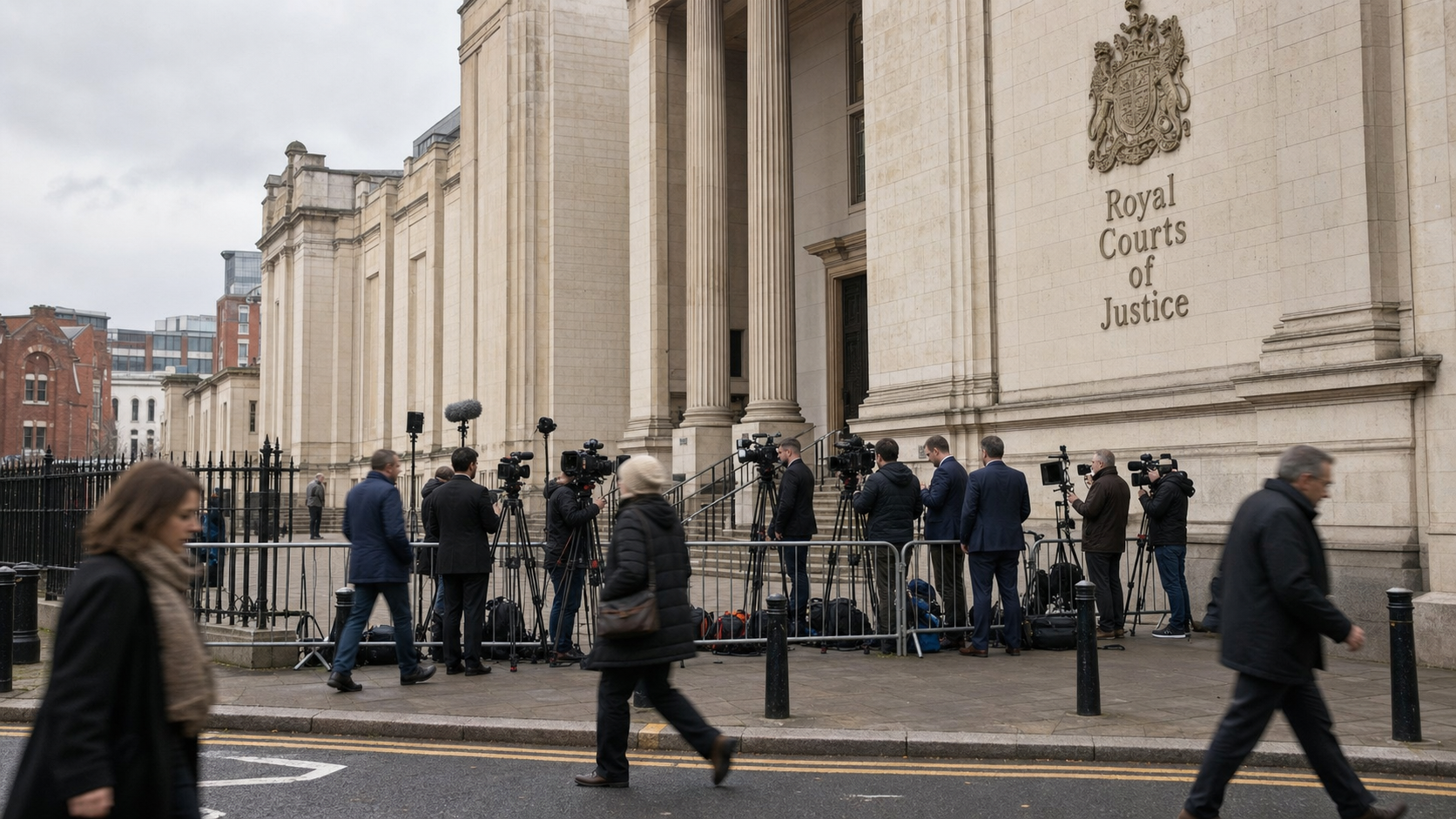
Former Democratic Unionist Party leader Sir Jeffrey Donaldson has officially lodged an appeal against his convictions for the rape and sexual assault of two victims when they were children, with paperwork filed at the Court of Appeal in Belfast on Friday — a development that has deepened the political and institutional crisis engulfing Northern Ireland's largest unionist party and prompted fresh scrutiny of safeguarding failures at the highest levels of public life.
Background
Jeffrey Donaldson served as leader of the DUP from 2021 until his sudden resignation in March 2024, when he was arrested alongside his wife Eleanor on a series of historic sexual offences charges. His arrest came as a profound shock to the Northern Ireland political establishment — Donaldson had been one of the most prominent figures in unionist politics for three decades, serving as a Member of Parliament for Lagan Valley since 1997 and playing a significant role in the negotiations that produced the St Andrews Agreement in 2006.
Following a trial at Downpatrick Crown Court, Donaldson was convicted on multiple counts of rape and sexual assault against two victims, offences committed when the victims were children. The convictions represented one of the most significant criminal cases involving a senior political figure in Northern Ireland's history. He was sentenced to a substantial custodial term, with the judge making clear the gravity of the offences and the profound breach of trust they represented.
The case has had far-reaching consequences for the DUP, which was already under pressure following a period of political turbulence that included the party's withdrawal from the Stormont Executive in protest at the Northern Ireland Protocol. Gavin Robinson, who had previously served as party leader before Donaldson's appointment, returned to lead the party following Donaldson's arrest. The scandal has raised serious questions about what senior party figures knew about Donaldson's conduct and when, questions that the party has struggled to answer convincingly.
Key Developments
The filing of the appeal at the Court of Appeal in Belfast on Friday marks the beginning of what is expected to be a lengthy and complex legal process. Donaldson's legal team is understood to be challenging aspects of the trial proceedings, though the specific grounds of appeal have not been made public. Legal costs associated with the case are reported to be running at approximately half a million pounds, a figure that has attracted significant media attention given Donaldson's circumstances.
In parallel with the criminal appeal, both the Northern Ireland Civil Service and the Stormont Assembly have launched separate formal reviews into Donaldson's conduct during his time as a junior minister in the Office of the First Minister and deputy First Minister and his years at Parliament Buildings. These reviews are examining whether there were failures of oversight or safeguarding that allowed his behaviour to go undetected and unreported for so long.
The DUP, now led by Gavin Robinson, has attempted to draw a line under the scandal by commissioning its own internal review of safeguarding procedures and distancing itself from Donaldson's legacy. However, polling conducted in the weeks following the conviction suggests the damage to the party's electoral standing has been severe, with some surveys indicating that unionism could lose its status as the largest designation in the Stormont Assembly for the first time in the 2027 election.
Why It Matters
The Donaldson case matters for reasons that extend far beyond the fate of one political party. It raises fundamental questions about the culture of deference and the absence of robust safeguarding mechanisms in Northern Ireland's political institutions. The fact that a man convicted of serious historic child sexual abuse was able to rise to the leadership of the region's largest party and serve as a senior minister without his offending being detected or reported speaks to systemic failures that demand serious examination. This is not the first time that Northern Ireland's political and civic institutions have been confronted with questions about the protection of children and vulnerable people — the legacy of abuse in religious and state institutions has been a recurring theme in public life for decades. The Donaldson case adds a new and deeply troubling dimension to that history.
Local Impact
The political fallout from the case is being felt most acutely in Lagan Valley, the South Down constituency Donaldson represented, and in the broader unionist community across Northern Ireland. For many unionists, the case has been a source of profound shame and disillusionment, coming at a time when the community was already grappling with questions about its political direction and identity. In Belfast, the case has dominated political conversation, with the Assembly's review process expected to produce findings that will have implications for how all parties manage safeguarding and conduct issues. For the victims, whose courage in coming forward made the prosecution possible, the lodging of the appeal represents a further ordeal — one that the legal system will now have to manage with appropriate sensitivity and care.
What's Next
The Court of Appeal will set a date for the hearing of Donaldson's appeal in the coming months. Given the complexity of the case and the volume of material involved, a hearing is unlikely before early 2027. The Stormont Assembly's review of his conduct is expected to report by the end of 2026, with the Civil Service review on a similar timeline. The DUP will face its next major electoral test at the 2027 Assembly election, at which point the full political consequences of the scandal will become clear. In the meantime, the party faces the challenge of rebuilding public trust while managing the ongoing legal and institutional processes that the case has set in motion.