Irish League Season Saved as NIFL EGM Votes to Endorse Restructuring After Banbridge Town Legal Challenge
The 2026-27 Irish League season will begin as scheduled on the weekend of August 7 to 9 after an Extraordinary General Meeting of the Northern Ireland Football League overwhelmingly endorsed three key resolutions on Tuesday evening, resolving a legal dispute that had threatened to delay the campaign and casting a shadow over the opening fixtures — including the eagerly anticipated north Belfast derby between Cliftonville and Crusaders.
Background
The crisis that threatened to derail the Irish League season before it had even begun had its origins in the restructuring of the third tier of Northern Irish football. The NIFL had overseen the transition of the Premier Intermediate League to a newly established Conference League, a change designed to streamline the pyramid structure and improve pathways between the amateur and professional game. However, the process by which that restructuring was implemented contained a procedural flaw that would prove costly.
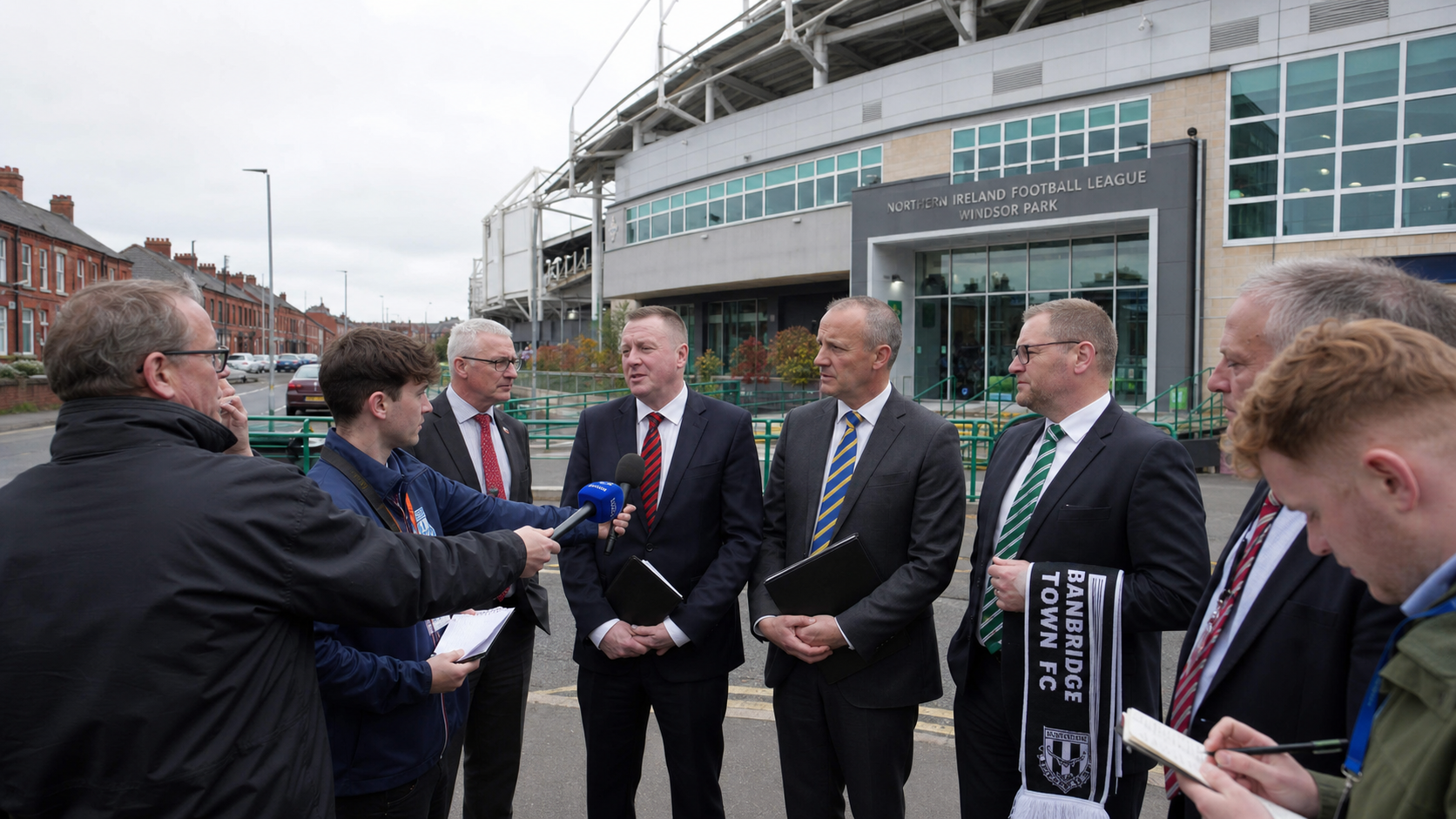
Banbridge Town, a club from County Down that found itself affected by the restructuring, successfully appealed to the Irish Football Association Appeals Committee, which ruled that their removal from NIFL structures was "unlawful" because the league had failed to properly secure approval for its regulations from member clubs. The ruling created an immediate legal problem: if the restructuring was unlawful, the entire framework for the 2026-27 season was potentially compromised.
The NIFL moved quickly to address the situation, convening an Extraordinary General Meeting to seek retrospective approval from member clubs for the regulations that should have been approved in the first place. The meeting required a 90% quorum of the 47 member clubs to proceed, given that it was being held outside the standard 21-day notice period — a threshold that created genuine uncertainty about whether the EGM could go ahead at all.
Key Developments
The EGM, held on Tuesday, August 4, 2026, achieved the required quorum, and member clubs voted to pass three specific resolutions: the approval of league restructuring, the adoption of league rules for 2025-26, and the approval of competition rules for 2026-27. The resolutions were approved by a majority well in excess of the 75% required, clearing the legal obstacle that had threatened the season.
Following the vote, the NIFL board issued a statement confirming that the season would commence as planned, with the opening weekend featuring the north Belfast derby between Cliftonville and Crusaders in the Premiership, and a second-tier match between Strabane Athletic and Institute. As part of the resolution to the dispute, the NIFL acknowledged the procedural error and committed to commissioning an independent review of its processes to minimise the risk of future occurrences.
The restructuring confirmed at the EGM establishes the Conference League, run by the Northern Amateur Football League, as the new third tier, while the NIFL continues to govern the top two divisions. The Championship has been expanded from 12 to 16 teams, a change that is expected to increase competitive opportunities for clubs across Northern Ireland.
Why It Matters
The near-miss that preceded Tuesday's EGM exposed a significant governance weakness in the NIFL's processes — one that, had it not been resolved, could have caused serious disruption to clubs, players, and supporters across Northern Ireland. The Irish League is the oldest football league in the world, and its traditions and structures matter deeply to the communities that support it. A delayed or disrupted season would have had financial consequences for clubs that depend on gate receipts and sponsorship income from the opening weeks of the campaign. The NIFL's commitment to an independent review of its processes is welcome, but the episode underscores the need for robust governance frameworks in amateur and semi-professional sport, where the resources to manage legal challenges are limited.
Local Impact
For supporters of clubs across Northern Ireland, the confirmation that the season will begin on time is a relief. The north Belfast derby between Cliftonville and Crusaders — one of the most anticipated fixtures in the Irish League calendar — will now go ahead as planned, with both clubs having invested significantly in their squads over the summer. In Strabane, the opening Championship fixture against Institute will mark the beginning of a new era for the club following its promotion from the Conference League. Across the province, from Ballymena to Newry and from Coleraine to Ards, clubs and their supporters can now focus on football rather than legal uncertainty.
What's Next
The NIFL has committed to publishing the terms of reference for its independent governance review before the end of August, with a final report expected by December 2026. The review will examine the processes by which regulatory changes are approved and communicated to member clubs, with the aim of ensuring that procedural errors of the kind that triggered the Banbridge Town appeal cannot recur. Banbridge Town, whose appeal set the crisis in motion, will compete in the Conference League in 2026-27 following the confirmation of the restructuring. The club has indicated it is satisfied with the outcome of the EGM and looks forward to competing in the new structure.