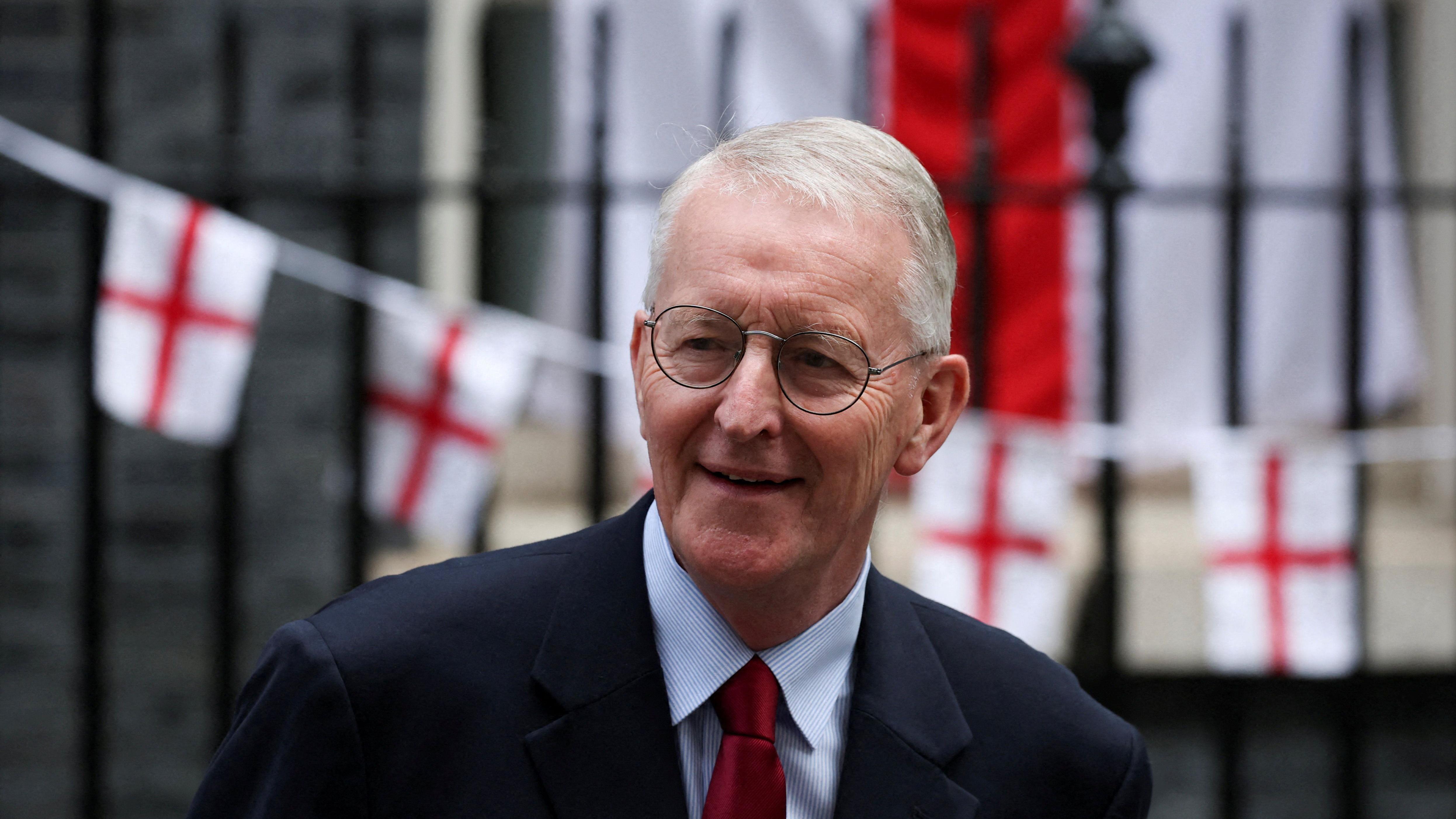
Hilary Benn Tells Stormont to Stop Waiting for Treasury Rescue as NI Budget Impasse Deepens
UK Secretary of State for Northern Ireland Hilary Benn has issued a blunt warning to Stormont ministers, telling them to stop expecting the Treasury to rescue them from difficult budget decisions and to take responsibility for the fiscal choices that are within their own power to make. His intervention comes as the Stormont Executive remains unable to agree a budget for the current financial year, leaving public services across Northern Ireland in a state of prolonged uncertainty.
Background
The relationship between Stormont and Westminster on financial matters has been a source of persistent tension since the restoration of devolution. Northern Ireland's block grant — the annual allocation of funding from the UK Treasury — is calculated using the Barnett formula, which provides Northern Ireland with a per-capita allocation that is significantly higher than the equivalent for England. The current needs-based adjustment means that Northern Ireland receives approximately 124% of equivalent per-capita spending in England, a premium that reflects the higher levels of deprivation, the costs of the legacy of the Troubles, and the additional expenses associated with running a devolved administration.
Despite this relatively generous funding settlement, the Stormont Executive has consistently struggled to balance its budget, with ministers from different parties unable to agree on spending priorities and reluctant to make the difficult decisions — including cuts to services and increases in charges — that a balanced budget would require. The result has been a cycle of overspending, emergency interventions from Westminster, and the accumulation of a significant financial deficit that has constrained the Executive's ability to invest in public services.
The current budget impasse is the most serious in several years. The Executive has been unable to agree a budget for the 2026-27 financial year, leaving departments operating on the basis of provisional allocations that do not allow for effective long-term planning. The situation has been described by senior civil servants as "unsustainable" and has prompted warnings from the heads of several major public bodies that they will be unable to maintain current service levels without a settled budget.
Key Developments
Secretary of State Benn has been increasingly direct in his public statements about the Stormont budget impasse, warning against what he has described as a "Treasury always chickens out" mentality in Belfast — a reference to the expectation among some Stormont politicians that Westminster will ultimately step in to cover any financial shortfall, removing the need for difficult local decisions. He has argued that this expectation is both financially irresponsible and politically corrosive, as it allows Stormont ministers to avoid accountability for the consequences of their spending choices.
Benn has pointed to the 124% per-capita funding premium as evidence that a lack of money is not the primary barrier to progress in Northern Ireland. Instead, he has cited "missed opportunities" by Stormont ministers to enact meaningful reform of public services — reform that, he argues, could deliver better outcomes for citizens at lower cost. His position places the onus for solutions squarely on the shoulders of local political leaders, a stance that has been welcomed by some commentators but criticised by others as an oversimplification of the challenges facing the Executive.
The Secretary of State has also been clear about the UK government's constitutional position on Northern Ireland's future. He has described the new Labour government as "unambiguously pro-union" and has stated that an Irish unification referendum is not on the horizon, a position that has been welcomed by unionist parties but noted with interest by Sinn Féin and the Irish government.
Why It Matters
The budget impasse at Stormont has real consequences for the people of Northern Ireland. Public services that are already under severe pressure — the NHS, schools, roads, and social care — cannot be effectively managed without a settled budget, and the uncertainty is causing significant difficulties for the managers and frontline staff who are trying to deliver those services. The HMICFRS inspection report on the PSNI, published in July 2026, identified budget cuts as a primary cause of the force's capacity crisis — a direct consequence of the Executive's failure to agree on spending priorities.
Benn's intervention is significant because it signals a shift in Westminster's approach to the Stormont budget. Previous Secretaries of State have been more willing to provide emergency financial support to the Executive, effectively underwriting the consequences of political dysfunction. Benn's more robust stance suggests that the Labour government is less willing to play this role, and that Stormont ministers will face greater pressure to make difficult decisions rather than waiting for a Treasury rescue.
The Secretary of State's assertion that Northern Ireland is "unambiguously pro-union" in the eyes of the UK government is also politically significant. It provides a clear signal to all parties about the constitutional framework within which the current political debate is taking place, and it sets a clear context for the discussions about institutional reform and the unity question that are dominating the political agenda on both sides of the border.
Local Impact
The budget impasse is having a direct impact on public services across Northern Ireland. In the health sector, the absence of a settled budget has made it impossible for the five health and social care trusts — Belfast, South Eastern, Southern, Western, and Northern — to plan effectively for the coming year. Capital investment projects have been delayed, recruitment has been frozen in some areas, and the already severe waiting list crisis has been exacerbated by the inability to fund new initiatives. In education, schools across Northern Ireland are facing a funding shortfall that is affecting their ability to maintain buildings, retain staff, and provide the range of subjects and activities that pupils need.
For businesses in Northern Ireland, the budget impasse adds to the uncertainty created by the ongoing debate about the Windsor Framework and the region's post-Brexit trading arrangements. Companies that are considering investment in Northern Ireland need confidence in the stability and effectiveness of the devolved government, and the current dysfunction is not conducive to that confidence. The Northern Ireland Chamber of Commerce has called on all parties to prioritise the resolution of the budget impasse as a matter of urgency.
What's Next
The Stormont Executive is expected to make a further attempt to agree a budget before the Assembly's summer recess, with a deadline of late July identified by the Finance Minister as the last realistic opportunity to avoid a formal budget crisis. If agreement cannot be reached, the Secretary of State has indicated that he will consider using his powers under the Northern Ireland Act to impose a budget — a step that would be deeply controversial and that all parties have said they wish to avoid. The UK Treasury is expected to publish its assessment of Northern Ireland's financial position in the autumn, which will inform the block grant settlement for 2027-28.